
Applying Ratios in Right Triangles: A Proportional Geometry Approach
Loading the math board and drawing, please wait…
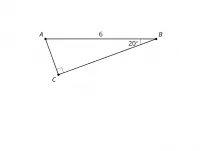
This example demonstrates how to use ratio (proportional) relationships inside a right triangle to connect lengths and angle-related quantities, supporting students in reasoning and solving problems that rely on consistent edge relationships. The key math ideas include the ratio/proportion method in right triangles, relationships between legs and the hypotenuse, and the geometric reasoning that parallels (and builds intuition for) basic trigonometric ideas. While no explicit GeoGebra construction commands were provided in the source summary, the construction can be implemented by creating a right triangle, measuring relevant sides, and defining ratio expressions from those measurements; optionally, using rotation/transformations can reposition the triangle while preserving the ratio structure, helping learners observe invariance. Suitable for middle-school geometry lessons, guided practice, and early exploration of ratio-based problem solving.
AI Drawing Prompt Reference
Draw a right triangle in the plane, clearly identifying one leg and the other leg as perpendicular sides. Mark the lengths of both legs and also mark the hypotenuse length. Indicate a proportional relationship between the leg lengths and the hypotenuse using ratio or equal-proportion expressions, so the viewer can reason about consistent edge-length relationships. Then reposition the triangle by a rigid motion such as a translation or rotation, keeping it a right triangle, to help compare the invariance of the ratio structure before and after the transform.
The prompt above was compiled from the original drawing commands and is for reference only.