
Volume Relationship Between Pyramid and Prism by RRamanujam
Loading the math board and drawing, please wait…
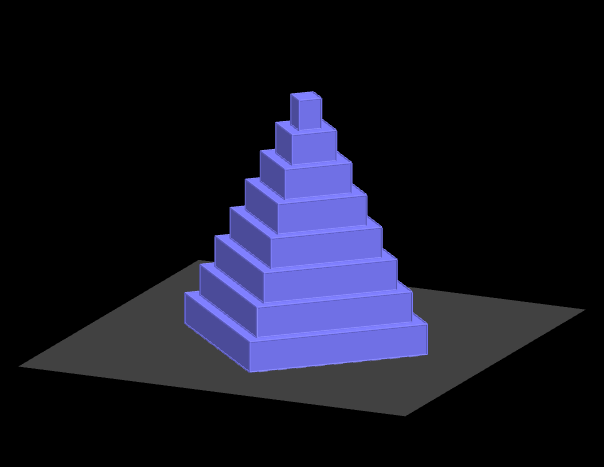
This example demonstrates how the volume of a pyramid can be derived as a limit of the sum of volumes of square prisms. Key mathematical concepts include pyramids, prisms, volume, and limits. The Sequence command is used to construct a series of prisms, and the volume changes are observed by adjusting the height and base length. Suitable for high school mathematics education and students learning solid geometry.
GeoGebra Commands & Parameters
Sequence((((n - i) * a / n), 0, (i * h / n)), i, 0, n) → list2Sequence((0, ((n - i) * a / n), (i * h / n)), i, 0, n) → list1Sequence((((-(n - i)) * a / n), 0, (i * h / n)), i, 0, n) → list3Sequence((0, ((-(n - i)) * a / n), (i * h / n)), i, 0, n) → list4Sequence(Polygon[Element[list2, i], Element[list1, i], Element[list3, i], Element[list4, i]], i, 1, n) → list5Sequence(Prism[Element[list5, i], h / n], i, 1, n) → list6
AI Drawing Prompt Reference
Draw a pyramid and a prism to show how the volume of the pyramid can be derived from the sum of volumes of square prisms as the height and base length change. The pyramid is constructed from a series of small prisms, and their volumes approach the volume of the pyramid. Adjust parameters to illustrate the concept of limits in volume calculation, suitable for high school solid geometry learning.
The prompt above was compiled from the original drawing commands and is for reference only.