
Visualizing Two-Digit Numbers
Loading the math board and drawing, please wait…
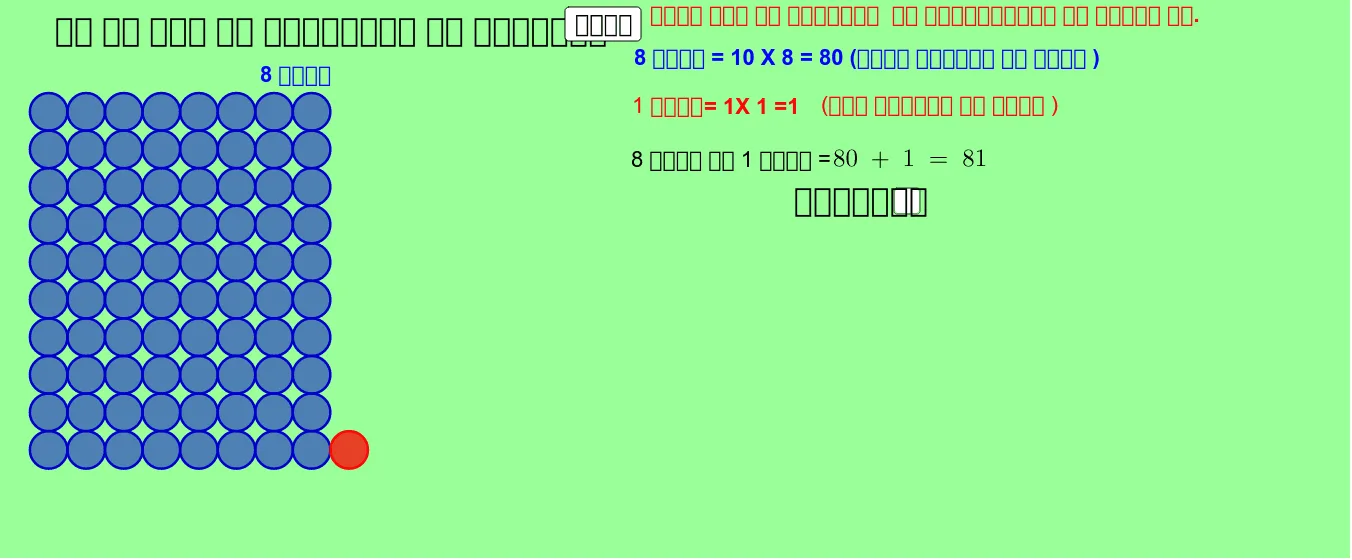
This example demonstrates the composition and representation of two-digit numbers through dynamic visuals. Key math concepts include number decomposition, decimal representation, and coordinate geometry. It is constructed using GeoGebra commands like Random, Sequence, and Textfield, with objects such as a, t, u, L_2, L_1, b, etc. Suitable for middle school mathematics education to help students understand place value and visual number representation.
GeoGebra Commands & Parameters
Random(10, 100) → aSequence(Sequence[Circle[(p, n), 0.5], n, 1, 10], p, 1, t) → L_2Sequence(Circle[(t + 1, n), 0.5], n, 1, u) → L_1Textfield(c_t) → InputBox1Textfield(c_u) → InputBox2Textfield(c_u) → InputBox2_3Textfield(c) → InputBox4Random(11, 100) → eRandom(11, 100) → fRandom(11, 100) → gRandom(11, 100) → hRandom(11, 100) → iRandom(11, 100) → jRandom(11, 100) → kRandom(10, 100) → lRandom(10, 100) → mRandom(10, 100) → nRandom(10, 100) → oRandom(10, 100) → q
AI Drawing Prompt Reference
Create a dynamic visualization showing the composition and representation of two-digit numbers, featuring multiple circles and text boxes, with randomly generated digits to represent tens and units, using the size and position of circles to visualize the number composition, first drawing circles for tens, then for units, and finally displaying the numbers in text boxes.
The prompt above was compiled from the original drawing commands and is for reference only.