
Visualizing the Pythagorean Identity (Part 1) with Geometry and Vectors
Loading the math board and drawing, please wait…
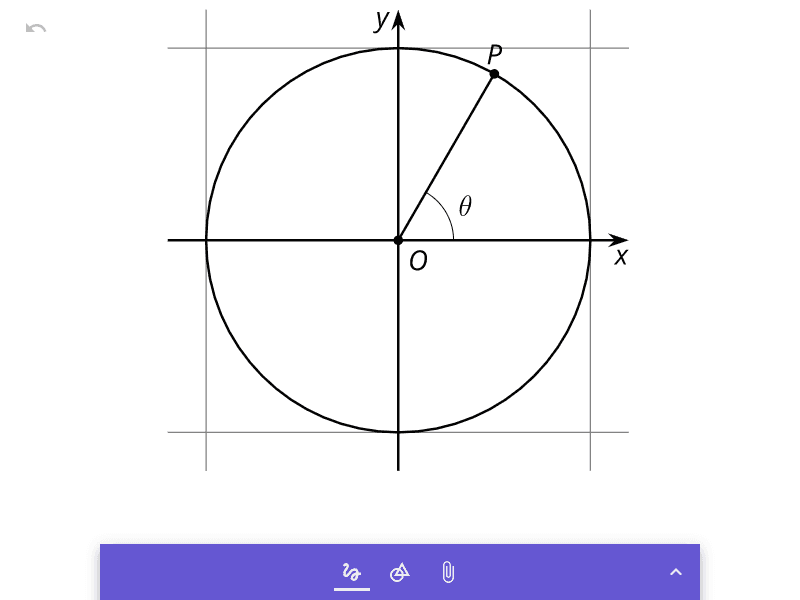
This example demonstrates the Pythagorean identity through a geometry-focused visualization, highlighting how length relationships emerge from a specific geometric configuration. The central mathematical ideas include right-triangle (or right-structure) relationships, the Pythagorean identity in terms of squared lengths, the interpretation of vectors via their magnitudes (and optionally projections/components), and the role of angles in connecting geometry to trigonometric or algebraic expressions. Since the provided construct summary contains no GeoGebra commands, the construction workflow is inferred from the typical setup: build the relevant triangles or vector-based geometry, measure the required lengths (and their squares) or derive them from vector data, and then compare the corresponding expressions to confirm the identity. Suitable for middle/high school students and early university preparatory learners, it works well for classroom demonstration, guided practice, and exploratory learning of geometric identities.
AI Drawing Prompt Reference
Create a geometric visualization to demonstrate the Pythagorean identity, featuring a right triangle and two related vectors. Show the lengths of the vectors and their angle relationships, constructing and measuring the sides and angles of the triangle to verify the Pythagorean theorem in its vector form, emphasizing the role of vector magnitudes and angles in connecting geometry to trigonometric or algebraic expressions.
The prompt above was compiled from the original drawing commands and is for reference only.