
Two Isosceles Triangles with Congruent Lateral Sides
Loading the math board and drawing, please wait…
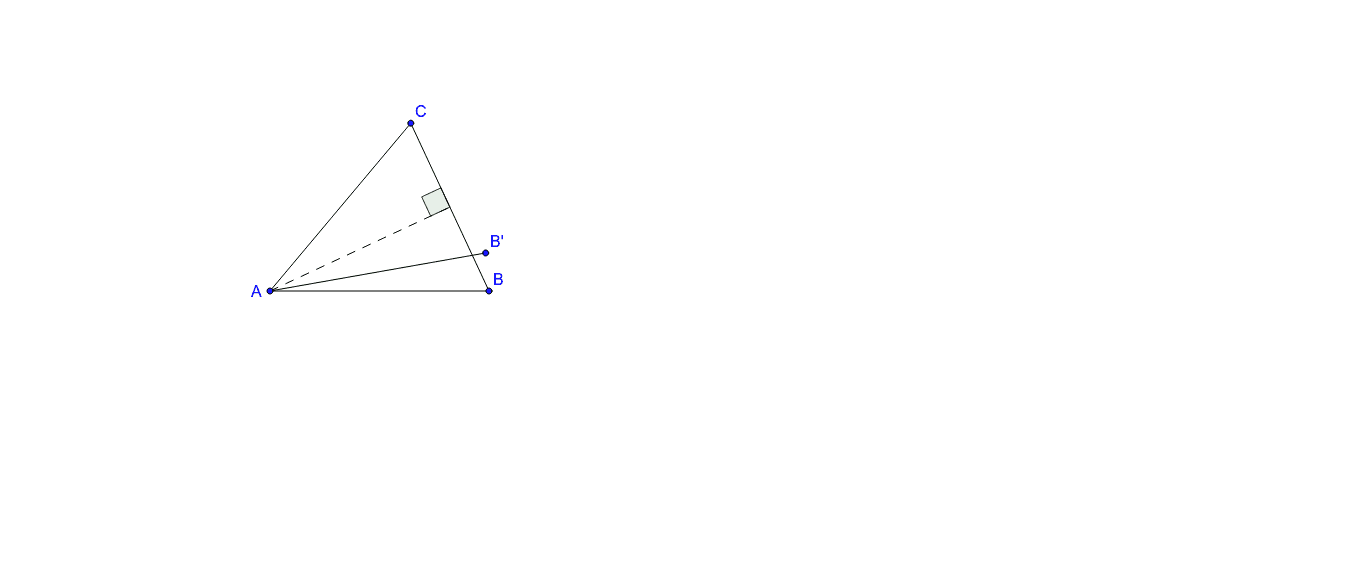
This example demonstrates the construction and properties of two isosceles triangles with congruent lateral sides. Key math concepts include the definition of isosceles triangles, congruence criteria, angle bisectors, and rotational symmetry. The construction uses commands like Segment, Rotate, LineBisector, Intersect, and Angle in GeoGebra. Suitable for high school geometry instruction, helping students understand the symmetry and congruence of isosceles triangles.
GeoGebra Commands & Parameters
Segment(A, B) → aRotate(A, 50*°, A) → A'Rotate(B, 50*°, A) → CSegment(A', C) → a'Rotate(A, 10*°, A) → A'_1Rotate(B, 10*°, A) → B'Segment(A'_1, B') → a'_1Segment(C, B) → bLineBisector(b) → cIntersect(c, b) → DSegment(A, D) → dAngle(C, D, A) → α
AI Drawing Prompt Reference
Draw two isosceles triangles with equal legs to demonstrate their symmetry and congruence. Start by creating a line segment, then rotate one endpoint by 50 degrees to form one leg of the first triangle and the other endpoint by 50 degrees to form the leg of the second triangle. Complete the triangles by drawing their bases, find the perpendicular bisector of each base, and connect the intersection point of the bisector and base to the opposite vertex. Finally, measure the vertex angles to highlight the properties of isosceles triangles.
The prompt above was compiled from the original drawing commands and is for reference only.