
Transformations: Translations of Polygons and Solids
Loading the math board and drawing, please wait…
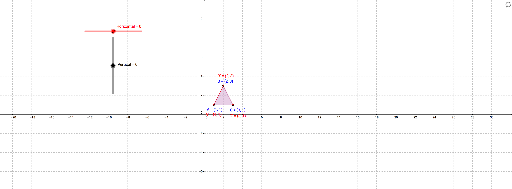
This GeoGebra example dynamically demonstrates the translation transformation of geometric objects such as polygons and cylinders in a plane. The core mathematical concept is translation, where every point of a figure moves the same distance in the same direction, preserving shape and size. The construction uses the Polygon command to create polygon poly1 with vertices A, B, C, and their images A', B', C' to form the translated polygon poly2. It also involves translating a cylinder and a cuboid, with horizontal and vertical translation vectors. Suitable for middle school and above to explore geometric transformations, and for teachers to illustrate properties like parallel and equal segments connecting corresponding points, and congruence of figures.
GeoGebra Commands & Parameters
Polygon(A, B, C) → poly1, c, a_1, b_1Polygon(A', B', C') → poly2, c', a', b'
AI Drawing Prompt Reference
Draw a dynamic example demonstrating translation transformations of geometric objects, including a polygon and its translated image, and a cylinder and cuboid with translation effects. Use different colors to distinguish original and translated shapes, and arrows to represent translation vectors, showing the equal distance and direction relationships between corresponding points before and after translation, emphasizing the preservation of shape and size.
The prompt above was compiled from the original drawing commands and is for reference only.