
Tiling Animation Based on the Snub Square Tiling
Loading the math board and drawing, please wait…
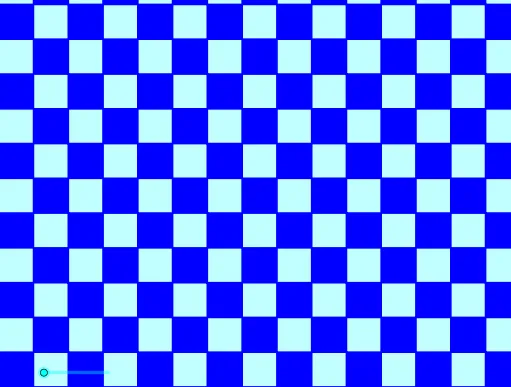
① This example demonstrates a dynamic tiling animation based on the snub square tiling, an Archimedean tiling, where rotating and mirroring transformations create evolving geometric patterns. ② Core mathematical concepts include Archimedean tilings, tessellations of regular polygons (squares, equilateral triangles, rhombi), symmetry transformations (rotation, reflection), and sequence generation. ③ Construction highlights: from the construction summary, the GeoGebra commands used include Rotate, Midpoint, Mirror, Polygon, Vector, and Sequence, involving objects such as points (A, B, C, D, E), polygons (poly1, poly2), and auxiliary elements (qq, q1, o), generating periodic tilings through sequences and transformations. ④ Suitable for high school or early university geometry classes, useful for exploring symmetry in tessellations, transformation groups, and animation design, as well as for mathematical art projects.
GeoGebra Commands & Parameters
Rotate(B, ((-q_1(a)) * 30°)) → B'Midpoint(A, B') → CMidpoint(O, B') → DMidpoint(O, A) → EMirror(O, C) → O'Polygon(O, A, O', B') → q1, o, a_1, o', b'Polygon(O, B', 4) → poly1, f, g, h, i, F, GMidpoint(B', O') → HMidpoint(O', A) → IMidpoint(G, O) → JMidpoint(G, F) → KMidpoint(D, K) → LPolygon(B', O', 4) → poly2, j, k, l, m, M, NMidpoint(F, N) → PMirror(B', P) → B''Polygon(F, B', N, B'') → q2, f_1, n, n_1, b''Midpoint(E, D) → QMidpoint(I, H) → RPolygon(B', D, S, E, A, I, T, H) → poly3, p, d, s, e, a_2, i_1, t, h_1Midpoint(B', F) → UPolygon(O, J, U, F, K, D) → poly4, o_1, j_1, u, f_2, k_1, d_1Midpoint(B', N) → VMidpoint(O', M) → WMidpoint(U, V) → ZMidpoint(N, B'') → A_1Midpoint(B'', F) → B_1Midpoint(N, M) → C_1Polygon(O', H, C_1, N, V, W) → poly5, q, h_2, c_1, n_2, v, wMidpoint(B_1, A_1) → D_1Polygon(U, F_1, V, B') → q3, u_1, r, v_1, bPolygon(B_1, E_1, A_1, B'') → q4, b_1, e_1, c, g_1Polygon(B'', F, G, O, A, O', M, N) → poly6, l_1, f_3, g_2, o_2, a_3, m_1, m_2, n_3Vector(G, B'') → w_1Vector(G, A) → p_1Sequence(Sequence[Polygon[Translate[B'', Vector[(i * p_1) + (j * w_1)]], Translate[F, Vector[(i * p_1) + (j * w_1)]], Translate[G, Vector[(i * p_1) + (j * w_1)]], Translate[O, Vector[(i * p_1) + (j * w_1)]], Translate[A, Vector[(i * p_1) + (j * w_1)]], Translate[O', Vector[(i * p_1) + (j * w_1)]], Translate[M, Vector[(i * p_1) + (j * w_1)]], Translate[N, Vector[(i * p_1) + (j * w_1)]]], i, -3, 3], j, -3, 3) → l2Sequence(Sequence[Translate[Lpo, Vector[(i * p_1) + (j * w_1)]], i, -3, 3], j, -3, 3) → l1
AI Drawing Prompt Reference
Create an animation of a dynamic tiling based on the snub square tiling, an Archimedean tiling, showing how rotating and mirroring transformations create evolving geometric patterns. The core should include tessellations of squares, equilateral triangles, and rhombi, with sequences and symmetry transformations (rotation, reflection) generating periodic tilings. The animation should demonstrate symmetry in tessellations, transformation groups, and animation design.
The prompt above was compiled from the original drawing commands and is for reference only.