
Three Equal Lines: Circumcircle and Function-Based Geometric Construction
Loading the math board and drawing, please wait…
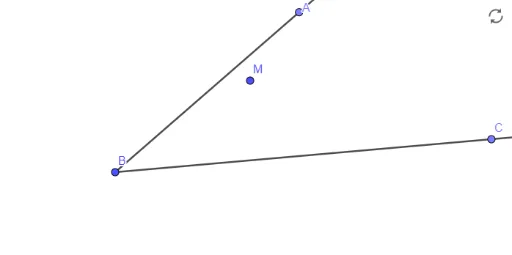
This GeoGebra example demonstrates the construction of three line segments of equal length, visually linked to a circumscribed circle, step functions, and the normal distribution. The core mathematical concepts include the geometric constraint of equal-length segments, properties of circumcircles, and the overlay of function graphs (such as step functions and normal distribution) with geometric objects. The construction uses the Ray and Point commands to create key points M, B, C₁, D, A, and C, while functions f and g control the positions of segment endpoints, resulting in three equal-length lines. This example is suitable for middle and high school mathematics teachers for classroom demonstrations, helping students intuitively understand the construction of equal-length segments in dynamic geometry, and can be extended to explore interdisciplinary connections between geometry and functions. It also serves as a self-guided exploration for students interested in geometric-function hybrids.
GeoGebra Commands & Parameters
Ray(B, C_1) → fRay(B, D) → gPoint(g) → APoint(f) → C
AI Drawing Prompt Reference
Draw a geometric figure with a circumscribed circle and three line segments of equal length. From a common starting point, extend two rays: one to a point on the circle, the other to a point outside the circle. Place a point on each ray such that the distances from the starting point to these points and to another point on the circle are all equal. Overlay step-function and normal-distribution curves in the background, visually linking the segment endpoints to the function graphs. Ensure the equal-length constraint and the function overlay are clearly visible.
The prompt above was compiled from the original drawing commands and is for reference only.