
Surface Area of Solids of Revolution
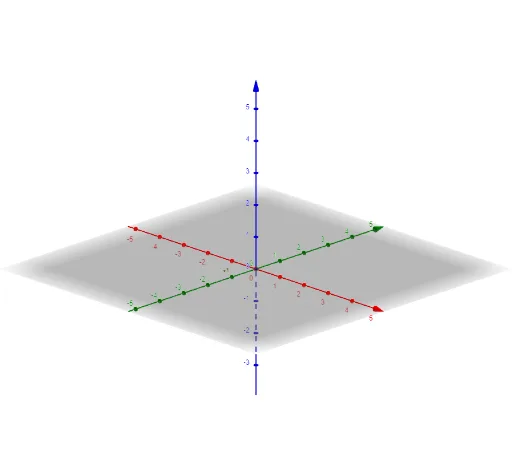
Loading the math board and drawing, please wait…
This example demonstrates the calculation of the surface area of solids of revolution. Key mathematical concepts include the surface area formula for solids of revolution and coordinate geometry. Using GeoGebra commands such as Line, CurveCartesian, and Surface, the generation process of solids of revolution and the calculation of surface area can be dynamically displayed. Suitable for high school mathematics education and learning.
GeoGebra Commands & Parameters
Line((0, 0, 0), (1, 0, 0)) → fCurveCartesian(t, k(t), t, j, l) → aSurface(a, b, f) → cCurveCartesian(cos(t) + 1, sin(t), t, 0, (2 * pi)) → dLine((0, 0, 0), (0, 1, 0)) → gCurveCartesian((2 / 3 * t^(1.5)), (2 * sqrt(t)), t, 0, 2) → hSurface(h, b, g) → iTextfield(k) → InputBox1Textfield(j) → InputBox2Textfield(l) → InputBox3CurveCartesian(k(t), t, t, j, l) → oSurface(o, b, g) → e
AI Drawing Prompt Reference
Draw the surface area of solids of revolution, start by drawing the x-axis, then plot a curve defined by parameter t, rotate this curve around the x-axis to form a solid of revolution and calculate its surface area. Next, plot a circular curve and rotate it around the x-axis to form another solid of revolution and calculate its surface area. Finally, input the function expressions and parameter ranges to dynamically display the generation process of the solids of revolution and the surface area calculations.
The prompt above was compiled from the original drawing commands and is for reference only.