
Reducing Margin of Error with Random Trials and Trigonometric Geometry
Loading the math board and drawing, please wait…
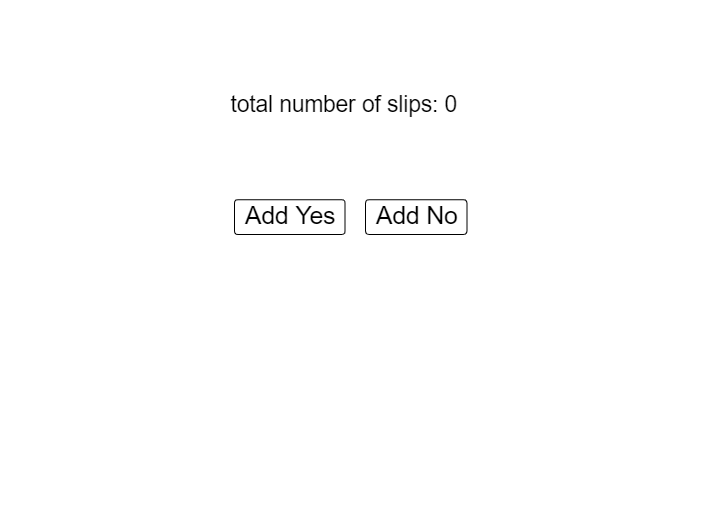
This example demonstrates how repeating random sampling and using probability structure can reduce the “margin of error” in an estimate. Geometric elements (including equilateral triangle relationships) are used alongside probability simulation to build intuition about how modeling choices affect uncertainty. The key mathematical ideas include discrete probability reasoning (e.g., success/failure outcomes and geometric-distribution style thinking), the role of trigonometric functions in connecting geometric quantities, and the statistical intuition that error bounds shrink when more data are collected. Construction highlights in GeoGebra: it uses the commands Join and Shuffle to assemble the interactive scene and to randomize the “slips” drawn from a bag. The objects numNo, numYes, listOfSlips, bagOfSlips, and numDraw support counting outcomes and managing the draw process. Buttons and controls such as button1–button5, reset, step, and the text objects (text1, text2) drive step-by-step simulation and update the displayed results, allowing learners to observe how the estimated margin of error changes. Suitable for middle school to high school statistics and interactive math lessons, especially for introducing uncertainty and error bounds through simulation.
GeoGebra Commands & Parameters
Join({Sequence["Yes", i, 1, numYes], Sequence["No", i, 1, numNo]}) → listOfSlipsShuffle(listOfSlips) → bagOfSlips, ?
AI Drawing Prompt Reference
Create a visual, interactive-style simulation that explains how repeating random trials reduces the “margin of error.” First, represent outcomes as a mixed collection of labeled pieces: a sequence containing several “Yes” and several “No,” then randomly shuffle these to form a “bag of slips.” Simulate drawing slips step by step, tally the number of “Yes” versus “No,” and continually update on-screen text that reports the changing estimate and its error bound. Include a geometry component that connects to trigonometric intuition, such as using relationships related to an equilateral triangle, to support how geometric quantities relate to the probability modeling.
The prompt above was compiled from the original drawing commands and is for reference only.