
Pyramid Volume Calculation by Prabhash Paudel
Loading the math board and drawing, please wait…
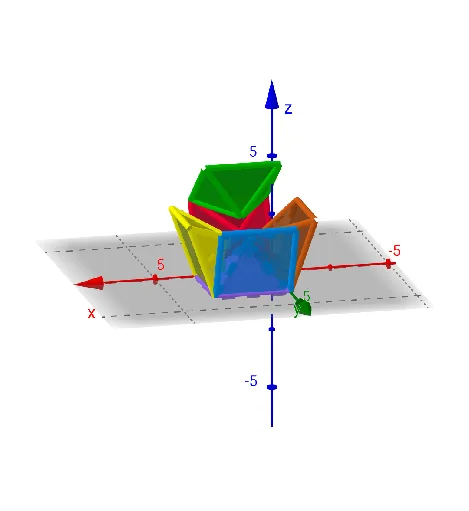
This example demonstrates the calculation of a pyramid's volume. It involves core mathematical concepts like volume formulas, polygon area calculation, and solid geometry. Constructed using commands such as Point, Cube, Net, Polygon, Pyramid, and objects like a, A, B, C, cube. Suitable for high school mathematics education to understand volume formulas and 3D shape construction.
GeoGebra Commands & Parameters
Point(Circle[B, Distance[A, B], Segment[A, B]]) → CCube(A, B, C) → cube, D, faceCDHG, faceEFGH, edgeAD, edgeAB, edgeBC, edgeCD, edgeAE, edgeDH, edgeEH, edgeEF, E, edgeBF, edgeFG, edgeCG, edgeGH, F, G, H, faceABCD, faceADHE, faceABFE, faceBCGFNet(cube, b) → c, I, R, S, T, U, V, faceIJKL, faceILNM, faceIJRQ, faceJKTS, faceKLVU, J, faceMNOP, edgeIL, edgeIJ, edgeJK, edgeKL, edgeLN, edgeMN, edgeIM, edgeIQ, edgeQR, K, edgeJR, edgeJS, edgeST, edgeKT, edgeKU, edgeUV, edgeLV, edgeNO, edgeOP, edgeMP, L, M, N, O, P, QPolygon(B, C, T, S) → pol1, f, g, i, jPyramid(pol1, (-h)) → pyr1, W, faceBCW, faceCTW, faceSTW, faceBSW, edgeBW, edgeCW, edgeTW, edgeSWPolygon(C, D, V, U) → pol2, c_1, d, v, uPyramid(pol2, (-h)) → pyr2, Z, face1, face2, face3, face4, edge1, edge2, edge3, edge4Polygon(D, I, M, N) → pol3, d_1, i_1, m, nPyramid(pol3, (-h)) → pyr3, A_1, face5, face6, face7, face8, edge5, edge6, edge7, edge8Polygon(M, N, O, P) → pol4, m_1, n_1, o, pPyramid(pol4, h) → pyr4, B_1, face9, face11, face12, face10, edge9, edge10, edge11, edge12Polygon(B, R, Q, I) → pol5, b_1, r, q, i_2Pyramid(pol5, (-h)) → pyr5, C_1, face14, face16, face15, face13, edge13, edge16, edge15, edge14Polygon(B, C, D, I) → pol6, b_2, c_2, d_2, i_3Pyramid(pol6, h) → pyr6, D_1, face17, face19, face20, face18, edge17, edge18, edge19, edge20
AI Drawing Prompt Reference
Draw a pyramid volume calculation model. Start by creating a cube, then unfold its surface. Next, draw four triangles on the unfolded surface, each serving as the base for a pyramid. Finally, ensure that the apexes of all pyramids are directly above or below the center of the cube, forming a complete pyramid volume model.
The prompt above was compiled from the original drawing commands and is for reference only.