
Probability Wheel Random Demo
Loading the math board and drawing, please wait…
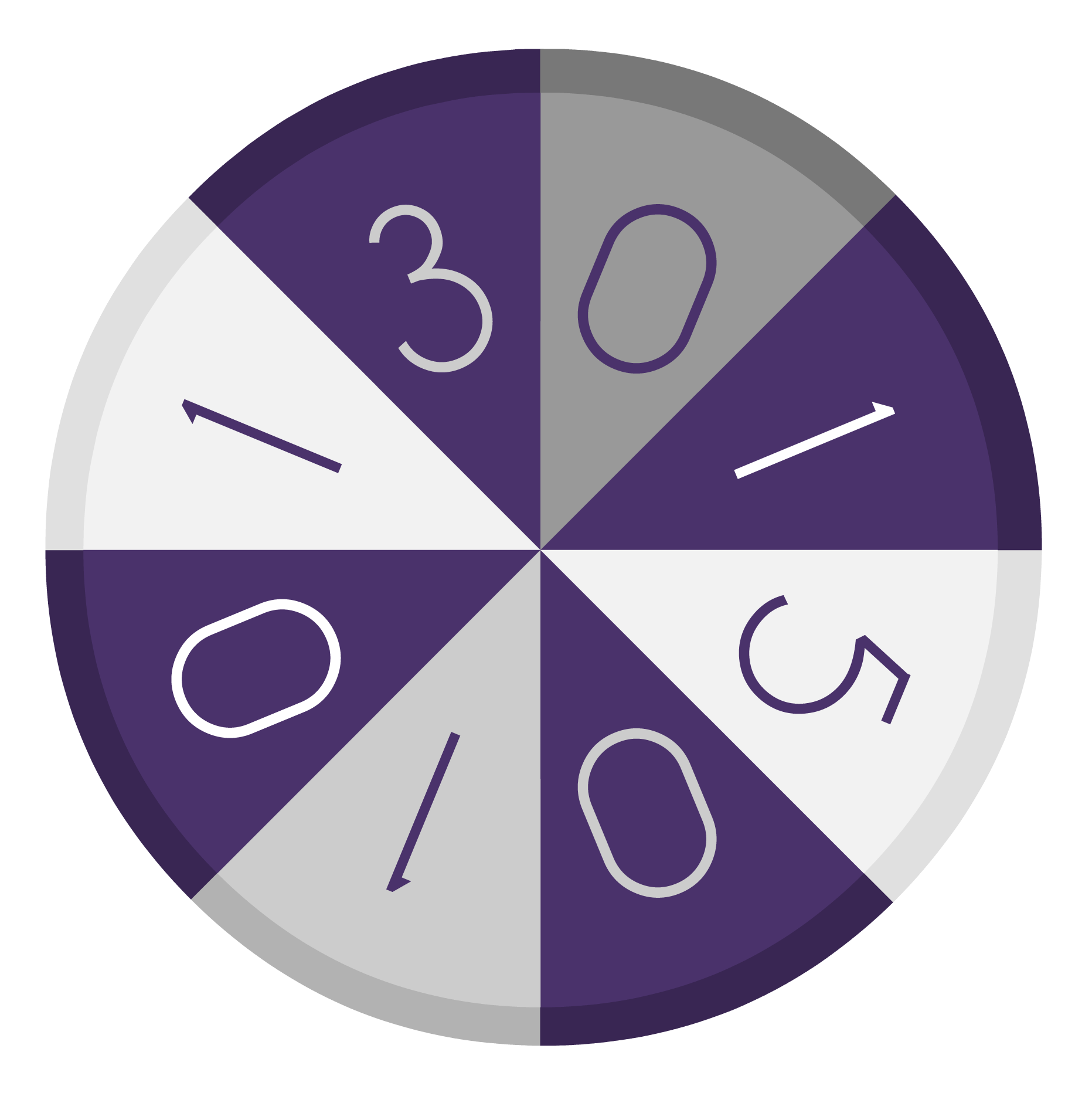
This interactive GeoGebra example demonstrates a probability wheel that randomly spins to illustrate fundamental principles of probability distribution. The core mathematical concepts include random events in probability theory, random number generation, and rotation transformations in geometry. Construction details: The Random command generates random numbers to determine rotation angles, the Rotate command creates dynamic spinning effects, and If conditional statements evaluate landing positions. Color-coded sections (GRBY: Green, Red, Blue, Yellow) visually represent different probability intervals. This example is suitable for introducing basic probability concepts in primary and secondary mathematics education, as well as for demonstrating classical probability models in introductory statistics courses.
GeoGebra Commands & Parameters
Random(721, 1079) → bIf(764 < b < 766, b + 1, If[809 < b < 811, b + 1, If[854 < b < 856, b + 1, If[899 < b < 901, b + 1, If[944 < b < 946, b + 1, If[989 < b < 991, b + 1, If[1034 < b < 1036, b + 1, If[1079 < b < 1081, b + 1, b]]]]]]]) → cRotate(wheel, a°, I) → wheel'If(765 > c > 720, 0, If[810 > c > 765, 1, If[855 > c > 810, 5, If[900 > c > 855, 0, If[945 > c > 900, 1, If[990 > c > 945, 0, If[1035 > c > 990, 1, If[1080 > c > 1035, 3]]]]]]]) → RIf(765 > c > 720, 1, If[810 > c > 765, 3, If[855 > c > 810, 0, If[900 > c > 855, 1, If[945 > c > 900, 5, If[990 > c > 945, 0, If[1035 > c > 990, 1, If[1080 > c > 1035, 0]]]]]]]) → GIf(765 > c > 720, 5, If[810 > c > 765, 0, If[855 > c > 810, 1, If[900 > c > 855, 0, If[945 > c > 900, 1, If[990 > c > 945, 3, If[1035 > c > 990, 0, If[1080 > c > 1035, 1]]]]]]]) → BIf(765 > c > 720, 1, If[810 > c > 765, 0, If[855 > c > 810, 1, If[900 > c > 855, 3, If[945 > c > 900, 0, If[990 > c > 945, 1, If[1035 > c > 990, 5, If[1080 > c > 1035, 0]]]]]]]) → Y
AI Drawing Prompt Reference
Draw a circular probability wheel centered at a rotation point, divided into four colored sectors — green, red, blue, and yellow — each with a different angular width representing distinct probabilities. A fixed pointer sits at the top. When activated, a random angle within a defined range is generated, the whole wheel rotates around its center by that angle and gradually slows to a stop; then a conditional check determines which sector the pointer lands on and displays the associated numeric outcome for that color (e.g., scores for red, green, blue, yellow). The animation shows the spinning motion and final landing position.
The prompt above was compiled from the original drawing commands and is for reference only.