
Perpendicular Bisector of a Line Segment by hrawson20
Loading the math board and drawing, please wait…
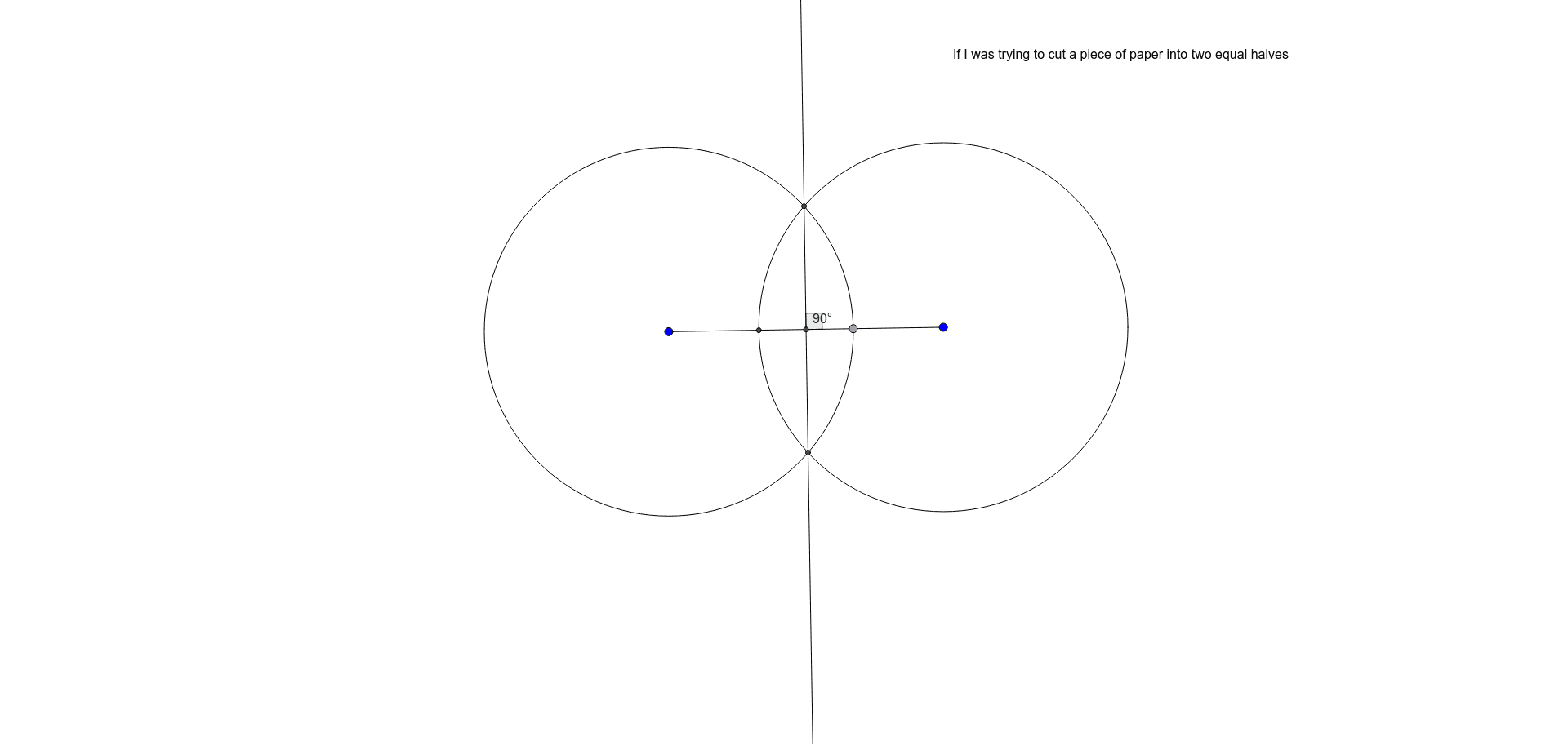
This example demonstrates how to construct the perpendicular bisector of a line segment. Key mathematical concepts include the definition and properties of the perpendicular bisector. Using GeoGebra commands such as Segment, Circle, Intersect, and Line, the construction process is illustrated. Suitable for students at the junior high school level and above, focusing on geometric construction and the concept of perpendicular bisectors.
GeoGebra Commands & Parameters
Segment(A, B) → fPoint(f) → CCircle(A, Segment[A, C]) → cCircle(B, Segment[A, C]) → dIntersect(c, d, 1) → DIntersect(d, f, 1) → EIntersect(c, d, 2) → FLine(D, F) → gIntersect(g, f) → GAngle(C, G, D) → α
AI Drawing Prompt Reference
Draw a horizontal line segment. Pick a point on it. Using each endpoint as center, draw two circles with radius equal to the distance from the chosen point to the left endpoint. These circles intersect at two points. Connect these two intersection points with a straight line, which crosses the original segment at its midpoint. Then draw a ray from the midpoint to the upper intersection point, and mark the angle between this ray and the segment.
The prompt above was compiled from the original drawing commands and is for reference only.