
Number Reading Practice - Level 2
Loading the math board and drawing, please wait…
In collections
Ganze Zahlen & Arbeiten mit der Zahlengerade
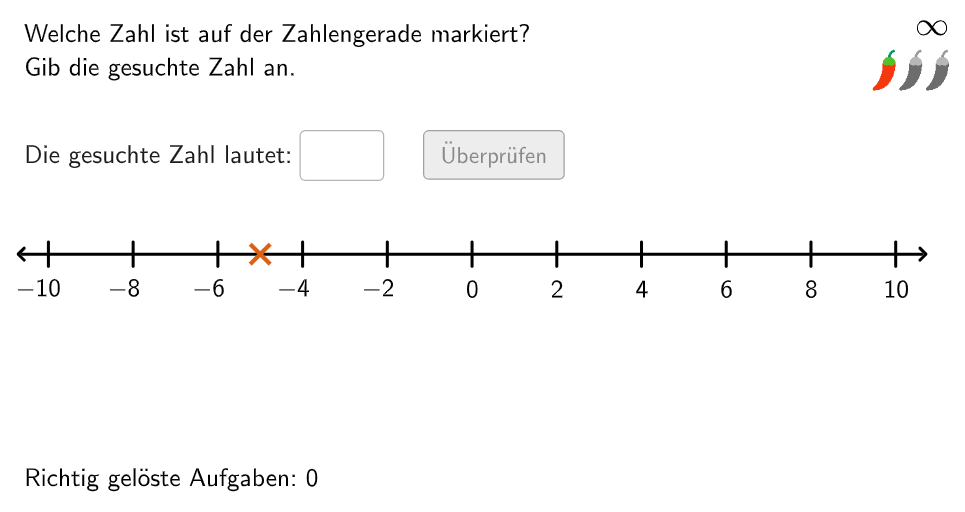
This example demonstrates enhancing number reading skills through solving mathematical problems. Core math concepts include comparing and ordering integers (using number line) and interpreting integers in real-world contexts. Construction highlights the use of GeoGebra commands like Join, Sequence, If, Element, Textfield, Defined, Segment, Translate with objects such as txtQuestion, btnValidate, attemptCount. Suitable for 5-6th grade students.
GeoGebra Commands & Parameters
Join({{2}, Sequence[RandomElement[{2, 3, 4, 5}], k, 1, 99]}) → StepCList1Sequence(RandomElement[{2, 3, 4, 5}], k, 1, 100) → StepCList2, {3, 3, 4, 5, 3, 5, 5, 4, 4, 2, 3, 4, 5, 2, 2, 3, 2, 2, 5, 4, 2, 2, 4, 2, 4, 4, 3, 3, 3, 3, 3, 5, 5, 5, 5, 3, 3, 4, 4, 5, 3, 5, 4, 4, 4, 2, 5, 4, 2, 4, 4, 4, 5, 4, 4, 2, 4, 3, 5, 4, 4, 4, 2, 5, 2, 4, 5, 5, 4, 4, 5, 3, 5, 5, 4, 2, 3, 5, 4, 2, 5, 2, 4, 5, 5, 4, 3, 3, 4, 5, 4, 4, 3, 2, 4, 5, 3, 4, 4, 3}Join({{2}, Sequence[RandomElement[{2, 4, 6, 8, 10}], k, 1, 99]}) → StepNList1Sequence(RandomElement[{2, 4, 6, 8, 10}], k, 1, 100) → StepNList2, {6, 8, 6, 8, 4, 2, 10, 8, 10, 4, 8, 8, 8, 2, 6, 4, 10, 8, 4, 10, 6, 4, 2, 10, 10, 4, 2, 8, 10, 2, 8, 8, 2, 6, 10, 2, 2, 4, 6, 6, 8, 6, 10, 8, 8, 6, 8, 10, 6, 6, 8, 8, 8, 4, 10, 8, 6, 10, 8, 4, 8, 8, 10, 10, 6, 6, 6, 4, 8, 2, 8, 8, 10, 10, 6, 6, 6, 6, 4, 8, 2, 10, 4, 10, 10, 8, 8, 8, 10, 8, 4, 6, 10, 2, 8, 6, 10, 4, 8, 8}Sequence((Random[-10, -2] * StepNList2(k)), k, 1, 100) → StartList2, {-36, -72, -54, -56, -16, -6, -70, -24, -70, -36, -64, -56, -40, -20, -24, -16, -90, -80, -16, -50, -36, -20, -4, -100, -100, -24, -6, -32, -80, -16, -72, -64, -6, -30, -100, -4, -8, -8, -60, -36, -80, -18, -100, -72, -56, -36, -72, -60, -60, -42, -80, -80, -80, -8, -90, -24, -18, -60, -64, -40, -64, -72, -60, -60, -36, -60, -42, -32, -48, -16, -72, -32, -20, -80, -48, -48, -54, -48, -16, -48, -16, -90, -40, -50, -100, -48, -80, -32, -100, -80, -8, -36, -70, -16, -56, -36, -60, -40, -64, -32}Sequence(RandomElement[{2, 3, 4, 5}], k, 1, 100) → StepCList3, {4, 5, 2, 3, 5, 5, 3, 5, 2, 2, 2, 5, 3, 3, 3, 4, 4, 4, 5, 2, 5, 4, 4, 5, 4, 3, 2, 2, 4, 5, 4, 2, 3, 5, 4, 5, 3, 4, 3, 2, 4, 4, 2, 5, 4, 2, 5, 4, 3, 4, 5, 4, 5, 5, 4, 2, 5, 2, 2, 4, 3, 4, 2, 4, 4, 3, 2, 4, 5, 4, 3, 4, 3, 5, 5, 2, 4, 2, 3, 5, 2, 4, 2, 4, 5, 2, 2, 3, 2, 5, 4, 3, 2, 5, 2, 4, 2, 5, 5, 2}If(level ≟ 1, 11, level ≟ 2, 11, 11) → anzahlSequence((-5 * StepNList1(k)), k, 1, 100) → StartList1, {-10, -20, -20, -20, -50, -30, -40, -50, -20, -50, -50, -50, -20, -20, -40, -30, -10, -30, -30, -40, -30, -30, -50, -40, -30, -30, -10, -30, -10, -30, -40, -20, -30, -50, -40, -10, -40, -30, -40, -40, -30, -20, -40, -30, -50, -30, -40, -10, -20, -10, -30, -10, -10, -20, -30, -40, -20, -40, -30, -40, -10, -30, -50, -20, -10, -40, -10, -20, -30, -40, -40, -30, -20, -40, -40, -50, -10, -20, -10, -20, -10, -40, -30, -40, -30, -50, -30, -40, -20, -40, -40, -40, -50, -10, -50, -40, -30, -30, -50, -50}Sequence(RandomElement[{2, 4, 6, 8, 10}], k, 1, 100) → StepNList3, {10, 8, 4, 10, 4, 4, 8, 10, 4, 2, 8, 2, 10, 6, 4, 6, 8, 10, 2, 6, 10, 10, 8, 4, 8, 10, 4, 6, 10, 6, 8, 6, 10, 2, 2, 2, 6, 8, 4, 6, 10, 8, 8, 6, 4, 4, 10, 4, 2, 8, 2, 4, 8, 8, 2, 2, 10, 6, 8, 2, 8, 10, 10, 2, 8, 4, 6, 4, 6, 6, 10, 8, 8, 10, 2, 8, 8, 8, 6, 2, 8, 4, 6, 10, 6, 2, 4, 6, 4, 2, 10, 6, 4, 4, 4, 10, 2, 4, 4, 4}Sequence((Random[-12, 6] * StepNList3(k)), k, 1, 100) → StartList3, {40, 40, 8, -20, -40, -4, -16, -70, -32, 8, 24, -8, -40, -24, -32, -48, 32, -40, -20, -42, -110, -80, -48, -12, -40, -20, -44, -54, -80, -30, 8, 12, 30, -18, -14, -4, -54, 0, 4, -42, 60, -64, -32, 6, -20, 4, 30, 4, 0, -8, -10, 24, -96, -8, 4, 8, -20, 0, -96, -8, 24, -30, 60, -20, -24, 0, 18, -40, 24, -30, 0, -8, 8, 20, 12, 0, -8, 48, 18, -24, -40, -4, 0, 10, 24, 0, -40, -60, 16, -4, -110, 30, 12, -24, -48, -100, -10, -28, 20, -20}Element(If[level ≟ 1, StepNList1, level ≟ 2, StepNList2, StepNList3], counter) → stepNIf(level ≟ 1, StartList1(counter), level ≟ 2, StartList2(counter), StartList3(counter)) → startNumberSequence(RandomElement[Join[{Sequence[m, m, StartList2(k) + stepN / 2, StartList2(k) + (5 * stepN), stepN], Sequence[m, m, StartList2(k) + stepN / 2, StartList2(k) + (10 * stepN), stepN]}]], k, 1, 100) → NumberList2, {-25, -61, -47, -51, -7, 7, -61, -11, -67, -27, -51, -49, -37, -15, -19, -15, -89, -61, -9, -47, -19, -11, 3, -99, -97, -23, 9, -27, -75, 1, -53, -49, -3, -21, -83, -1, -5, -5, -51, -27, -63, -1, -87, -71, -55, -31, -65, -55, -55, -33, -65, -63, -79, -5, -85, -19, -17, -53, -55, -37, -53, -71, -57, -55, -29, -51, -37, -31, -45, -7, -61, -13, -11, -75, -45, -41, -47, -31, -13, -39, -5, -85, -39, -49, -97, -39, -69, -15, -83, -69, -7, -35, -53, -13, -39, -31, -45, -25, -49, -21}If(show0, Mod[(-startNumber), stepC], 0) → diffSequence(RandomElement[Join[{Sequence[m, m, StartList1(k) + stepN / 2, StartList1(k) + (5 * stepN), stepN], Sequence[m, m, StartList1(k) + stepN / 2, StartList1(k) + (10 * stepN), stepN]}]], k, 1, 100) → NumberList1, {-5, -9, -7, -9, -39, -17, -33, -41, -17, -41, -43, -47, -3, -5, -31, -23, 7, -25, -21, -25, -29, -23, -41, -33, -11, -13, 7, -29, -5, -27, -31, -15, -23, -43, -37, -5, -35, -13, -33, -37, -27, -19, -35, -29, -31, -25, -31, -3, -19, -7, -13, -5, -3, -3, -25, -39, -11, -37, -21, -37, -9, -21, -41, -5, -9, -21, 5, -7, -29, -31, -23, -27, -3, -31, -21, -35, -1, -19, -5, -15, -1, -27, -21, -23, -25, -49, -27, -35, -11, -33, -31, -37, -47, -9, -47, -33, -15, -27, -43, -47}Sequence(RandomElement[Sequence[m, m, StartList3(k) + stepN / 2, StartList3(k) + (10 * stepN), stepN]], k, 1, 100) → NumberList3, {45, 45, 19, -5, -29, 7, -5, -55, -21, 13, 27, -3, -25, -23, -23, -45, 35, -25, -19, -23, -97, -73, -33, 5, -39, -1, -35, -39, -65, -21, 11, 19, 43, -13, -9, 13, -47, 7, 11, -37, 65, -51, -25, 25, -15, 5, 33, 7, 13, -3, -7, 41, -87, 3, 17, 17, -13, 7, -79, -1, 41, -13, 71, -15, -23, 13, 23, -21, 39, -19, 3, 7, 19, 37, 31, 19, 11, 67, 35, -11, -23, 11, 7, 25, 41, 11, -35, -45, 33, 1, -99, 43, 31, -19, -47, -81, 1, -11, 39, -9}Element(If[level ≟ 1, NumberList1, level ≟ 2, NumberList2, NumberList3], counter) → numberSequence(Random[1, 10], i, 1, 10) → randomNumbers, {4, 8, 7, 6, 4, 3, 8, 2, 10, 5}Element(randomNumbers, Mod[questionCount, Length[randomNumbers]] + 1) → randomNumberTextfield(input) → inputBoxDefined(input) → clickableBtnValidateSegment(Origin + ((-lengthAxis) - 0.5, 0), Origin + (lengthAxis + 0.5, 0)) → segAxisSequence(Origin + ((-lengthAxis), 0) + (((k * 2) * lengthAxis / (anzahl - 1)), 0), k, 0, anzahl - 1) → PointsListSequence(k, k, startNumber, startNumber + (stepN * 20), stepN) → NumbersOnAxisSequence(Text[(("\textsf{\(" * NumbersOnAxis(k)) * "\)}"), PointsList(k) + (If[NumbersOnAxis(k) < 0, -0.166, 0], (-segLength2)), false, true, 0, -1], k, 1, Length[NumbersOnAxis]) → CapListSequence(Segment[PointsList(k) + (0, (-segLength2)), PointsList(k) + (0, segLength2)], k, 1, 11, 1) → SegAxisListSequence(Origin + ((-lengthAxis), 0) + (((k * 2) * lengthAxis / (anzahl - 1)), 0), k, 0, anzahl - 1, 0.5) → SelectablePointsSequence(k, k, startNumber, startNumber + (stepN * 20), stepN / 2) → AxisNumberTranslate(imgChilliRot1, Vector[PosImgChilliRot1, PosImgChilliRot1 + ((0.8 * dimChilli), 0)]) → imgChilliRot2Translate(imgChilliRot1, Vector[(2 * Vector[PosImgChilliRot1, PosImgChilliRot1 + ((0.8 * dimChilli), 0)])]) → imgChilliRot3Translate(imgChilliGrau1, Vector[PosImgChilliRot1, PosImgChilliRot1 + ((0.8 * dimChilli), 0)]) → imgChilliGrau2
AI Drawing Prompt Reference
Draw a horizontal number line with extended ends, evenly spaced tick marks and numeric labels. Above the axis, display a random integer question with an input box and a validate button. The number range and step size vary by difficulty level. Below or beside the axis, place three chili icons, two colored and one gray, to indicate attempts or progress. The layout is clean and suitable for student number reading practice.
The prompt above was compiled from the original drawing commands and is for reference only.