
Musical Tones Mathematical Representation
Loading the math board and drawing, please wait…
In collections
geometriadinamica.es
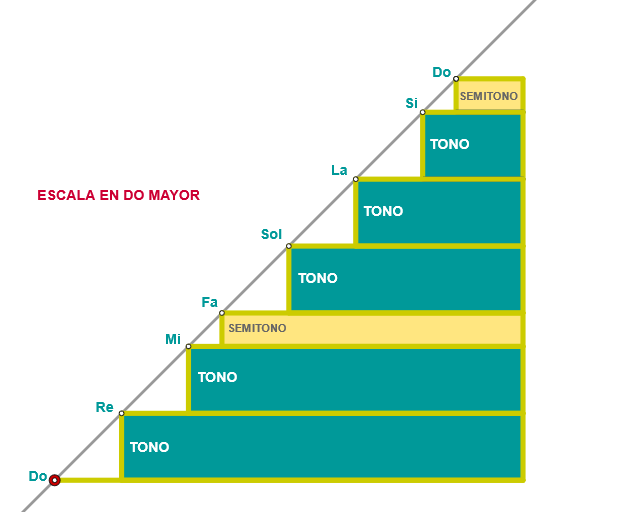
This example demonstrates the geometric representation of musical tones using mathematical graphics. It involves core math concepts like coordinate systems, polygon construction, function graphs, and trigonometric functions. Construction highlights include commands like Point, Polygon, Segment, Midpoint, Line, and If from the GeoGebra command summary. Suitable for high school students and math enthusiasts exploring the intersection of music and mathematics.
GeoGebra Commands & Parameters
Point(g) → DO4Polygon(M_1, DO5, O_1, Q_1) → poly12, m_2, n_2, o_1, q_1Polygon(B_1, SI4, Q_1, I) → poly7, b_4, si4, q_2, iSegment(DO4, K) → aPolygon(V, RE4, O, K) → poly9, v_3, re4, o, k_1Polygon(W, MI4, S, O) → poly11, w_1, mi4, s, o_2Polygon(J, FA4, D_1, S) → poly13, j, fa4, d_1, s_1Polygon(Z, SOL4, F_1, D_1) → poly5, z_2, sol4_1, f_1, d_2Polygon(A_1, LA4, I, F_1) → poly2, a_2, la4_1, i_1, f_3Midpoint(j) → AMidpoint(m_2) → ELine(DO, DO2) → eIf(ver, 1, 0) → x5
AI Drawing Prompt Reference
Draw a geometric representation of musical tones, including a circular coordinate system, multiple polygons, segments, and points. The graph contains basic elements of music tones, such as notes, lines, and circles. The polygons' vertices and edges form the graph of music tones, segments connect the polygons' vertices, and points represent key positions of music tones. The construction order is to first draw the polygons, then connect the polygons' vertices, and finally add points and segments.
The prompt above was compiled from the original drawing commands and is for reference only.