
Linear Functions - The Basics
Loading the math board and drawing, please wait…
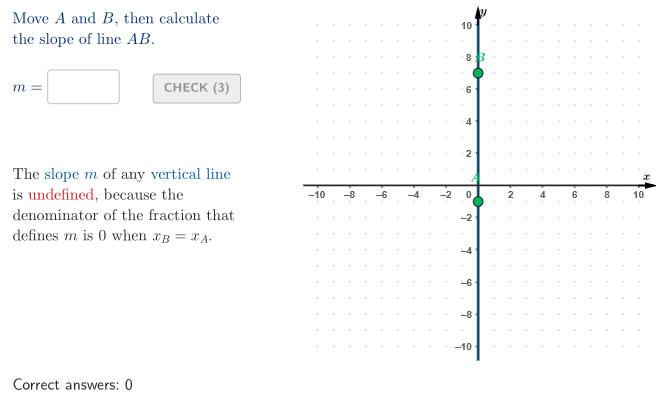
This interactive GeoGebra activity demonstrates how to determine the slope of a linear function using two given points. It covers the core concepts of linear functions, slope, and the two-point form of a line. The construction uses commands such as Point, Line, and Slope to create the graph and calculate the slope, while Shuffle and Element generate random point pairs for practice. Interactive text fields and buttons allow users to input answers and receive immediate feedback. Suitable for middle school or high school students learning about linear functions and slope, this activity provides a hands-on way to explore the relationship between points and the slope of a line.
GeoGebra Commands & Parameters
Shuffle({1, 2, 3, 4, 5, 6, 7}) → allCaseNum, {5, 2, 1, 7, 3, 4, 6}Shuffle(Sequence[t, t, -6, 6, 1] \ {-1, 1}) → allCompX, {-2, 2, 6, -6, 5, 0, -5, 3, 4, -3, -4}Shuffle(Sequence[t, t, -6, 6, 1] \ {0, -1, 1}) → allCompY, {-4, 6, 3, -5, 2, 4, -6, -3, -2, 5}Shuffle(Join[Sequence[Sequence[(j, k), j, -10, 10, 1], k, -10, 10, 1]]) → bigGrid, {(0, -7), (-7, -7), (7, 5), (-6, 7), (2, 1), (1, -2), (-3, -9), (-5, 7), (-4, 3), (-3, 6), (2, -2), (-8, 0), (5, 7), (2, 3), (-8, 1), (10, -2), (4, 8), (-9, -4), (8, -6), (6, 5), (7, -7), (5, 8), (-3, 8), (-7, 9), (-2, 2), (5, 2), (10, -7), (2, -7), (0, -5), (4, 7), (-8, 4), (-4, -10), (9, 8), (8, -9), (-10, 8), (6, 1), (-3, -5), (-7, -9), (9, 5), (-8, -5), (8, 1), (6, 7), (-3, -2), (-9, -2), (-10, 5), (-10, -5), (5, 1), (10, 5), (0, 1), (8, 2), (1, -1), (9, 1), (4, -6), (-4, 10), (-8, 3), (-8, 5), (0, 5), (10, -4), (8, -2), (-8, -9), (2, 7), (0, 9), (8, 8), (3, -8), (5, -6), (4, 5), (-9, -10), (4, -1), (0, 6), (-4, -4), (-7, 5), (-2, 10), (-9, 2), (7, 4), (2, 9), (-8, 2), (7, 10), (-3, -10), (1, 6), (8, -5), (-1, 6), (1, -9), (8, -4), (4, 2), (1, -7), (-4, 5), (9, -8), (0, -2), (10, 7), (-2, -6), (4, -8), (9, -3), (2, 6), (-6, -8), (-10, -2), (-6, 1), (1, -4), (2, 5), (-6, -5), (-3, 10), (10, 9), (7, -1), (-7, 1), (10, -5), (-10, -8), (3, 7), (-10, 6), (9, -4), (6, -8), (-4, -9), (0, -10), (9, 9), (-10, 0), (8, -8), (4, -5), (7, -8), (-7, -1), (-5, 0), (-4, 9), (1, 5), (5, -9), (7, -2), (8, 7), (1, 2), (-10, -3), (-8, 8), (-7, 0), (5, -7), (-5, -7), (4, -3), (-9, 4), (3, -7), (3, 2), (8, -10), (-2, 1), (-5, 10), (-6, 3), (1, 10), (-1, -9), (-3, -1), (6, 4), (-2, 7), (3, -10), (-1, 5), (-9, 3), (-10, 3), (-2, -3), (-1, -1), (0, 4), (-3, 9), (4, -9), (-7, -4), (-9, -1), (-8, 9), (4, -7), (10, -3), (-3, 0), (4, -10), (-4, -2), (7, 1), (0, -8), (6, -1), (8, 6), (9, -5), (2, -6), (7, 6), (-9, 5), (-10, -1), (7, -4), (4, 3), (4, 6), (-6, -4), (6, 9), (-2, 8), (-9, 1), (-3, 1), (-1, 9), (-2, 5), (5, 9), (4, 1), (5, 3), (-2, 0), (8, 0), (5, 4), (6, -2), (-8, -10), (5, -4), (-5, 8), (-9, 8), (-7, 8), (-5, -2), (-4, 8), (-2, 4), (8, 3), (8, -7), (3, -5), (0, 3), (-3, -4), (-7, 10), (5, -5), (1, 7), (-1, 10), (3, -3), (-9, -9), (9, -1), (-9, 7), (2, -1), (0, -9), (-2, 3), (-7, -2), (6, -5), (0, 10), (-6, 8), (-7, -8), (1, -6), (5, -1), (1, -8), (-1, -5), (-10, -9), (-9, 9), (6, 0), (1, -10), (-3, -6), (8, 9), (-1, 1), (10, 6), (5, -3), (-10, 9), (-5, -6), (7, 3), (-3, -3), (-2, -10), (6, -3), (-1, 0), (0, 7), (0, -6), (-4, 4), (-6, 6), (4, -2), (6, -7), (9, 7), (5, 5), (-7, 6), (-1, 2), (4, 9), (10, 4), (-7, 4), (10, 0), (-10, -6), (3, 3), (-6, 2), (-4, 6), (-6, -3), (-9, -8), (-9, 0), (6, 6), (9, 3), (-10, 1), (6, -9), (-6, 5), (-2, 9), (6, -4), (10, -9), (1, 9), (-6, -10), (-4, 2), (-10, 7), (4, -4), (-7, 7), (-3, 4), (-8, -2), (9, -2), (6, 3), (9, 10), (-7, -10), (-5, -3), (-5, 9), (1, 4), (0, 8), (0, 2), (-6, -1), (5, 6), (-1, -8), (-5, -8), (-2, -1), (-6, -7), (1, 8), (-4, -5), (5, -10), (-9, -3), (5, -2), (-5, 6), (7, -10), (7, 0), (-4, -7), (-8, -3), (-1, -6), (10, 8), (2, -8), (-6, -9), (4, 4), (-5, -5), (-10, 10), (-9, 10), (9, -10), (0, -4), (1, -3), (5, 0), (2, -10), (-6, 10), (-8, -7), (3, -2), (-3, 2), (10, 3), (7, -5), (-8, 6), (-6, 9), (-5, 3), (2, 10), (2, 8), (-3, -7), (-5, 2), (-3, 7), (7, -9), (3, 9), (-4, 0), (7, 2), (-7, -5), (-9, 6), (6, 8), (-2, -2), (6, -6), (10, 2), (8, 4), (10, -10), (5, -8), (-6, -2), (0, -1), (3, 10), (-5, 1), (3, -1), (0, -3), (-3, 3), (-7, -6), (-1, -10), (8, -3), (9, -9), (2, 2), (6, 2), (-1, 3), (-6, 4), (10, 10), (-8, -4), (-10, -7), (2, 4), (1, 0), (-10, -10), (2, -5), (-6, -6), (3, 6), (-1, 8), (-1, -7), (-5, -4), (-7, 2), (2, -3), (2, 0), (-2, -9), (3, -4), (-9, -6), (8, 10), (-10, -4), (-2, -5), (3, 5), (9, -6), (5, 10), (-5, 5), (-4, -8), (-6, 0), (-8, 7), (9, 4), (-2, 6), (-8, -8), (-2, -7), (7, -6), (-1, 4), (1, 3), (-10, 4), (-4, -3), (-3, -8), (3, 4), (-4, 1), (-7, -3), (-4, -6), (7, -3), (1, -5), (3, 1), (1, 1), (2, -4), (-2, -8), (-2, -4), (-3, 5), (9, -7), (6, 10), (6, -10), (-8, 10), (4, 0), (-10, 2), (-8, -1), (10, 1), (4, 10), (-7, 3), (9, 2), (3, -6), (-4, -1), (10, -8), (-8, -6), (-5, -9), (10, -6), (3, -9), (-5, -1), (7, 9), (8, 5), (-1, 7), (9, 6), (-4, 7), (3, 8), (-1, -2), (7, 8), (-1, -4), (-9, -7), (-1, -3), (3, 0), (-9, -5), (2, -9), (7, 7), (10, -1), (8, -1), (-5, 4), (0, 0), (-5, -10), (9, 0)}Element(allCaseNum, Mod[countQuestion, Length[allCaseNum]] + 1) → caseNumElement(allCompX, Mod[countQuestion, Length[allCompX]] + 1) → compXElement(allCompY, Mod[countQuestion, Length[allCompY]] + 1) → compYElement(bigGrid, Mod[countQuestion, Length[bigGrid]] + 1) → V1Point(bigGrid) → APoint(bigGrid) → BLine(A, B) → lineABSlope(lineAB) → mABTextfield(inputB) → InputBoxBCorner(5) → layoutAppSizeonboardingTextOffset(Corner[onboardingText, 1], Corner[onboardingText, 3], onboardingCase, Corner[1], Corner[3], Corner[5]) → OnboardingTextOffsetTextfield(inputA) → InputBoxATextfield(inputC) → InputBoxCPolygon(P1, Mirror[P1, yAxis], Mirror[P1, (0, 0)], Mirror[P1, xAxis]) → peep, f, g, h, iSegment((-10.8, 0), (10.8, 0)) → fakeXSegment((0, -10.8), (0, 10.8)) → fakeYVector(V1, (0, 0)) → aniVecTranslate(V1, Vector[(aniSli * aniVec)]) → V1TTranslate(V2, Vector[(aniSli * aniVec)]) → V2TVector((10, 0), (11.2, 0)) → arrowXVector((0, 10), (0, 11.2)) → arrowyIf(y(A) > y(B), (x(A), y(B)), (x(B), y(A))) → CIf(y(A) > y(B), Segment[B, B + (aniSli * (C - B))], Segment[A, A + (aniSli * (C - A))]) → horProjIf(y(A) > y(B), Segment[A, A + (aniSli * (C - A))], Segment[B, B + (aniSli * (C - B))]) → vertProj
AI Drawing Prompt Reference
This is a linear function activity graphic featuring two random points, a line connecting them, a slope calculation result, input boxes for entering the slope answer, random point pair generation, horizontal and vertical projection lines, a polygon for displaying axes, and line segments for axis ranges. The construction order: first generate random point pairs, create two points, connect the line, calculate slope, create input boxes, set layout, create polygon, create axis line segments, perform vector operations, and create projection lines.
The prompt above was compiled from the original drawing commands and is for reference only.