
Geometric Similarity from a Variable-Parts Perspective
Loading the math board and drawing, please wait…
In collections
The variable-parts perspective across the curriculum
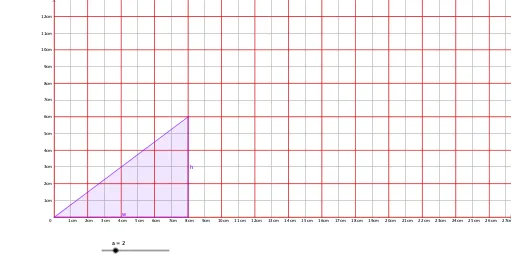
This example demonstrates geometric similarity from a variable-parts perspective. Key mathematical concepts include properties of similar triangles and polygons. Using GeoGebra commands such as Intersect, Line, and Circle, dynamic exploration of the changes in similar figures is possible. Suitable for middle school and above students or teachers.
GeoGebra Commands & Parameters
Intersect(xAxis, yAxis) → ALine(A, xAxis) → fLine(A, yAxis) → gCircle(A, a) → cIntersect(c, g, 2) → CIntersect(c, f, 2) → DLine(D, g) → hLine(C, f) → iCircle(D, a) → dCircle(C, a) → eIntersect(e, g, 2) → EIntersect(d, f, 2) → FCircle(F, a) → kCircle(E, a) → pIntersect(p, g, 2) → GIntersect(k, f, 2) → HCircle(H, a) → qCircle(G, a) → rIntersect(r, g, 2) → IIntersect(q, f, 2) → JCircle(J, a) → sCircle(I, a) → tIntersect(s, f, 2) → KIntersect(t, g, 2) → LCircle(K, a) → c_1Circle(L, a) → d_1Intersect(c_1, f, 2) → MIntersect(d_1, g, 2) → NCircle(M, a) → e_1Circle(N, a) → f_1Intersect(e_1, f, 2) → OIntersect(f_1, g, 2) → PCircle(O, a) → g_1Circle(P, a) → h_1Intersect(g_1, f, 2) → QIntersect(h_1, g, 2) → RCircle(Q, a) → k_1Circle(R, a) → p_1Intersect(p_1, g, 2) → SIntersect(k_1, f, 2) → TCircle(T, a) → q_1Circle(S, a) → r_1Intersect(r_1, g, 2) → UIntersect(q_1, f, 2) → VCircle(V, a) → s_1Circle(U, a) → t_1Intersect(s_1, f, 2) → WCircle(W, a) → c_2Intersect(t_1, g, 2) → ZCircle(Z, a) → d_2Intersect(c_2, f, 2) → A_1Intersect(d_2, g, 2) → B_1Circle(A_1, a) → e_2Circle(B_1, a) → f_2Intersect(e_2, f, 2) → C_1Intersect(f_2, g, 2) → D_1Circle(C_1, a) → g_2Circle(D_1, a) → h_2Intersect(g_2, f, 2) → E_1Intersect(h_2, g, 2) → F_1Circle(E_1, a) → k_2Circle(F_1, a) → p_2Intersect(k_2, f, 2) → G_1Intersect(p_2, g, 2) → H_1Circle(G_1, a) → q_2Circle(H_1, a) → r_2Intersect(q_2, f, 2) → I_1Intersect(r_2, g, 2) → J_1Circle(I_1, a) → s_2Circle(J_1, a) → t_2Intersect(s_2, f, 2) → K_1Intersect(t_2, g, 2) → L_1Circle(K_1, a) → c_3Circle(L_1, a) → d_3Intersect(c_3, f, 2) → M_1Intersect(d_3, g, 2) → N_1Circle(M_1, a) → e_3Circle(N_1, a) → f_3Intersect(e_3, f, 2) → O_1Intersect(f_3, g, 2) → P_1Circle(O_1, a) → g_3Circle(P_1, a) → h_3Intersect(g_3, f, 2) → Q_1Intersect(h_3, g, 2) → R_1Circle(Q_1, a) → k_3Circle(R_1, a) → p_3Intersect(k_3, f, 2) → S_1Intersect(p_3, g, 2) → T_1Circle(S_1, a) → q_3Circle(T_1, a) → r_3Intersect(q_3, f, 2) → U_1Intersect(r_3, g, 2) → V_1Circle(U_1, a) → s_3Circle(V_1, a) → t_3Intersect(s_3, f, 2) → W_1Intersect(t_3, g, 2) → Z_1Circle(W_1, a) → c_4Circle(Z_1, a) → d_4Intersect(c_4, f, 2) → A_2Intersect(d_4, g, 2) → B_2Circle(A_2, a) → e_4Circle(B_2, a) → f_4Intersect(e_4, f, 2) → C_2Intersect(f_4, g, 2) → D_2OrthogonalLine(E, g) → jOrthogonalLine(G, g) → lOrthogonalLine(I, g) → mOrthogonalLine(L, g) → nOrthogonalLine(N, g) → bOrthogonalLine(P, g) → i_1OrthogonalLine(R, g) → j_1OrthogonalLine(S, g) → l_1OrthogonalLine(U, g) → m_1OrthogonalLine(Z, g) → n_1OrthogonalLine(B_1, g) → a_1OrthogonalLine(D_1, g) → b_1OrthogonalLine(F_1, g) → i_2OrthogonalLine(H_1, g) → j_2OrthogonalLine(J_1, g) → l_2OrthogonalLine(L_1, g) → m_2OrthogonalLine(N_1, g) → n_2OrthogonalLine(P_1, g) → a_2OrthogonalLine(R_1, g) → b_2OrthogonalLine(T_1, g) → i_3OrthogonalLine(V_1, g) → j_3OrthogonalLine(Z_1, g) → l_3OrthogonalLine(B_2, g) → m_3OrthogonalLine(D_2, g) → n_3OrthogonalLine(F, f) → a_3OrthogonalLine(H, f) → b_3OrthogonalLine(J, f) → g_4OrthogonalLine(K, f) → h_4OrthogonalLine(M, f) → i_4OrthogonalLine(O, f) → j_4OrthogonalLine(Q, f) → k_4OrthogonalLine(T, f) → l_4OrthogonalLine(V, f) → m_4OrthogonalLine(W, f) → n_4OrthogonalLine(A_1, f) → p_4OrthogonalLine(C_1, f) → q_4OrthogonalLine(E_1, f) → r_4OrthogonalLine(G_1, f) → s_4OrthogonalLine(I_1, f) → t_4OrthogonalLine(K_1, f) → a_4OrthogonalLine(M_1, f) → b_4OrthogonalLine(O_1, f) → f_5OrthogonalLine(Q_1, f) → g_5OrthogonalLine(S_1, f) → h_5OrthogonalLine(U_1, f) → i_5OrthogonalLine(W_1, f) → j_5OrthogonalLine(A_2, f) → k_5OrthogonalLine(C_2, f) → l_5Intersect(h, n_3) → E_2Intersect(n_3, a_3) → F_2Intersect(n_3, b_3) → G_2Intersect(n_3, g_4) → H_2Intersect(n_3, h_4) → I_2Intersect(n_3, i_4) → J_2Intersect(n_3, j_4) → K_2Intersect(n_3, k_4) → L_2Intersect(n_3, l_4) → M_2Intersect(n_3, m_4) → N_2Intersect(n_3, n_4) → O_2Intersect(n_3, p_4) → P_2Intersect(n_3, q_4) → Q_2Intersect(n_3, r_4) → R_2Intersect(n_3, s_4) → S_2Intersect(n_3, t_4) → T_2Intersect(n_3, a_4) → U_2Intersect(b_4, n_3) → V_2Intersect(n_3, f_5) → W_2Intersect(n_3, g_5) → Z_2Intersect(n_3, h_5) → A_3Intersect(n_3, i_5) → B_3Intersect(n_3, j_5) → C_3Intersect(n_3, k_5) → D_3Intersect(n_3, l_5) → E_3Intersect(m_3, l_5) → F_3Intersect(l_3, l_5) → G_3Intersect(j_3, l_5) → H_3Intersect(i_3, l_5) → I_3Intersect(b_2, l_5) → J_3Intersect(a_2, l_5) → K_3Intersect(n_2, l_5) → L_3Intersect(m_2, l_5) → M_3Intersect(l_2, l_5) → N_3Intersect(j_2, l_5) → O_3Intersect(i_2, l_5) → P_3Intersect(b_1, l_5) → Q_3Intersect(a_1, l_5) → R_3Intersect(n_1, l_5) → S_3Intersect(m_1, l_5) → T_3Intersect(l_1, l_5) → U_3Intersect(j_1, l_5) → V_3Intersect(i_1, l_5) → W_3Intersect(b, l_5) → Z_3Intersect(n, l_5) → A_4Intersect(m, l_5) → B_4Intersect(l, l_5) → C_4Intersect(j, l_5) → D_4Intersect(i, l_5) → E_4Segment(A, D_2) → m_5Segment(D, E_2) → n_5Segment(F, F_2) → p_5Segment(H, G_2) → q_5Segment(J, H_2) → r_5Segment(K, I_2) → s_5Segment(M, J_2) → t_5Segment(O, K_2) → a_5Segment(Q, L_2) → b_5Segment(T, M_2) → c_5Segment(V, N_2) → d_5Segment(W, O_2) → e_5Segment(A_1, P_2) → f_6Segment(C_1, Q_2) → g_6Segment(E_1, R_2) → h_6Segment(G_1, S_2) → i_6Segment(I_1, T_2) → j_6Segment(K_1, U_2) → k_6Segment(M_1, V_2) → l_6Segment(O_1, W_2) → m_6Segment(Q_1, Z_2) → n_6Segment(S_1, A_3) → p_6Segment(U_1, B_3) → q_6Segment(W_1, C_3) → r_6Segment(A_2, D_3) → s_6Segment(C_2, E_3) → t_6Segment(D_2, E_3) → a_6Segment(B_2, F_3) → b_6Segment(Z_1, G_3) → c_6Segment(V_1, H_3) → d_6Segment(T_1, I_3) → e_6Segment(R_1, J_3) → f_7Segment(P_1, K_3) → g_7Segment(N_1, L_3) → h_7Segment(L_1, M_3) → i_7Segment(J_1, N_3) → j_7Segment(H_1, O_3) → k_7Segment(F_1, P_3) → l_7Segment(D_1, Q_3) → m_7Segment(B_1, R_3) → n_7Segment(Z, S_3) → p_7Segment(U, T_3) → q_7Segment(S, U_3) → r_7Segment(R, V_3) → s_7Segment(P, W_3) → t_7Segment(N, Z_3) → a_7Segment(L, A_4) → b_7Segment(I, B_4) → c_7Segment(G, C_4) → d_7Segment(E, D_4) → e_7Segment(C, E_4) → f_8Segment(A, C_2) → g_8Intersect(r_5, d_7) → F_4Polygon(A, J, F_4) → t1, f_9, a_8, j_8
AI Drawing Prompt Reference
Draw a circle c centered at point A, then draw lines h and i through points C and D respectively intersecting the y-axis and x-axis. Next, draw circles d and e with centers at points D and C and radius a. Then, draw lines j and k through points E and F intersecting the y-axis and x-axis. Continue this process to form a series of similar triangles and circles, ensuring each circle has the same radius.
The prompt above was compiled from the original drawing commands and is for reference only.