
Geometric Exploration of Facial Symmetry
Loading the math board and drawing, please wait…
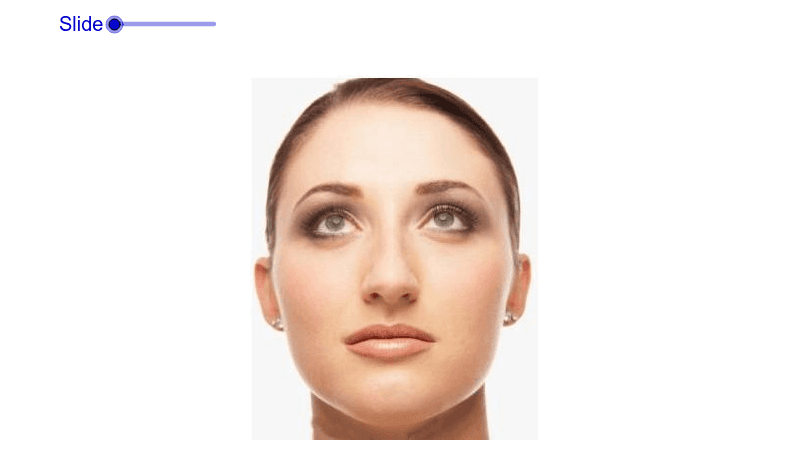
This GeoGebra example demonstrates and quantifies the geometric asymmetry of the human face using mathematical transformations. The core mathematical concepts include reflectional symmetry, axial symmetry, translation, and vector geometry. To construct the model, the tool utilizes commands such as Line, Translate, and Mirror, operating on geometric objects including points A, B, C, D, E, F, vectors v and u, and imported images pic1 and pic2. By applying these transformations, it generates mirrored and translated versions (pic1', pic2', etc.) to visually and quantitatively analyze facial asymmetry. This interactive applet is highly suitable for high school or introductory college geometry courses, transformation geometry lessons, and mathematical modeling of biological symmetry.
GeoGebra Commands & Parameters
Line(C, D) → bLine(E, F) → cTranslate(pic1, u) → pic1'Translate(pic2, v) → pic2'Mirror(pic2', b) → pic2''Mirror(pic1', c) → pic1''
AI Drawing Prompt Reference
Draw two reference lines passing through two pairs of landmark points to serve as facial symmetry axes. Import two facial photographs, then translate each by a specified vector. Next, reflect the first translated photo across the second line and the second translated photo across the first line, producing four images displayed side by side for visual comparison of facial asymmetry.
The prompt above was compiled from the original drawing commands and is for reference only.