
Geometric Construction of Axial Symmetry: Mirror Image of Points and Figures
Loading the math board and drawing, please wait…
In collections
geometriadinamica.es
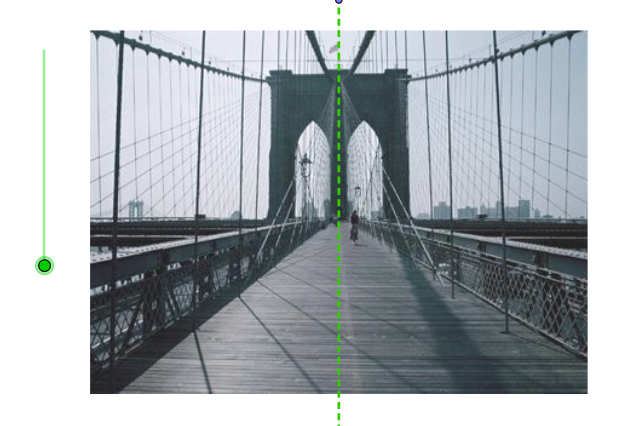
This example demonstrates how to construct and visualize axial symmetry in the plane, highlighting the corresponding positions of points and whole shapes on opposite sides of a symmetry axis. Key concepts include axial symmetry (reflection about a line), image (mirror) points, and geometric construction principles such as perpendicular lines and the perpendicular bisector (used to justify symmetry). The construction uses GeoGebra commands and objects: Line and Ray to form the reference and symmetry axis; Circle and CircleArc to build curved parts so the “whole figure” can be mirrored; Intersect to compute critical intersection points that define vertices and their images; OrthogonalLine and LineBisector to obtain perpendicular relations needed for determining symmetry; and Mirror to reflect the relevant points/objects across the axis. Point and text annotations help track correspondences. Suitable for middle and high school geometry lessons, especially topics on transformations and geometric construction.
GeoGebra Commands & Parameters
Line(A, B) → bCircle(A, d1) → dCircle(B, d1) → eIntersect(d, b, 2) → CIntersect(e, b, 1) → DOrthogonalLine(A, b) → fOrthogonalLine(B, b) → gPoint(f) → EOrthogonalLine(E, f) → hIntersect(g, h) → FCircle(E, d1) → kCircle(F, d1) → pIntersect(k, h, 1) → GLineBisector(E, F) → iRay(A, D) → jIntersect(d, j) → I, NIntersect(e, j, 2) → JRay(D, A) → lIntersect(e, l) → K, LOrthogonalLine(D, b) → mIntersect(b, i) → HPoint(i) → MCircleArc(M, A, B) → qOrthogonalLine(C, b) → nIntersect(q, n, 1) → OMirror(O, H) → O'
AI Drawing Prompt Reference
Draw an axial symmetric figure with points A and B, and line b as the symmetry axis. Use circles d and e centered at A and B, respectively, intersecting line b to get points C and D. Construct perpendicular lines f and g through A and B, intersecting at points E and F. Construct circles k and p centered at E and F, intersecting at points G and H. Construct the perpendicular bisector i of E and F, and rays j from A to D and from D to A, intersecting at points I and N, and J and K, respectively. Construct a perpendicular line m from D to line b, intersecting the perpendicular bisector i at point H. Construct an arc q with M as the center and A and B as endpoints, intersecting the perpendicular line n at point O, and mirror O to H to get O'.
The prompt above was compiled from the original drawing commands and is for reference only.