
Essence of Calculus Chapter 3: Similar Triangles
Loading the math board and drawing, please wait…
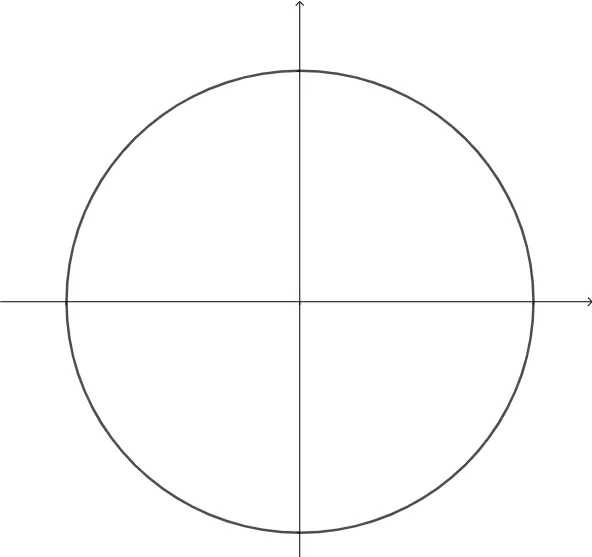
This example demonstrates the properties of similar triangles. Key mathematical concepts include the proportional relationships in similar triangles. Using GeoGebra commands such as Point, Circle, Segment, and Angle, the construction of similar triangles is shown. Suitable for high school mathematics education.
GeoGebra Commands & Parameters
Point(yAxis) → OCircle(O, Q) → cPoint(c) → ASegment(O, A) → fAngle(Q, O, A) → θOrthogonalLine(A, f) → gPoint(g) → PAngle(P, A, O) → αOrthogonalLine(A, xAxis) → iIntersect(i, xAxis) → BSegment(A, B) → jAngle(A, B, O) → βLine(A, xAxis) → hAngle(j, h) → γPoint(h) → CAngle(C, A, O) → δAngle(P, A, C) → εOrthogonalLine(P, h) → kIntersect(h, k) → DAngle(A, D, P) → ηSegment(P, D) → lAngle(D, P, A) → ζ
AI Drawing Prompt Reference
In a coordinate system, take a point O on the y-axis as the center to draw a circle, and pick a point A on the circle, then connect OA. Draw a perpendicular line through A to OA, and take a point P on this perpendicular line. Draw a perpendicular line through A to the x-axis, intersecting the x-axis at point B, and connect AB. Draw a line through A parallel to the x-axis, and take a point C on this line. The construction results in multiple triangles that form several sets of similar triangles through perpendicular and parallel relationships, with multiple angle labels in the diagram.
The prompt above was compiled from the original drawing commands and is for reference only.