
Distinguishing Volume and Surface Area (Lesson 7.7.15)
Loading the math board and drawing, please wait…
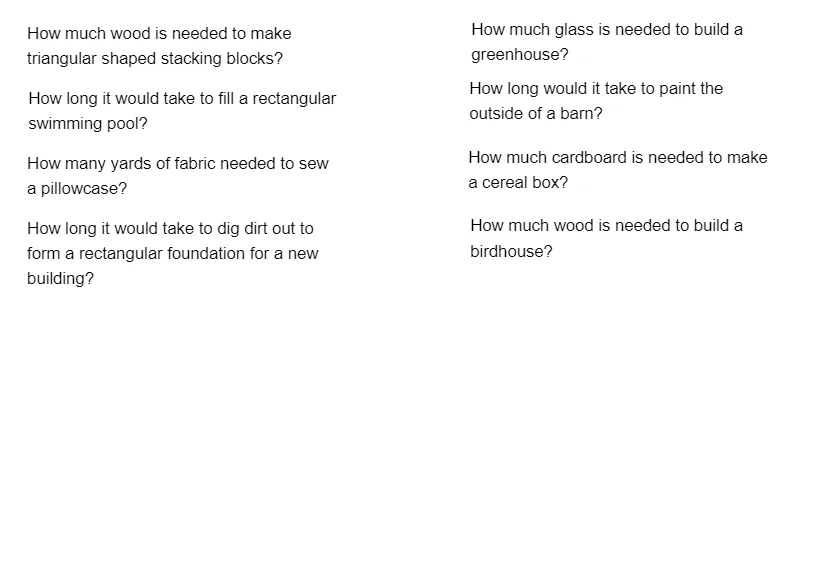
This example demonstrates how to distinguish volume (the amount of space a solid occupies) from surface area (the area covering the outside of a solid). It focuses on core solid-geometry ideas such as volume vs. surface area and how these quantities convey different “meanings” even when shapes or dimensions are related. The construction emphasizes concept building through clear on-screen explanations: the GeoGebra setup uses multiple text objects (text1–text8) to present key statements, labels, and comparisons that guide learners to interpret which measurement corresponds to which notion. By pairing the geometric visualization with explanatory annotations, the activity supports students in forming intuition and reading relationships between dimensions, area, and volume. Suitable for middle to high school solid-geometry lessons, classroom demonstrations, and self-guided conceptual practice.
AI Drawing Prompt Reference
Create a 3D solid figure, such as a rectangular prism or cylinder, clearly illustrating the difference between volume and surface area. Include multiple text annotations explaining that volume measures the space occupied by the solid, while surface area measures the total area covering its exterior. Use arrows or labels to point to the relevant parts of the figure. Add comparative notes emphasizing that these two quantities convey different meanings even when shapes or dimensions are related. The overall layout should support educational use, suitable for classroom demonstration or self-study.
The prompt above was compiled from the original drawing commands and is for reference only.