
Cubes and Cube Roots Visualized: Linking the Cube Function to Its Root
Loading the math board and drawing, please wait…
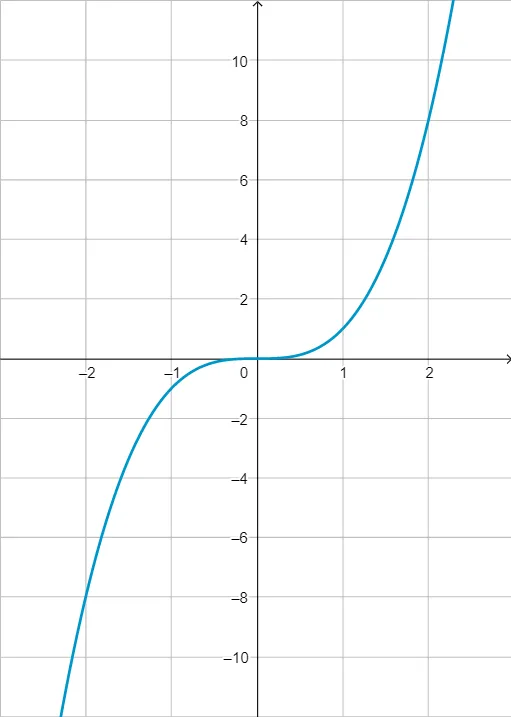
This GeoGebra example demonstrates how cubes and cube roots correspond visually, bridging geometric volume/size ideas with algebraic relationships. It centers on the cube function f(x)=x^3 and the cube-root function as its inverse, emphasizing the one-to-one relationship between taking a cube and extracting a cube root. The construction focuses on defining and graphing the key function object (noted as “f” in the construction summary) and using function visualization to highlight the behavior of the cubic mapping and how root values recover the original inputs. Learners can observe how changing input values affects the cube output and the cube-root recovery, strengthening understanding of inverse processes and the algebra–graph connection. Suitable for middle and high school math lessons on functions, exponents, and inverse relationships, as well as for interactive classroom demonstrations.
GeoGebra Commands & Parameters
f: y = x^(3)
AI Drawing Prompt Reference
Draw a Cartesian coordinate plane with the cubic function y equals x cubed, a smooth S-shaped curve passing through the origin, rising from lower left to upper right. Also draw the cube root function y equals the cube root of x (x to the 1/3 power) as a dashed or differently colored curve, also through the origin but rising more gently. Show that the two curves are symmetric about the line y equals x, illustrating their inverse relationship. Mark several key points on the curves with arrows or labels to demonstrate how an input x is cubed to get an output, then the cube root recovers the original input, visually linking the cube operation and its inverse.
The prompt above was compiled from the original drawing commands and is for reference only.