
Compass Constructions: Parallel/Perpendicular Lines and Angle/Line Bisectors
Loading the math board and drawing, please wait…
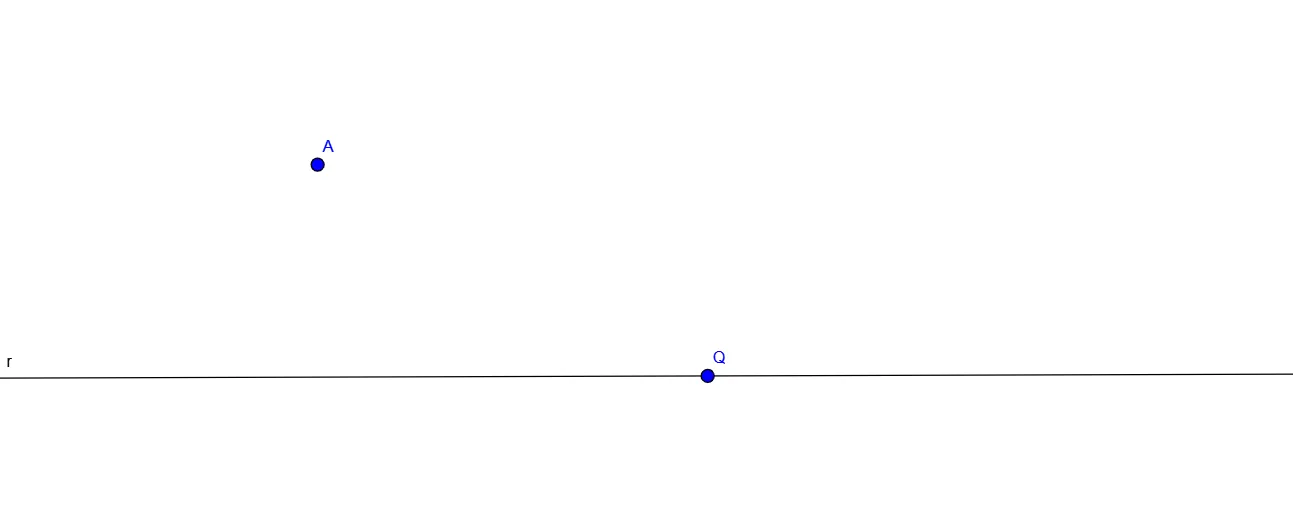
This example demonstrates classic compass-and-straightedge constructions to draw a line parallel to a given line, construct a perpendicular line, and build both an angle bisector and a line bisector (perpendicular bisector). It highlights the geometric principles behind these constructions: parallelism and perpendicularity, the angle-bisector property (equal angles), and the line-bisector/perpendicular-bisector property (equal distances to the endpoints). The construction is organized around GeoGebra’s use of lines created from key objects: the “Line” command together with points and parameters such as P, Q, A, and a radius-like value r. P and Q act as defining points (e.g., endpoints or input points for the target lines), A serves as a reference for angle-related construction, and r provides the compass radius needed to locate intersections that determine the bisectors. Suitable for middle/high school geometry and for instructional demonstrations of geometric construction techniques in GeoGebra.
GeoGebra Commands & Parameters
Line(P, Q) → r