
Circle Sort of Multiples of 9
Loading the math board and drawing, please wait…
In collections
Multiply with Dice
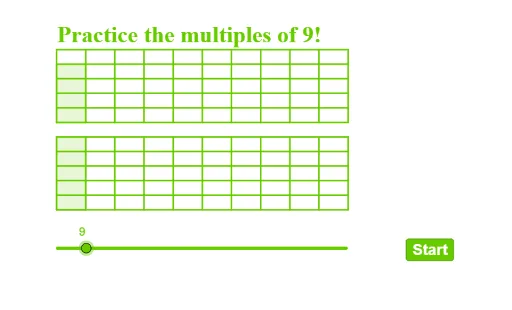
This example demonstrates the classification and sorting of multiples of 9 within circles. It involves core math concepts like arithmetic, circles, ratios, incircle, division, stochastic processes, and centroid. The construction uses GeoGebra commands: Shuffle, Element, Circle, Polygon, Sequence. Suitable for middle school and above, focusing on number sequences, geometric classification, and random processes.
GeoGebra Commands & Parameters
Shuffle(listp) → listq, {(8, 14), (2, 14), (5, 14), (9, 11), (11, 14), (12, 11), (14, 14), (15, 11), (6, 11), (3, 11)}Element(listq, 1) → P1Element(listq, 2) → P2Element(listq, 3) → P3Element(listq, 4) → P4Element(listq, 5) → P5Element(listq, 6) → P6Element(listq, 7) → P7Element(listq, 8) → P8Element(listq, 9) → P9Element(listq, 10) → P10Circle(P1, rR) → aaCircle(P2, rR) → bbCircle(P3, rR) → ccCircle(P4, rR) → ddCircle(P5, rR) → eeCircle(P6, rR) → ffCircle(P7, rR) → ggCircle(P8, rR) → hhCircle(P9, rR) → iiCircle(P10, rR) → jjShuffle(listquestion) → listqn, {8, 6, 9, 10, 2, 4, 3, 5, 1, 7}Element(listqn, elm) → qQPolygon((2, 9), (2, 11.5), (a / 9 + 2, 11.5), (a / 9 + 2, 9)) → q1, f, g, h, iSequence(Segment[(m, 9), (m, 11.5)], m, 2, 12) → l2Polygon((2, 12), (2, 14), (2 + a / 9, 14), (2 + a / 9, 12)) → q2, j, k, l, mSequence(Segment[(2, 9 + n), (12, 9 + n)], n, 0, 2.5, 0.5) → l1Sequence(Segment[(m, 12), (m, 14.5)], m, 2, 12) → l3Sequence(Segment[(2, 11.5 + n), (12, 11.5 + n)], n, 0, 3, 0.5) → l4