
Algebra I - Dilation Transformation - Absolute Value
Loading the math board and drawing, please wait…
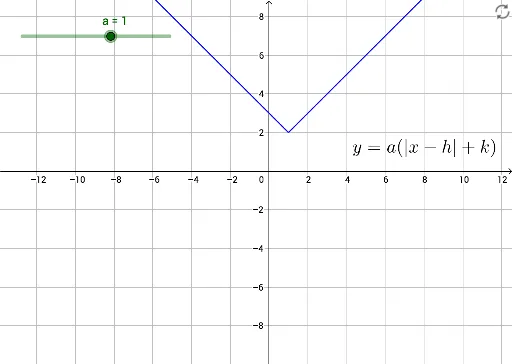
This example demonstrates how to change the size of a figure in the coordinate system using dilation transformation and explores the application of the absolute value function in transformations. Core math concepts include the properties of dilation, the definition of the absolute value function, and its geometric significance. Construction highlights the use of GeoGebra commands/objects: a (point or figure), text1 (text label), d (dynamic object), c (construction element). Suitable for middle school and above students to learn about the relationship between geometric transformations and function graphs.
GeoGebra Commands & Parameters
Numeric a(1)d: y = abs(x - 1) + 2c(x) = (a * (abs(x - 1) + 2))
AI Drawing Prompt Reference
Draw an absolute value function graph in the coordinate system and show its effect after a dilation transformation. First, plot the base absolute value function graph, then perform a dilation transformation centered at a point to observe the relationship between the transformed and original graphs, and label key points and transformation processes.
The prompt above was compiled from the original drawing commands and is for reference only.