
向量加法 by Antonio Di Muro
几何画板及绘图内容加载中,请稍等……
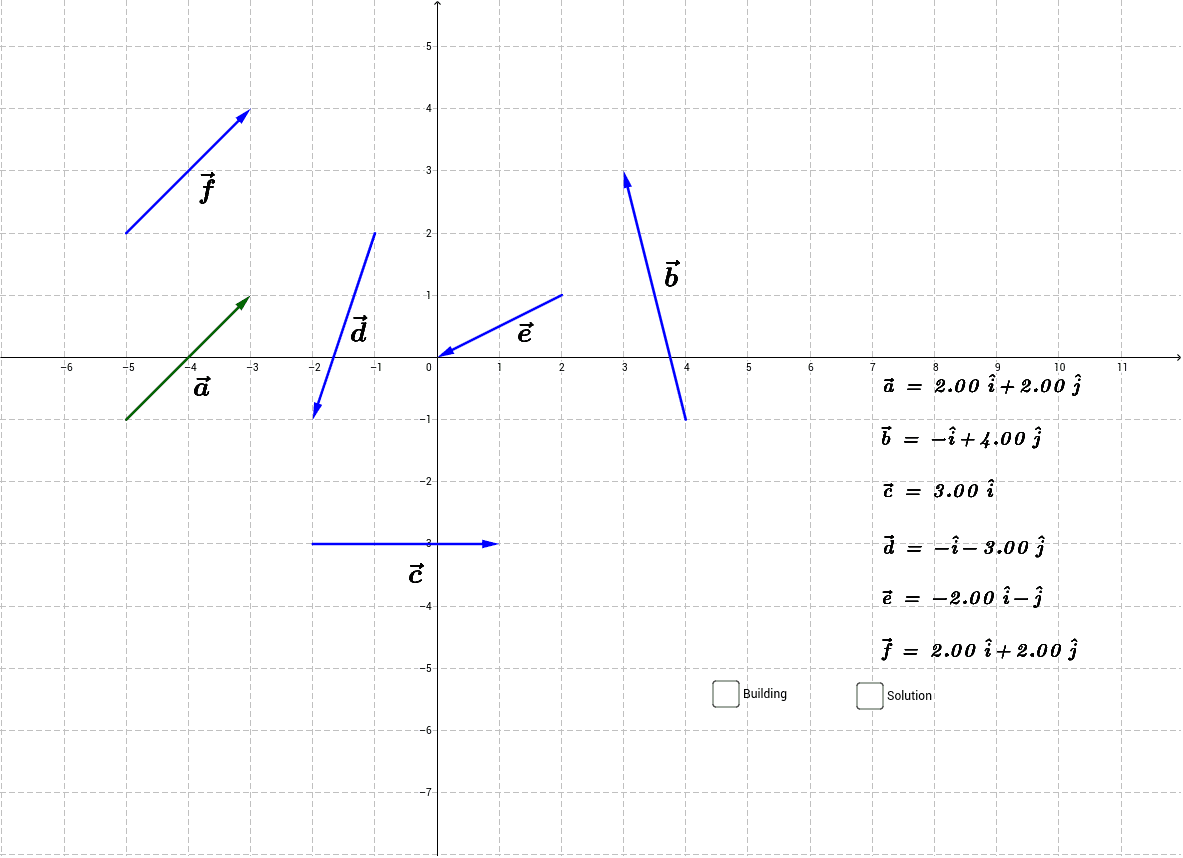
①本范例演示了向量加法的平行四边形法则和三角形法则;②涉及的核心数学概念包括向量、坐标几何、对称性、导数和置信区间;③作图要点使用了Vector、Point、LaTeX命令,以及Point、testo等对象;④适合高中及以上学生学习和理解向量运算。
GeoGebra 命令及参数
Vector(A, B) → aVector(A_1, B_1) → bVector(A_2, B_2) → fVector(A_3, B_3) → eVector(A_4, B_4) → dVector(A_5, B_5) → cVector(A, R) → wPoint(a) → CPoint(b) → DPoint(c) → EPoint(d) → FPoint(e) → GPoint(f) → HVector(A_6, B_6) → a_1Point(a_1) → C_1LaTeX(If[ya ≟ 1 ∧ (xa ≠ 0), testo5 + testo8, If[ya ≟ 1 ∧ xa ≟ 0, testo8, If[ya ≟ -1, testo7 + testo8, If[(ya > 0) ∧ (xa ≠ 0), testo5 + testo4, If[(ya > 0) ∧ xa ≟ 0, testo4, If[ya < 0, testo7 + testo4, If[ya ≟ 0, testo49]]]]]]]) → testo13LaTeX(If[xa ≟ 1, testo9, If[xa ≟ -1, testo7 + testo9, If[xa > 0, testo3, If[xa < 0, testo7 + testo3, If[xa ≟ 0, testo49]]]]]) → testo10LaTeX(testo2 + testo10 + testo13) → testo14LaTeX(If[xb ≟ 1, testo9, If[xb ≟ -1, testo7 + testo9, If[xb > 0, testo19, If[xb < 0, testo7 + testo19, If[xb ≟ 0, testo49]]]]]) → testo29LaTeX(If[xc ≟ 1, testo9, If[xc ≟ -1, testo7 + testo9, If[xc > 0, testo21, If[xc < 0, testo7 + testo21, If[xc ≟ 0, testo49]]]]]) → testo30LaTeX(If[xd ≟ 1, testo9, If[xd ≟ -1, testo7 + testo9, If[xd > 0, testo23, If[xd < 0, testo7 + testo23, If[xd ≟ 0, testo49]]]]]) → testo31LaTeX(If[xe ≟ 1, testo9, If[xe ≟ -1, testo7 + testo9, If[xe > 0, testo25, If[xe < 0, testo7 + testo25, If[xe ≟ 0, testo49]]]]]) → testo32LaTeX(If[xf ≟ 1, testo9, If[xf ≟ -1, testo7 + testo9, If[xf > 0, testo27, If[xf < 0, testo7 + testo27, If[xf ≟ 0, testo49]]]]]) → testo33LaTeX(If[yb ≟ 1 ∧ (xb ≠ 0), testo5 + testo8, If[yb ≟ 1 ∧ xb ≟ 0, testo8, If[yb ≟ -1, testo7 + testo8, If[(yb > 0) ∧ (xb ≠ 0), testo5 + testo20, If[(yb > 0) ∧ xb ≟ 0, testo20, If[yb < 0, testo7 + testo20, If[yb ≟ 0, testo49]]]]]]]) → testo34LaTeX(If[yc ≟ 1 ∧ (xc ≠ 0), testo5 + testo8, If[yc ≟ 1 ∧ xc ≟ 0, testo8, If[yc ≟ -1, testo7 + testo8, If[(yc > 0) ∧ (xc ≠ 0), testo5 + testo22, If[(yc > 0) ∧ xc ≟ 0, testo22, If[yc < 0, testo7 + testo22, If[yc ≟ 0, testo49]]]]]]]) → testo35LaTeX(If[yd ≟ 1 ∧ (xd ≠ 0), testo5 + testo8, If[yd ≟ 1 ∧ xd ≟ 0, testo8, If[yd ≟ -1, testo7 + testo8, If[(yd > 0) ∧ (xd ≠ 0), testo5 + testo24, If[(yd > 0) ∧ xd ≟ 0, testo24, If[yd < 0, testo7 + testo24, If[yd ≟ 0, testo49]]]]]]]) → testo36LaTeX(If[ye ≟ 1 ∧ (xe ≠ 0), testo5 + testo8, If[ye ≟ 1 ∧ xe ≟ 0, testo8, If[ye ≟ -1, testo7 + testo8, If[(ye > 0) ∧ (xe ≠ 0), testo5 + testo26, If[(ye > 0) ∧ xe ≟ 0, testo26, If[ye < 0, testo7 + testo26, If[ye ≟ 0, testo49]]]]]]]) → testo37LaTeX(If[yf ≟ 1 ∧ (xf ≠ 0), testo5 + testo8, If[yf ≟ 1 ∧ xf ≟ 0, testo8, If[yf ≟ -1, testo7 + testo8, If[(yf > 0) ∧ (xf ≠ 0), testo5 + testo28, If[(yf > 0) ∧ xf ≟ 0, testo28, If[yf < 0, testo7 + testo28, If[yf ≟ 0, testo49]]]]]]]) → testo38LaTeX(testo12 + testo29 + testo34) → testo39LaTeX(testo15 + testo30 + testo35) → testo40LaTeX(testo16 + testo31 + testo36) → testo41LaTeX(testo17 + testo32 + testo37) → testo42LaTeX(testo18 + testo33 + testo38) → testo43LaTeX(If[xw ≟ 1, testo9, If[xw ≟ -1, testo7 + testo9, If[xw > 0, testo44, If[xw < 0, testo7 + testo44, If[xw ≟ 0, testo49]]]]]) → testo46LaTeX(If[yw ≟ 1 ∧ (xw ≠ 0), testo5 + testo8, If[yw ≟ 1 ∧ xw ≟ 0, testo8, If[yw ≟ -1, testo7 + testo8, If[(yw > 0) ∧ (xw ≠ 0), testo5 + testo45, If[(yw > 0) ∧ xw ≟ 0, testo45, If[yw < 0, testo7 + testo45, If[yw ≟ 0, testo49]]]]]]]) → testo47LaTeX(testo11 + testo46 + testo47) → testo48