
分数除法演示 by Anthony Dove
几何画板及绘图内容加载中,请稍等……
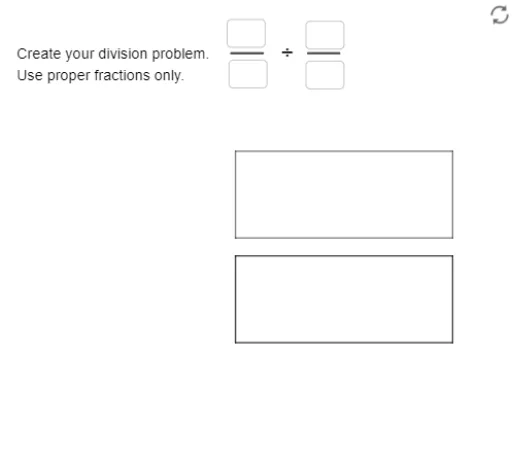
①本范例通过动态图形演示了两个真分数的除法过程,直观展示分数除法的几何意义;②涉及核心数学概念包括分数除法运算、相似三角形性质、图形面积计算、周长等;③构造过程中运用了 GeoGebra 命令如 FromBase 创建基础图形,Segment 绘制线段,Circle 绘制圆形,Intersect 计算交点,Point 创建点,Sequence 生成序列,Polygon 绘制多边形,Textfield 添加文本说明,CommonDenominator 计算公分母,Distance 计算距离等;④适合初中及以上数学学习者用于理解分数除法与几何图形的关联,也可用于数学教学演示。
GeoGebra 命令及参数
FromBase(tn_2, 10) → n_2FromBase(td_1, 10) → d_1FromBase(td_2, 10) → d_2Segment(A, A_1) → f1bCircle(A, 7) → gIntersect(g, f, 2) → CSegment(C, A) → hPoint(h) → BSegment(B, B_1) → f2bSequence((x(A) + (i * f2b / d_2), y(A)), i, 1, d_2 - 1) → l2on1bSequence((x(A_3) + (i * f2b / d_2), y(A_3)), i, 1, d_2 - 1) → l2on1tPolygon(A, Element[l2on1b, n_2], Element[l2on1t, n_2], A_3) → Poly3, c_1, c_2, c_3, c_4Intersect(c_2, c_3) → C_2Textfield(tn_1) → InputBox1Textfield(td_1) → InputBox2Textfield(tn_2) → InputBox3Textfield(td_2) → InputBox4Point(j) → E_1Point(j) → E_2Segment(E_1, E_2) → e_1Point(j) → E_3Point(j) → E_4Segment(E_3, E_4) → e_2Point(j) → E_5Point(j) → E_6FromBase(tn_1, 10) → n_1FromBase(tn_3, 10) → n_3FromBase(td_3, 10) → d_3FromBase(tm_1, 10) → m_1Textfield(tm_1) → InputBox5Textfield(tn_3) → InputBox6Textfield(td_3) → InputBox7Segment(A_1, A_2) → f1rSegment(A_2, A_3) → f1tSegment(A_3, A) → f1lSequence((x(A) + (i * f1b / d_1), y(A)), i, 1, d_1 - 1) → l1bSequence((x(A_3) + (i * f1b / d_1), y(A_3)), i, 1, d_1 - 1) → l1tSequence(Segment[Element[l1b, i], Element[l1t, i]], i, 1, d_1 - 1) → l1sPolygon(A, Element[l1b, n_1], Element[l1t, n_1], A_3) → Polyl1, a_1, a_2, a_3, a_4Segment(B_1, B_2) → f2rSegment(B_2, B_3) → f2tSegment(B_3, B) → f2lSequence((x(B_3) + (i * f2b / d_2), y(B_3)), i, 1, d_2 - 1) → l2tSequence((x(B) + (i * f2b / d_2), y(B)), i, 1, d_2 - 1) → l2bSequence(Segment[Element[l2b, i], Element[l2t, i]], i, 1, d_2 - 1) → l2sPolygon(B, Element[l2b, n_2], Element[l2t, n_2], B_3) → Poly2, b_1, b_2, b_4, b_3Textfield(tcd) → InputBox8FromBase(tcd, 10) → cdCommonDenominator(f_1, f_2) → cd_1Sequence((x(A) + (i * f1b / cd), y(A)), i, 1, cd - 1) → l1b2Sequence((x(A_3) + (i * f1b / cd), y(A_3)), i, 1, cd - 1) → l1t2Sequence(Segment[Element[l1b2, i], Element[l1t2, i]], i, 1, cd - 1) → l1s2Sequence((x(B) + (i * f1b / cd), y(B)), i, 1, cd - 1) → l2b2Sequence((x(B_3) + (i * f1b / cd), y(B_3)), i, 1, cd - 1) → l2t2Sequence(Segment[Element[l2b2, i], Element[l2t2, i]], i, 1, cd - 1) → l2s2Intersect(c_1, c_2) → C_1Intersect(b_1, b_2) → C_3Intersect(b_2, b_4) → C_4Distance(B, C_3) → distf2Sequence((x(C_1) + (i * distf2), y(C_1)), i, 0, floor(f_1 / f_2)) → l2divbSequence((x(C_2) + (i * distf2), y(C_2)), i, 0, floor(f_1 / f_2)) → l2divtSequence(Segment[Element[l2divb, i], Element[l2divt, i]], i, 0, floor(f_1 / f_2)) → l2divs_1Sequence(Segment[Element[l2divb, i], Element[l2divt, i]], i, 0, f_1 / f_2 + 1) → l2divsSegment(A_3, A) → Test3Segment(D, E) → iSegment(A, Element[l2divb, ceil(f_1 / f_2)]) → Test2_1LaTeX(Test2_1, true, true) → text8Segment(A_3, Element[l2divt, ceil(f_1 / f_2)]) → Test1_1