
战舰几何:极坐标风格的作图与相交轨迹(V2)
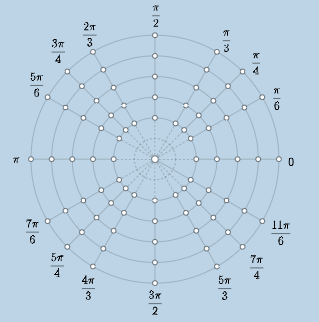
几何画板及绘图内容加载中,请稍等……
这个范例展示了用极坐标/旋转构造思想生成“战舰”风格的几何结构:通过旋转、射线与圆弧的组合,形成若干关键点的相交与连线关系,从而呈现出具有对称与约束的图形布局。核心数学概念包括:极坐标式构形的等角旋转、圆与圆弧的交点计算、线段/射线的几何约束,以及由坐标或二次曲线相关性质引出的逻辑连接(如正交中心、二次函数/方程在背景中的几何解释)。作图要点:在 GeoGebra 中主要使用 Rotate(旋转)来复制构造方向;用 Segment(线段)与 Ray(射线)建立连接与半直线约束;用 Circle(圆)与 Intersect(求交)确定关键点;再用 CircleArc(圆弧)刻画圆周上的弧形边界,最终由多个交点与线段组合形成完整“战舰”式轮廓(如构造摘要所列的多组对象点/符号、圆弧段与交点集合)。适合中学高年级到大学预备阶段的几何建模与计算机数学可视化课程使用,也可用于探究“旋转对称—圆的交点—几何约束”之间的关系。
GeoGebra 命令及参数
Rotate(G, pi / 4) → G'_1Segment(A, G'_1) → jRotate(G, (11 * pi / 6)) → G'_5Segment(A, G'_5) → pCircle(A, F) → c_1Intersect(c_1, j, 1) → RSegment(A, R) → bRotate(G, (2 * pi / 3)) → G'_4Circle(A, B) → qSegment(A, G'_4) → nIntersect(q, n, 1) → TCircleArc(A, B, T) → h_1Ray((0, 0), (1, 0)) → fRotate(G, pi / 6) → G'Rotate(G, pi / 3) → G'_2Rotate(G, pi / 2) → G'_3Segment(A, G') → iSegment(A, G'_2) → lSegment(A, G'_3) → mRotate(G, (3 * pi / 4)) → G'_{6}Rotate(G, (5 * pi / 6)) → G'_{7}Rotate(G, pi) → G'_{8}Rotate(G, (7 * pi / 6)) → G'_{9}Rotate(G, (5 * pi / 4)) → G'_{10}Rotate(G, (4 * pi / 3)) → G'_{11}Rotate(G, (3 * pi / 2)) → G'_{12}Rotate(G, (5 * pi / 3)) → G'_{13}Rotate(G, (7 * pi / 4)) → G'_{14}Segment(A, G'_{6}) → aSegment(A, G'_{7}) → f_1Segment(A, G'_{8}) → g_1Segment(A, G'_{9}) → i_1Segment(A, G'_{10}) → j_1Segment(A, G'_{11}) → k_1Segment(A, G'_{12}) → l_1Segment(A, G'_{13}) → m_1Segment(A, G'_{14}) → n_1Circle(A, G) → d_1Circle(A, E) → tCircle(A, D) → sCircle(A, C) → rIntersect(r, i, 1) → HIntersect(s, i) → I,Intersect(t, i, 1) → JIntersect(c_1, i, 1) → KIntersect(d_1, i, 1) → MIntersect(d_1, j, 1) → NIntersect(c_1, j, 1) → OIntersect(t, j, 1) → PIntersect(s, j, 1) → QIntersect(r, j, 1) → SIntersect(r, l, 1) → UIntersect(s, l, 1) → VIntersect(t, l, 1) → WIntersect(c_1, l, 1) → ZIntersect(d_1, l) → A_1,Intersect(s, m, 1) → C_1Intersect(r, m, 1) → D_1Intersect(t, m, 1) → E_1Intersect(c_1, m, 1) → F_1Intersect(d_1, m, 1) → G_1Intersect(r, n, 1) → I_1Intersect(s, n, 1) → J_1Intersect(t, n, 1) → K_1Intersect(c_1, n, 1) → L_1Intersect(d_1, n, 1) → M_1Intersect(r, a, 1) → O_1Intersect(r, f_1, 1) → R_1Intersect(s, f_1, 1) → S_1Intersect(t, f_1, 1) → T_1Intersect(c_1, f_1, 1) → U_1Intersect(d_1, f_1, 1) → V_1Intersect(d_1, a) → W_1,Intersect(c_1, a, 1) → Z_1Intersect(t, a, 1) → A_2Intersect(s, a, 1) → B_2Intersect(r, g_1) → E_2,Intersect(s, g_1, 1) → F_2Intersect(t, g_1) → G_2,Intersect(c_1, g_1, 1) → H_2Intersect(d_1, g_1, 1) → I_2Intersect(d_1, i_1, 1) → J_2Intersect(c_1, i_1, 1) → K_2Intersect(t, i_1, 1) → L_2Intersect(s, i_1, 1) → M_2Intersect(r, i_1, 1) → N_2Segment(A, H) → p_1Segment(A, S) → q_1Segment(A, D_1) → r_1Segment(A, I_1) → s_1Segment(A, O_1) → t_1Segment(A, R_1) → a_1Segment(A, E_2) → b_1Segment(A, N_2) → e_1Intersect(r, l_1, 1) → B_1Intersect(s, l_1, 1) → H_1Intersect(t, l_1) → N_1,Intersect(c_1, l_1, 1) → P_1Intersect(d_1, l_1, 1) → Q_1Intersect(d_1, m_1, 1) → C_2Intersect(c_1, m_1, 1) → D_2Intersect(t, m_1, 1) → O_2Intersect(s, m_1, 1) → P_2Intersect(r, m_1, 1) → Q_2Intersect(r, n_1) → R_2,Intersect(r, k_1, 1) → S_2Intersect(s, k_1, 1) → T_2Intersect(t, k_1, 1) → U_2Intersect(c_1, k_1, 1) → V_2Intersect(d_1, k_1, 1) → W_2Intersect(d_1, j_1, 1) → Z_2Intersect(c_1, j_1, 1) → A_3Intersect(t, j_1, 1) → B_3Intersect(s, j_1, 1) → C_3Intersect(r, j_1, 1) → D_3Intersect(r, p) → E_3,Intersect(s, p, 1) → F_3Intersect(t, p, 1) → G_3Intersect(c_1, p, 1) → H_3Intersect(d_1, p, 1) → I_3Intersect(r, f, 1) → J_3Intersect(s, f, 1) → K_3Intersect(t, f, 1) → L_3Intersect(c_1, f) → M_3,Intersect(d_1, f, 1) → N_3Segment(A, J_3) → f_2Segment(A, H) → g_2Segment(A, S) → h_2Segment(A, U) → i_2Segment(A, D_1) → j_2Segment(A, I_1) → k_2Segment(A, O_1) → l_2Segment(A, R_1) → m_2Segment(A, E_2) → n_2Segment(A, N_2) → p_2Segment(A, D_3) → q_2Segment(A, S_2) → r_2Segment(A, B_1) → s_2Segment(A, Q_2) → t_2Segment(A, R_2) → a_2Segment(A, E_3) → b_2Segment(E_3, I_3) → c_2Segment(J_3, N_3) → d_2Segment(H, M) → e_2Segment(S, N) → f_3Segment(U, A_1) → g_3Segment(D_1, G_1) → h_3Segment(I_1, M_1) → i_3Segment(O_1, W_1) → j_3Segment(R_1, V_1) → k_3Segment(E_2, I_2) → l_3Segment(N_2, J_2) → m_3Segment(D_3, Z_2) → n_3Segment(S_2, W_2) → p_3Segment(B_1, Q_1) → q_3Segment(Q_2, C_2) → r_3Segment(R_2, G'_{14}) → s_3Intersect(s, s_3, 1) → O_3Intersect(t, s_3, 1) → P_3Intersect(c_1, s_3, 1) → Q_3
AI 绘图提示语参考
该图形由一系列通过旋转生成的点构成,这些点与原点相连形成线段。多个圆以原点为圆心,半径不同,圆弧用于勾勒边界。圆与线段、圆弧的交点定义关键点,形成多个对称的交点区域。图形整体呈现旋转对称性,线段、圆和圆弧相互连接,交点作为结构节点,最终构成一个复杂而对称的几何图案。
以上提示语为根据原始绘图命令整理而来,仅供参考。