
Volume of a Prism with Regular Hexagonal Base: Integration and Slice Summation
Loading the math board and drawing, please wait…
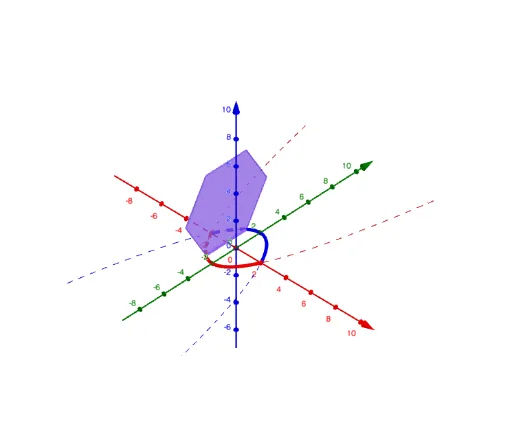
① This example demonstrates how to compute the volume of a prism with a regular hexagonal base using integration and slice summation, visually linking the volume to base side length and height. ② Core mathematical concepts include definite integrals (volume as integral of cross-sectional area), area of a regular hexagon, prism volume formula, and the connection between discrete summation and continuous integration. ③ Construction highlights: GeoGebra commands such as Integral for integrating the area function, Surface for generating 3D surfaces, Sequence and Polygon for creating the hexagonal base and multiple slices, sliders (m, n, h) to control slice count and height, and VolHexSum to accumulate slice volumes for comparison with the integral result. ④ Suitable for high school to early college students, this interactive tool helps understand the integral approach to volume, 3D modeling, and numerical approximation, and serves as a teaching resource for calculus or solid geometry.
GeoGebra Commands & Parameters
Integral(((3 * sqrt(3)) * (f(x) - g(x))^(2) / 2), -2, 2) → VolSurface(u, f(u) + (v * (f(u) - g(u)) / 2), ((v * (f(u) - g(u))) * sqrt(3) / 2), u, -2, 2, v, 0, 1) → FrontBottomSurface(u, (v * g(u)) + ((1 - v) * f(u)), ((f(u) - g(u)) * sqrt(3)), u, -2, 2, v, 0, 1) → TopSurface(u, (v * g(u)) + ((1 - v) * f(u)), 0, u, -2, 2, v, 0, 1) → BaseSurface(u, f(u) + (f(u) - g(u)) / 2 - (v * (f(u) - g(u)) / 2), (((1 - v) * (f(u) - g(u))) * sqrt(3) / 2) + ((v * (f(u) - g(u))) * sqrt(3)), u, -2, 2, v, 0, 1) → FrontMiddleSequence(Polygon[(-2 + (i * h), g(-2 + ((i + p) * h)), 0), (-2 + (i * h), f(-2 + ((i + p) * h)), 0), (-2 + (i * h), (1.5 * f(-2 + ((i + p) * h))) - (0.5 * g(-2 + ((i + p) * h))), ((f(-2 + ((i + p) * h)) - g(-2 + ((i + p) * h))) * sqrt(3) / 2)), (-2 + (i * h), f(-2 + ((i + p) * h)), ((f(-2 + ((i + p) * h)) - g(-2 + ((i + p) * h))) * sqrt(3))), (-2 + (i * h), g(-2 + ((i + p) * h)), ((f(-2 + ((i + p) * h)) - g(-2 + ((i + p) * h))) * sqrt(3))), (-2 + (i * h), (1.5 * g(-2 + ((i + p) * h))) - (0.5 * f(-2 + ((i + p) * h))), ((f(-2 + ((i + p) * h)) - g(-2 + ((i + p) * h))) * sqrt(3) / 2))], i, 0, n - 1) → LeftHexSequence(Polygon[(-2 + ((i + 1) * h), g(-2 + ((i + p) * h)), 0), (-2 + ((i + 1) * h), f(-2 + ((i + p) * h)), 0), (-2 + ((i + 1) * h), (1.5 * f(-2 + ((i + p) * h))) - (0.5 * g(-2 + ((i + p) * h))), ((f(-2 + ((i + p) * h)) - g(-2 + ((i + p) * h))) * sqrt(3) / 2)), (-2 + ((i + 1) * h), f(-2 + ((i + p) * h)), ((f(-2 + ((i + p) * h)) - g(-2 + ((i + p) * h))) * sqrt(3))), (-2 + ((i + 1) * h), g(-2 + ((i + p) * h)), ((f(-2 + ((i + p) * h)) - g(-2 + ((i + p) * h))) * sqrt(3))), (-2 + ((i + 1) * h), (1.5 * g(-2 + ((i + p) * h))) - (0.5 * f(-2 + ((i + p) * h))), ((f(-2 + ((i + p) * h)) - g(-2 + ((i + p) * h))) * sqrt(3) / 2))], i, 0, n - 1) → RightHexSequence(Polygon[(-2 + (i * h), g(-2 + ((i + p) * h)), ((f(-2 + ((i + p) * h)) - g(-2 + ((i + p) * h))) * sqrt(3))), (-2 + (i * h), f(-2 + ((i + p) * h)), ((f(-2 + ((i + p) * h)) - g(-2 + ((i + p) * h))) * sqrt(3))), (-2 + ((i + 1) * h), f(-2 + ((i + p) * h)), ((f(-2 + ((i + p) * h)) - g(-2 + ((i + p) * h))) * sqrt(3))), (-2 + ((i + 1) * h), g(-2 + ((i + p) * h)), ((f(-2 + ((i + p) * h)) - g(-2 + ((i + p) * h))) * sqrt(3)))], i, 0, n - 1) → TopRectsSequence(Polygon[(-2 + (i * h), f(-2 + ((i + p) * h)), ((f(-2 + ((i + p) * h)) - g(-2 + ((i + p) * h))) * sqrt(3))), (-2 + (i * h), (1.5 * f(-2 + ((i + p) * h))) - (0.5 * g(-2 + ((i + p) * h))), ((f(-2 + ((i + p) * h)) - g(-2 + ((i + p) * h))) * sqrt(3) / 2)), (-2 + ((i + 1) * h), (1.5 * f(-2 + ((i + p) * h))) - (0.5 * g(-2 + ((i + p) * h))), ((f(-2 + ((i + p) * h)) - g(-2 + ((i + p) * h))) * sqrt(3) / 2)), (-2 + ((i + 1) * h), f(-2 + ((i + p) * h)), ((f(-2 + ((i + p) * h)) - g(-2 + ((i + p) * h))) * sqrt(3)))], i, 0, n - 1) → FrontTopRectsSequence(Polygon[(-2 + (i * h), (1.5 * f(-2 + ((i + p) * h))) - (0.5 * g(-2 + ((i + p) * h))), ((f(-2 + ((i + p) * h)) - g(-2 + ((i + p) * h))) * sqrt(3) / 2)), (-2 + (i * h), f(-2 + ((i + p) * h)), 0), (-2 + ((i + 1) * h), f(-2 + ((i + p) * h)), 0), (-2 + ((i + 1) * h), (1.5 * f(-2 + ((i + p) * h))) - (0.5 * g(-2 + ((i + p) * h))), ((f(-2 + ((i + p) * h)) - g(-2 + ((i + p) * h))) * sqrt(3) / 2))], i, 0, n - 1) → FrontBotRectsSequence(Polygon[(-2 + (i * h), f(-2 + ((i + p) * h)), 0), (-2 + (i * h), g(-2 + ((i + p) * h)), 0), (-2 + ((i + 1) * h), g(-2 + ((i + p) * h)), 0), (-2 + ((i + 1) * h), f(-2 + ((i + p) * h)), 0)], i, 0, n - 1) → BottomRectsSequence(Polygon[(-2 + (i * h), g(-2 + ((i + p) * h)), ((f(-2 + ((i + p) * h)) - g(-2 + ((i + p) * h))) * sqrt(3))), (-2 + (i * h), (1.5 * g(-2 + ((i + p) * h))) - (0.5 * f(-2 + ((i + p) * h))), ((f(-2 + ((i + p) * h)) - g(-2 + ((i + p) * h))) * sqrt(3) / 2)), (-2 + ((i + 1) * h), (1.5 * g(-2 + ((i + p) * h))) - (0.5 * f(-2 + ((i + p) * h))), ((f(-2 + ((i + p) * h)) - g(-2 + ((i + p) * h))) * sqrt(3) / 2)), (-2 + ((i + 1) * h), g(-2 + ((i + p) * h)), ((f(-2 + ((i + p) * h)) - g(-2 + ((i + p) * h))) * sqrt(3)))], i, 0, n - 1) → BackTopRectsSequence(Polygon[(-2 + (i * h), g(-2 + ((i + p) * h)), 0), (-2 + (i * h), (1.5 * g(-2 + ((i + p) * h))) - (0.5 * f(-2 + ((i + p) * h))), ((f(-2 + ((i + p) * h)) - g(-2 + ((i + p) * h))) * sqrt(3) / 2)), (-2 + ((i + 1) * h), (1.5 * g(-2 + ((i + p) * h))) - (0.5 * f(-2 + ((i + p) * h))), ((f(-2 + ((i + p) * h)) - g(-2 + ((i + p) * h))) * sqrt(3) / 2)), (-2 + ((i + 1) * h), g(-2 + ((i + p) * h)), 0)], i, 0, n - 1) → BackBotRectsSurface(u, g(u) + (v * (g(u) - f(u)) / 2), ((v * (f(u) - g(u))) * sqrt(3) / 2), u, -2, 2, v, 0, 1) → BackBottomSurface(u, g(u) + (g(u) - f(u)) / 2 - (v * (g(u) - f(u)) / 2), (((1 - v) * (f(u) - g(u))) * sqrt(3) / 2) + ((v * (f(u) - g(u))) * sqrt(3)), u, -2, 2, v, 0, 1) → BackMiddlePolygon((s, f(s), 0), (s, (1.5 * f(s)) - (0.5 * g(s)), ((f(s) - g(s)) * sqrt(3) / 2)), (s, f(s), ((f(s) - g(s)) * sqrt(3))), (s, g(s), ((f(s) - g(s)) * sqrt(3))), (s, (1.5 * g(s)) - (0.5 * f(s)), ((f(s) - g(s)) * sqrt(3) / 2)), (s, g(s), 0)) → Slice, i, j, k, l, q, r
AI Drawing Prompt Reference
Visualize the volume of a prism with a regular hexagonal base using integration and slice summation. Start by drawing the base and top as regular hexagons. Then, create multiple horizontal slices that are smaller hexagons, stacked on top of each other, with gradually increasing heights. Finally, overlay all the slices to form the prism and include an integral curve that represents the continuous calculation of the volume, illustrating the relationship between the volume, base side length, and height.
The prompt above was compiled from the original drawing commands and is for reference only.