
Vocal Range and Mathematics: Geometry and Sequences in Human Voice
Loading the math board and drawing, please wait…
In collections
Música y Matemáticas
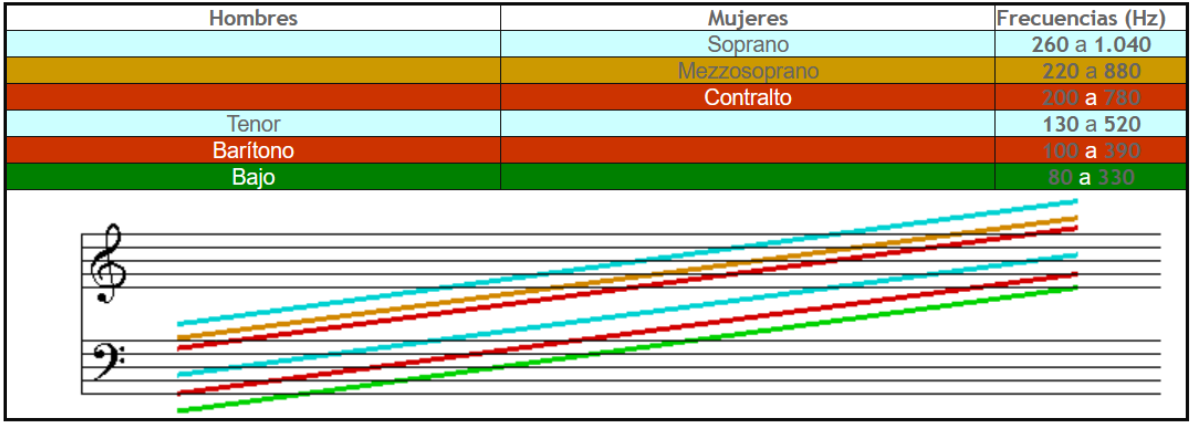
① This GeoGebra example dynamically illustrates the correspondence between human vocal ranges (from bass to soprano) and mathematical structures, mapping pitch sequences onto geometric points, lines, and intersections. ② Core mathematical concepts include sequences (pitch series), geometric construction (perpendicular lines, intersections), and comparison of arithmetic and geometric means, along with properties of rhombi and orthocenters. ③ Construction highlights: uses OrthogonalLine to create perpendiculars, Point and Intersect to determine key points; objects include points A, B, C, D, lines f, g, h, and labels such as soprano, mezzo, contralto, tenor, baritono, bajo representing voice parts, forming a cross-disciplinary visual model of music and mathematics. ④ Suitable for secondary school and above, this example supports interdisciplinary teaching of music and mathematics, helping students grasp the mathematical patterns in pitch sequences and the application of geometric construction in visualizing abstract concepts.
GeoGebra Commands & Parameters
OrthogonalLine(C, xAxis) → fOrthogonalLine(C, f) → hPoint(h) → DOrthogonalLine(D, h) → gOrthogonalLine(J, f) → iOrthogonalLine(E, f) → jOrthogonalLine(F, f) → kOrthogonalLine(H, f) → lOrthogonalLine(I, f) → mPoint(h) → KOrthogonalLine(K, h) → nIntersect(l, n) → NIntersect(m, n) → OIntersect(i, n) → POrthogonalLine(G, f) → pIntersect(p, n) → QIntersect(g, j) → RIntersect(g, k) → SIntersect(g, p) → T
AI Drawing Prompt Reference
Draw a musical pitch range and mathematical structure diagram with vertical lines and intersections. Start by drawing a perpendicular line from point C to the x-axis to get line f, then draw a perpendicular line from point C to line f to get line h. Next, take point D on line h and draw a perpendicular line from point D to line h to get line g. Continue by drawing a perpendicular line from point J to line f to get line i, from point E to line f to get line j, from point F to line f to get line k, from point H to line f to get line l, and from point I to line f to get line m. Take point K on line h and draw a perpendicular line from point K to line h to get line n. Then, take points N, O, and P on the intersections of lines l and n, m and n, and i and n, respectively. Finally, draw a perpendicular line from point G to line f to get line p, and take point Q on the intersection of lines p and n, and points R, S, and T on the intersections of lines g and j, g and k, and g and p, respectively.
The prompt above was compiled from the original drawing commands and is for reference only.