
Sliding Game: Geometric Transformation and Locus Analysis
Loading the math board and drawing, please wait…
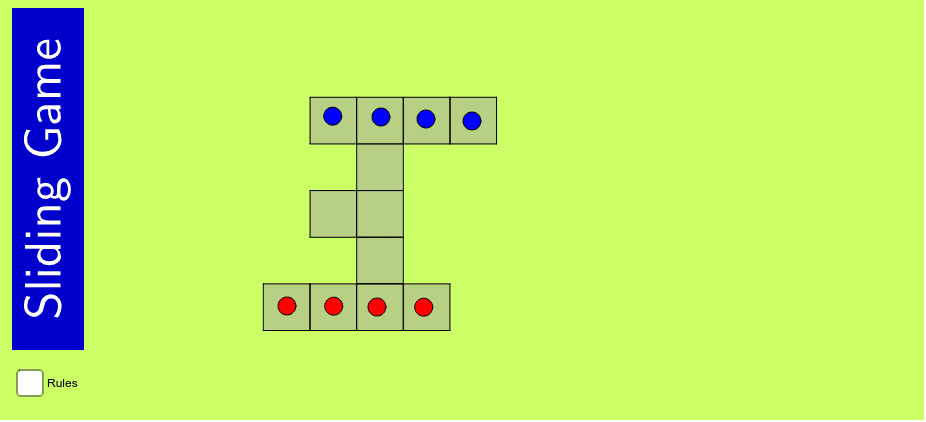
This example demonstrates dynamic geometric transformations through sliding operations. Key mathematical concepts include similarity transformations, linear equations, and vector operations. Construction involves commands like OrthogonalLine, Intersect, and Polygon in GeoGebra. Suitable for middle school geometry teaching and dynamic geometry exploration.
GeoGebra Commands & Parameters
OrthogonalLine(F, yAxis) → aOrthogonalLine(E, yAxis) → bOrthogonalLine(D, yAxis) → cOrthogonalLine(C, yAxis) → dOrthogonalLine(B, yAxis) → eOrthogonalLine(G, xAxis) → fOrthogonalLine(H, xAxis) → gOrthogonalLine(I, xAxis) → hOrthogonalLine(J, xAxis) → iOrthogonalLine(K, xAxis) → jOrthogonalLine(L, xAxis) → kIntersect(f, a) → MIntersect(g, a) → NIntersect(h, a) → OIntersect(i, a) → PIntersect(j, a) → QIntersect(k, a) → RIntersect(k, b) → SIntersect(k, c) → TIntersect(k, d) → UIntersect(k, e) → VIntersect(j, b) → WIntersect(j, c) → ZIntersect(j, d) → A_1Intersect(j, e) → B_1Intersect(i, e) → C_1Intersect(i, d) → D_1Intersect(i, c) → E_1Intersect(i, b) → F_1Intersect(h, b) → G_1Intersect(h, c) → H_1Intersect(h, d) → I_1Intersect(h, e) → J_1Intersect(e, g) → K_1Intersect(g, d) → L_1Intersect(g, c) → M_1Intersect(g, b) → N_1Intersect(f, b) → O_1Intersect(f, c) → P_1Intersect(f, d) → Q_1Intersect(f, e) → R_1Polygon(R_1, K_1, H, G) → poli2, r_2, k_1, h_1, g_2Polygon(H, I, J_1, K_1) → poli3, h_2, i_1, j_1, k_2Polygon(I, J, C_1, J_1) → poli4, i_2, j_2, c_1, j_3Polygon(I_1, D_1, C_1, J_1) → poli5, i_3, d_1, c_2, j_4Polygon(H_1, E_1, D_1, I_1) → poli6, h_3, e_1, d_2, i_4Polygon(M_1, H_1, I_1, L_1) → poli7, m_1, h_4, i_5, l_1Polygon(H_1, G_1, F_1, E_1) → poli8, h_5, g_3, f_1, e_2Polygon(N, O, G_1, N_1) → poli9, n, o, g_4, n_1Polygon(O, P, F_1, G_1) → poli10, o_1, p, f_2, g_5Polygon(F_1, W, Q, P) → poli11, f_3, w, q, p_1Polygon(Q, R, S, W) → poli12, q_1, r, s, w_1Polygon(C_1, B_1, K, J) → poli13, c_3, b_2, k_3, j_5VerticalText(testo1) → testo2
AI Drawing Prompt Reference
This is a dynamic geometric transformation graph with multiple line segments and points. Line segments extend outward from the origin, forming vertical and horizontal lines. Points are connected through intersections of these lines, creating a complex graph structure. The graph illustrates similarity transformations and linear equations, suitable for geometry teaching and exploration.
The prompt above was compiled from the original drawing commands and is for reference only.