
Practice: Using Negative Exponents with GeoGebra
Loading the math board and drawing, please wait…
This GeoGebra practice illustrates how negative exponents (a^{-n}) relate to reciprocal forms and how algebraic transformations can be represented and checked through constructed geometric elements. The example focuses on the definition a^{-n}=1/a^{n}, simplification of exponential expressions, and using visualization to build intuition for rewriting and verifying exponent rules. Construction-wise, it relies on the key GeoGebra objects listed in the provided construct summary—A1, B1, A2, A3, A4, A5—typically used as anchor points or intermediate points whose relationships (e.g., measured values or linked annotations) reflect the algebraic quantities under study. It is suitable for upper secondary and early university students, as well as for classroom demonstrations and self-study where learners benefit from connecting symbolic exponent rules to a concrete, visual representation.
GeoGebra Commands & Parameters
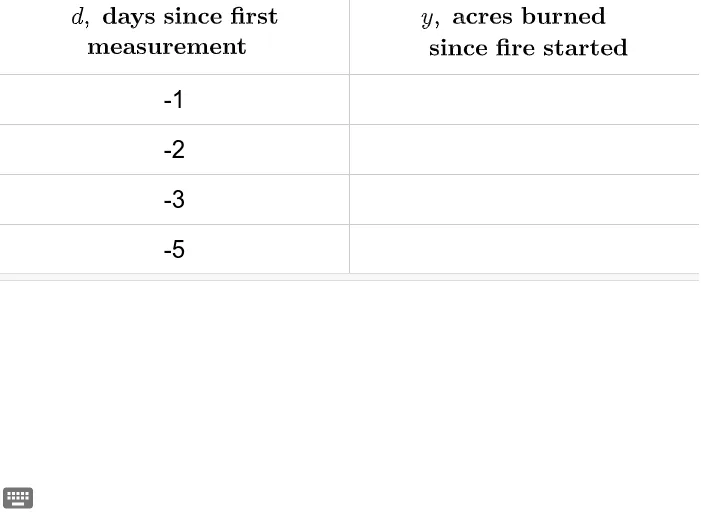
-1-2-3-5
AI Drawing Prompt Reference
Draw an exponential function to show how negative exponents are represented as reciprocal forms. Start by plotting y=1/x, then adjust points on the x-axis to observe changes in y-values and understand the a^{-n} = 1/a^n relationship. Next, plot y=x^{-1}, y=x^{-2}, y=x^{-3}, and y=x^{-5} to compare their shapes and positions and verify the exponent rules.
The prompt above was compiled from the original drawing commands and is for reference only.