
Motion Around a Circle: Quadratic Relations and Intersection Visualization
Loading the math board and drawing, please wait…
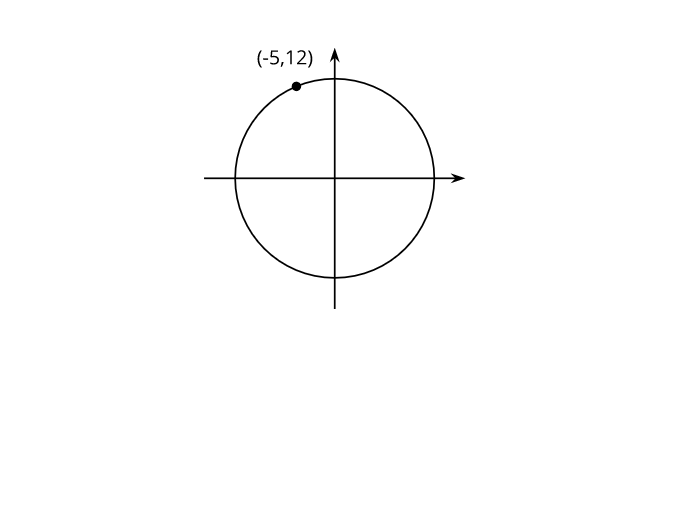
This example demonstrates how an object moving around a circle changes position as a parameter varies, and how those positions relate to intersection points with a target curve/geometry. It emphasizes core ideas from geometry and analytic geometry: properties of circles, the parametric viewpoint behind circular motion, the geometric meaning of quadratic equations (turning a position condition into a quadratic relationship), and the computation/visualization of intersections. With no explicit GeoGebra construction commands provided, the likely construction workflow is: create the circle (or related quadratic object), define the moving point via a parameter/rotation-based model, and generate intersection objects to link the moving configuration to where it meets the circle/curve (and, if included in the original lesson, connect the motion to 3D interpretations such as cylindrical/box-like setups and their projections). Suitable for middle to early high school learners and introductory analytic-geometry lessons, it supports intuitive understanding and classroom demonstrations of circular motion and quadratic/coordinate geometry concepts.
AI Drawing Prompt Reference
Draw a circle centered at the origin with a fixed radius. Place a moving point on the circle that travels along the circumference as a parameter changes, and show its path. Also, plot a target curve (such as a line or parabola) in the coordinate plane, and mark the intersection points where the moving point meets this curve during its motion. Adjust the parameter to observe how the point's position relates to the intersections, illustrating the connection between circular motion and quadratic intersection relationships. The figure should include coordinate axes, the circle, the moving point with its trajectory, the target curve, and intersection markers, with a clear layout suitable for classroom demonstration.
The prompt above was compiled from the original drawing commands and is for reference only.