
IM 7.7.16 Practice: Applying Volume and Surface Area
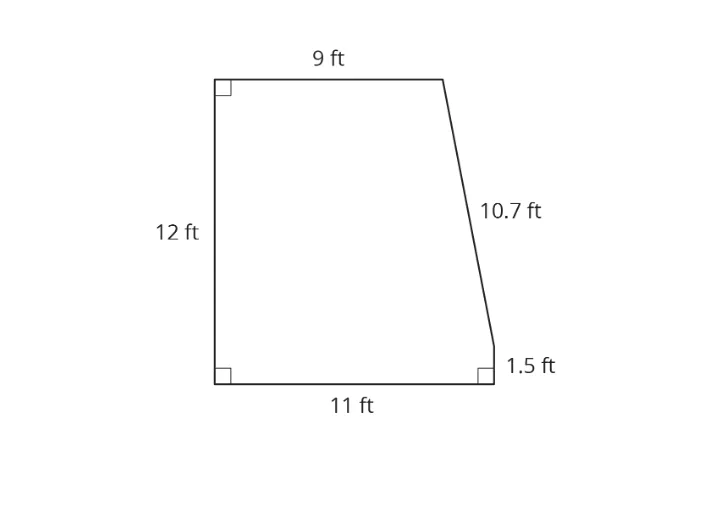
Loading the math board and drawing, please wait…
This GeoGebra practice demonstrates how to apply geometric reasoning to compute the volume and surface area of 3D solids. It centers on solid-geometry measurement, using trigonometry to resolve slanted dimensions or decompose relevant lengths, and coordinate geometry to place key vertices and define boundaries precisely. Root expressions are used when derived lengths involve square roots, ensuring accurate metric relationships. Construction is organized around 3D objects (e.g., pic1) and supporting geometric elements: points and edges are positioned with coordinates, trigonometric relationships determine heights/face measures, and the resulting lengths are assembled into the volume and surface-area calculations. Suitable for advanced middle school through early high school, as well as classroom demonstrations and guided practice.
AI Drawing Prompt Reference
Draw a 3D solid demonstrating geometric reasoning for calculating volume and surface area. Use coordinates to place key vertices and define boundaries precisely, apply trigonometry to resolve slanted dimensions or decompose lengths, and use square root expressions for derived lengths involving roots to ensure accurate metric relationships. Include the 3D object with supporting geometric elements like points and edges, clearly showing the assembly of lengths into volume and surface area calculations.
The prompt above was compiled from the original drawing commands and is for reference only.