
How Written Problems Become Systems of Equations
Loading the math board and drawing, please wait…
In collections
Linear Algebra
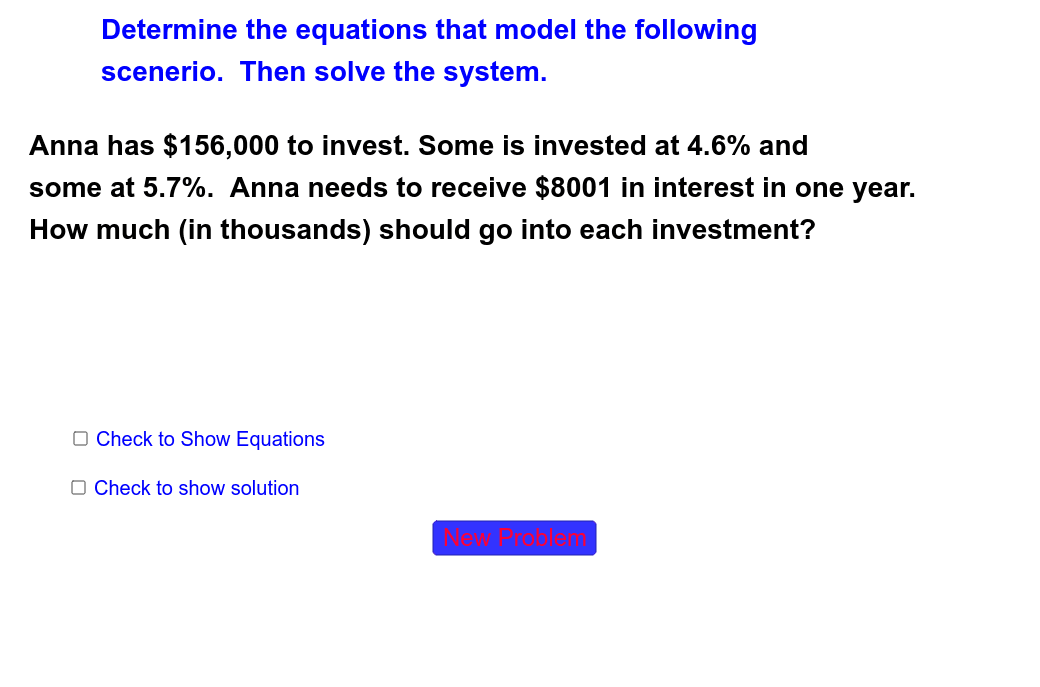
This example demonstrates the transformation of written mathematical problems into systems of equations modeled in GeoGebra. It involves core concepts like coordinate geometry, systems of equations, and geometric constructions. Key GeoGebra commands and objects used include Random, Element, RandomElement, pick, xc1, x1, y1, xc2, yc2, rh2, yc1, rh1, a, b, button1, c, d, text2, e, text4, text5, minusyc1, names, pickname, cost1, text1, text7, text3, text6, text8, xperc, yperc, text9, showcasing interactive modeling suitable for high school mathematics education.
GeoGebra Commands & Parameters
Random(1, 6) → pickElement({2, 1, Random[2, 8], Random[100, 300] / 100, (10 * Random[40, 80] / 100), Random[30, 80]}, pick) → xc1Random(1, 100) → x1Random(1, 100) → y1Element({1, Random[1, 100], 1, 1, 1, 1}, pick) → xc2Element({1, Random[1, 100], 1, 1, 1, 1}, pick) → yc2Element({4, 1, (-Random[1, xc1 - 1]), Random[100, 300] / 100, (10 * Random[80, 160] / 100), Random[30, 80]}, pick) → yc1RandomElement(names) → pickname
AI Drawing Prompt Reference
Create a coordinate geometry illustration showing the transformation of written problems into systems of equations. Randomly generate two points and label their coordinates, then create a function based on the first point and generate two constant points. Use these points to construct geometric relationships, demonstrating the connection between the solutions of the system of equations and geometric constructions, suitable for interactive modeling in high school mathematics education.
The prompt above was compiled from the original drawing commands and is for reference only.