
Geometrical and Mechanical Meanings of Derivative
Loading the math board and drawing, please wait…
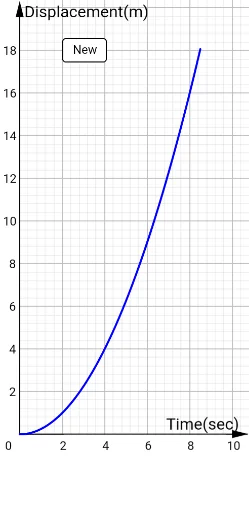
This example demonstrates the geometrical meaning (tangent slope) and mechanical meaning (instantaneous velocity) of derivatives. It involves core concepts like derivatives, tangents, velocity, and similarity transformations. Constructed using GeoGebra commands such as Shuffle, Element, CurveCartesian, Textfield, If, Tangent, Slope. Suitable for high school students and beginners in calculus learning derivative applications.
GeoGebra Commands & Parameters
Shuffle({2, 4, 6, 8}) → List1Element(List1, 1) → aElement(List1, 2) → bCurveCartesian(t, (0.25 * t^(2)), t, 0, 8.5) → eTextfield(ler) → inpIf(ler1 ≟ vel, true, false) → validateTangent(A1, e) → fSlope(f) → m
AI Drawing Prompt Reference
Draw a Cartesian coordinate plane with a parabola opening upward, given by y equals one quarter times x squared, for x from 0 to 8.5. Place a movable point on the parabola, and draw the tangent line to the parabola at that point, displaying the slope of this tangent. Also include a text input field for entering a velocity value, and set up a validation condition: when the entered velocity equals the tangent slope, show a confirmation. The figure illustrates the geometric meaning of the derivative as the tangent slope and its mechanical meaning as instantaneous velocity.
The prompt above was compiled from the original drawing commands and is for reference only.