
Geometric Transformations and Function Graphs in Geogebra
Loading the math board and drawing, please wait…
In collections
Realidades de GeoGebra
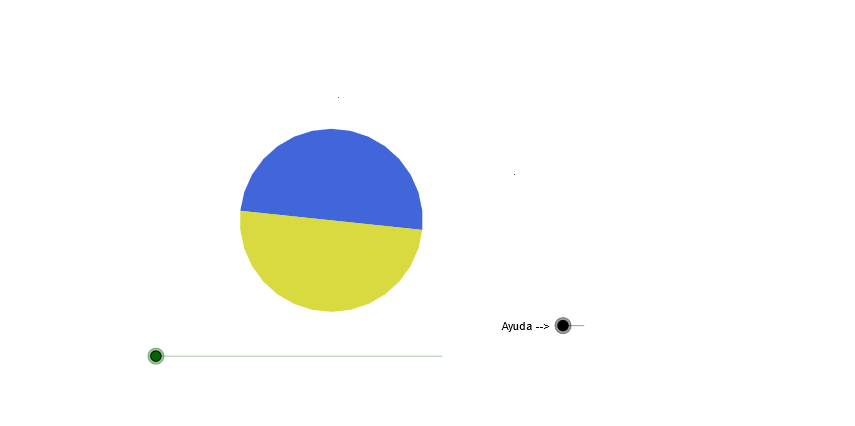
This example demonstrates geometric transformations and function graph plotting using Geogebra. Key mathematical concepts include geometric transformations, function graphs, and the Pythagorean theorem. Construction involves commands like Midpoint, Circle, Rotate, and Line, along with objects such as triangles, circles, and polygons. Suitable for middle or high school mathematics education to understand the connection between geometry and functions.
GeoGebra Commands & Parameters
Midpoint(N_1, O_1) → V_1Midpoint(L_1, M_1) → S_1Circle(A, P_0) → cRotate(P_0, α, A) → A_1If(a < 1, a, 1) → dRotate(A_1, ((-d) * α / 2), P_0) → P_1Rotate(A, ((-d) * α / 2), P_0) → E_1Rotate(P_1, α, E_1) → A_2Rotate(A_2, ((-d) * α), P_1) → P_2Rotate(E_1, ((-d) * α), P_1) → E_2Rotate(P_2, α, E_2) → A_3Rotate(A_3, ((-d) * α), P_2) → P_3Rotate(E_2, ((-d) * α), P_2) → E_3Rotate(P_3, α, E_3) → A_4Rotate(A_4, ((-d) * α), P_3) → P_4Rotate(E_3, ((-d) * α), P_3) → E_4Rotate(E_4, ((-d) * α), P_4) → E_5Rotate(P_4, α, E_4) → A_5Rotate(A_5, ((-d) * α), P_4) → P_5Rotate(E_5, ((-d) * α), P_5) → E_6Rotate(P_5, α, E_5) → A_6Rotate(A_6, ((-d) * α), P_5) → P_6Rotate(E_6, ((-d) * α), P_6) → E_7Rotate(P_6, α, E_6) → A_7Rotate(A_7, ((-d) * α), P_6) → P_7Rotate(E_7, ((-d) * α), P_7) → E_8Rotate(P_7, α, E_7) → A_8Rotate(A_8, ((-d) * α), P_7) → P_8Line(P_0, A) → bMirror(E_1, b) → BMirror(E_2, b) → CMirror(E_3, b) → DMirror(E_4, b) → EMirror(E_6, b) → FMirror(E_5, b) → GMirror(E_7, b) → HMirror(E_8, b) → IMirror(P_1, b) → QMirror(P_2, b) → RMirror(P_3, b) → SMirror(P_4, b) → TMirror(P_5, b) → UMirror(P_6, b) → VMirror(P_7, b) → WMirror(P_8, b) → YPolygon(P_6, P_5, T, U, V, W, Y, I, W, H, V, F, P_4, U, G, T, E, S, D, R, C, Q, B, P_3, P_0, E_1, P_1, E_2, P_2, E_3, P_3, E_4, P_4, E_5, P_2, P_5, E_6, P_6, E_7, P_7, P_1, P_0, Q, R, S) → R_1, e, n, p, q, r, s, t, a_1, b_1, c_1, d_1, f, e_1, f_1, g_1, h_1, i_1, j_1, k_1, l_1, m_1, n_1, g, p_1, q_1, r_1, s_1, t_1, a_2, b_2, c_2, d_2, e_2, h, f_2, g_2, h_2, i_2, j_2, k_2, i, j, k, l, mMidpoint(P_0, B) → K_1Vector(S_1, T_1) → vVector(S_1, U_1) → uVector(V_1, W_1) → wVector(V_1, Y_1) → zIf(a < 1.2, 0, a - 1.2) → ddMirror(P_6, A) → P_6'Mirror(P_5, A) → P_5'Mirror(P_4, A) → P_4'Mirror(P_3, A) → P_3'Mirror(P_2, A) → P_2'Mirror(P_1, A) → P_1'Mirror(P_0, A) → P_0'Mirror(Q, A) → Q'Mirror(R, A) → R'Mirror(S, A) → S'Mirror(T, A) → T'Mirror(U, A) → U'Mirror(V, A) → V'Mirror(W, A) → W'Mirror(Y, A) → Y'Mirror(I, A) → I'Mirror(W, A) → W'_1Mirror(H, A) → H'Mirror(V, A) → V'_1Mirror(F, A) → F'Mirror(U, A) → U'_1Mirror(G, A) → G'Mirror(T, A) → T'_1Mirror(E, A) → E'Mirror(S, A) → S'_1Mirror(D, A) → D'Mirror(R, A) → R'_1Mirror(C, A) → C'Mirror(Q, A) → Q'_1Mirror(B, A) → B'Mirror(P_0, A) → P_9Mirror(E_1, A) → E_1'Mirror(P_1, A) → P_{10}Mirror(E_2, A) → E_2'Mirror(P_2, A) → P_{11}Mirror(E_3, A) → E_3'Mirror(P_3, A) → P_{12}Mirror(E_4, A) → E_4'Mirror(P_4, A) → P_{13}Mirror(E_5, A) → E_5'Mirror(P_5, A) → P_{14}Mirror(E_6, A) → E_6'Mirror(P_6, A) → P_{15}Mirror(E_7, A) → E_7'Mirror(P_7, A) → P_7'Polygon(P_6', P_5', T', U', V', W', Y', I', W'_1, H', V'_1, F', P_4', U'_1, G', T'_1, E', S'_1, D', R'_1, C', Q'_1, B', P_3', P_9, E_1', P_{10}, E_2', P_{11}, E_3', P_{12}, E_4', P_{13}, E_5', P_2', P_{14}, E_6', P_{15}, E_7', P_7', P_1', P_0', Q', R', S') → R_1', p_6', s', t', u', v', w', y', i', w'_1, h', v'_1, p_5', f', u'_1, g', t'_1, e', s'_1, d', r'_1, c', q'_1, p_4', b', p_9, e_1', p_{10}, e_2', p_{11}, e_3', p_{12}, e_4', p_{13}, p_3', e_5', p_{14}, e_6', p_{15}, e_7', p_7', p_2', p_1', p_0', q', r'Vector(W', H') → u_1Translate(P_6', v_1) → P_6''Translate(P_5', v_1) → P_5''Translate(P_4', v_1) → P_4''Translate(P_3', v_1) → P_3''Translate(P_2', v_1) → P_2''Translate(P_1', v_1) → P_1''Translate(P_0', v_1) → P_0''Translate(Q', v_1) → Q''Translate(R', v_1) → R''Translate(S', v_1) → S''Translate(T', v_1) → T''Translate(U', v_1) → U''Translate(V', v_1) → V''Translate(W', v_1) → W''Translate(Y', v_1) → Y''Translate(I', v_1) → I''Translate(W'_1, v_1) → W'_1'Translate(H', v_1) → H''Translate(V'_1, v_1) → V'_1'Translate(F', v_1) → F''Translate(U'_1, v_1) → U'_1'Translate(G', v_1) → G''Translate(T'_1, v_1) → T'_1'Translate(E', v_1) → E''Translate(S'_1, v_1) → S'_1'Translate(D', v_1) → D''Translate(R'_1, v_1) → R'_1'Translate(C', v_1) → C''Translate(Q'_1, v_1) → Q'_1'Translate(B', v_1) → B''Translate(P_9, v_1) → P_9'Translate(E_1', v_1) → E_1''Translate(P_{10}, v_1) → P_{10}'Translate(E_2', v_1) → E_2''Translate(P_{11}, v_1) → P_{11}'Translate(E_3', v_1) → E_3''Translate(P_{12}, v_1) → P_{12}'Translate(E_4', v_1) → E_4''Translate(P_{13}, v_1) → P_{13}'Translate(E_5', v_1) → E_5''Translate(P_{14}, v_1) → P_{14}'Translate(E_6', v_1) → E_6''Translate(P_{15}, v_1) → P_{15}'Translate(E_7', v_1) → E_7''Translate(P_7', v_1) → P_7''Polygon(P_6'', P_5'', T'', U'', V'', W'', Y'', I'', W'_1', H'', V'_1', F'', P_4'', U'_1', G'', T'_1', E'', S'_1', D'', R'_1', C'', Q'_1', B'', P_3'', P_9', E_1'', P_{10}', E_2'', P_{11}', E_3'', P_{12}', E_4'', P_{13}', E_5'', P_2'', P_{14}', E_6'', P_{15}', E_7'', P_7'', P_1'', P_0'', Q'', R'', S'') → R_1'', p_6'', s'', t'', u'', v'', w'', y'', i'', w'_1', h'', v'_1', p_5'', f'', u'_1', g'', t'_1', e'', s'_1', d'', r'_1', c'', q'_1', p_4'', b'', p_9', e_1'', p_{10}', e_2'', p_{11}', e_3'', p_{12}', e_4'', p_{13}', p_3'', e_5'', p_{14}', e_6'', p_{15}', e_7'', p_7'', p_2'', p_1'', p_0'', q'', r''
AI Drawing Prompt Reference
Draw a circle with a fixed center and given radius. Place a starting point on the circle. From this point, perform a series of rotations around the center, with each rotation angle controlled by a parameter, and mirror the resulting points across a symmetry line. Connect these points in sequence to form a symmetric closed curve composed of arcs and line segments, resembling a petal or spiral pattern. Additionally, construct a triangle inside the circle, marking its vertices and midpoints, and use a vector to show the displacement between two points. The figure emphasizes the combination of geometric transformations (rotation, reflection) with function graphs.
The prompt above was compiled from the original drawing commands and is for reference only.