
Geometric construction of two skew lines in 3D
Loading the math board and drawing, please wait…
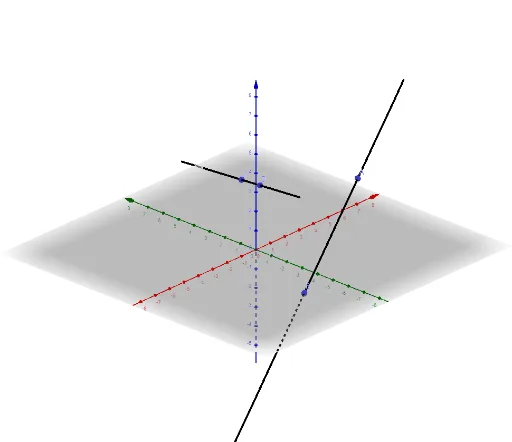
This example demonstrates the spatial relationship of two skew lines in three-dimensional space—lines that neither intersect nor are parallel. Key concepts include 3D line geometry, the defining property of skew lines (non-intersection and non-parallelism), and geometric ways to reason about angles and spatial orientation. Construction-wise, the model creates the scene using GeoGebra’s Line command to define two line objects, labeled f and g, from point-defined inputs (A, B, C, D). Multiple point objects are used to precisely place the lines’ directions and positions in 3D, making the skew configuration visually and structurally clear. Suitable for late secondary education and early university coursework, especially for lessons on solid geometry and basic spatial reasoning.
GeoGebra Commands & Parameters
Line(B, A) → fLine(D, C) → g
AI Drawing Prompt Reference
Draw two skew lines in 3D space that neither intersect nor are parallel to demonstrate their spatial relationship. Represent them as two lines, one from point B to point A and the other from point D to point C, using these points to define the direction and position of the lines clearly showing the skew configuration.
The prompt above was compiled from the original drawing commands and is for reference only.