
Geometric Approximation of Pi: Area and (Definite) Integral Thinking
Loading the math board and drawing, please wait…
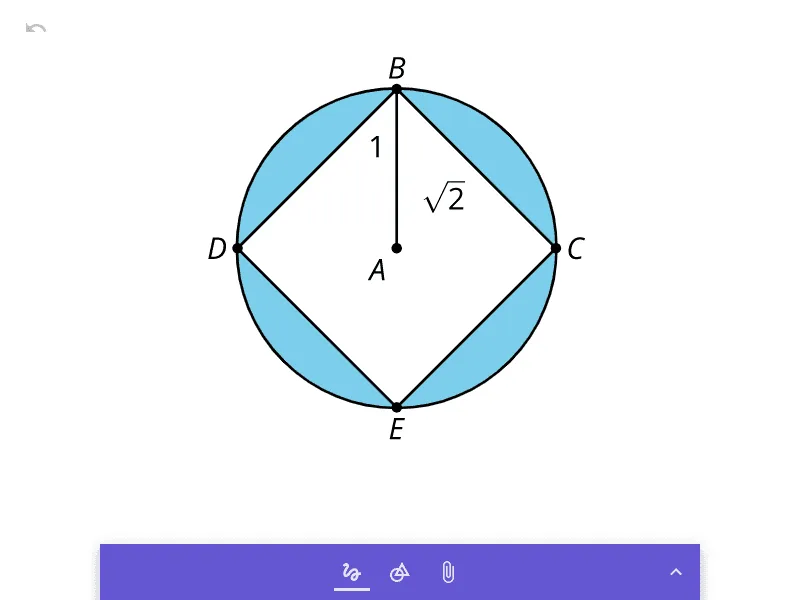
This example demonstrates how to approximate π by comparing geometric areas that form upper and lower bounds around a circle. The key mathematical ideas are area representation (linked to definite integrals), constructing polygonal approximations, and analyzing the difference and slope to observe how the approximation error changes as the partition becomes finer. It also supports the use of simple logical checks to update which bound is tighter as parameters vary. Construction focuses on creating circle geometry, generating inscribed/circumscribed polygon (or partition-based) approximations, measuring areas, computing the area difference (circle area minus/plus the approximation), and using those quantities to visualize convergence/accuracy trends. Suitable for advanced secondary school and early calculus courses, especially for building intuition between geometric area, definite integrals, and limiting behavior.
AI Drawing Prompt Reference
Draw a circle and display its interior and exterior approximations using polygons, one inscribed and the other circumscribed. Measure and compare the areas of the circle and the polygons, visually representing the difference in their areas. Show how the approximation improves as the number of sides of the polygons increases, illustrating the concept of definite integrals and limiting behavior.
The prompt above was compiled from the original drawing commands and is for reference only.