
GeoGebra Geometric Construction and Function Graphing Example by Heather Pierce
Loading the math board and drawing, please wait…
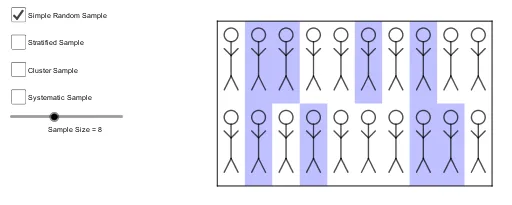
This example demonstrates how to create geometric figures and function graphs using GeoGebra. Key mathematical concepts include geometric transformations, function graphs, and coordinate systems. Construction involves using commands like Circle, Segment, Sequence, and If to build shapes, with Random for dynamic adjustments. Suitable for middle school or high school students to learn basic geometry and function concepts, and understand principles of geometric transformations.
GeoGebra Commands & Parameters
Circle(A, 0.125) → fCircle(B, 0.125) → gCircle(C, 0.125) → hCircle(D, 0.125) → kCircle(E, 0.125) → pCircle(F, 0.125) → qCircle(G, 0.125) → rCircle(H, 0.125) → sCircle(I, 0.125) → tCircle(J, 0.125) → c_1Circle(K, 0.125) → d_1Circle(L, 0.125) → e_1Circle(M, 0.125) → f_1Circle(N, 0.125) → g_1Circle(O, 0.125) → h_1Circle(P, 0.125) → k_1Circle(Q, 0.125) → p_1Circle(R, 0.125) → q_1Circle(S, 0.125) → r_1Circle(T, 0.125) → s_1Segment(U, G_1) → iSegment(V, H_1) → jSegment(W, I_1) → lSegment(Z, J_1) → mSegment(A_1, K_1) → nSegment(B_1, N_1) → i_1Segment(C_1, L_1) → j_1Segment(D_1, M_1) → l_1Segment(E_1, P_1) → m_1Segment(F_1, O_1) → n_1Segment(G_1, D_2) → t_1Segment(G_1, C_2) → a_1Segment(E_2, H_1) → b_1Segment(H_1, V_2) → f_2Segment(F_2, I_1) → g_2Segment(I_1, U_2) → h_2Segment(G_2, J_1) → i_2Segment(J_1, T_2) → j_2Segment(H_2, K_1) → k_2Segment(K_1, S_2) → l_2Segment(I_2, N_1) → m_2Segment(N_1, R_2) → n_2Segment(J_2, L_1) → p_2Segment(L_1, Q_2) → q_2Segment(K_2, M_1) → r_2Segment(M_1, P_2) → s_2Segment(L_2, P_1) → t_2Segment(P_1, O_2) → a_2Segment(M_2, O_1) → b_2Segment(O_1, N_2) → c_2Segment(R_3, Q_1) → d_2Segment(W_2, Q_1) → e_2Segment(Q_3, R_1) → f_3Segment(Z_2, R_1) → g_3Segment(P_3, S_1) → h_3Segment(A_3, S_1) → i_3Segment(O_3, T_1) → j_3Segment(B_3, T_1) → k_3Segment(N_3, U_1) → l_3Segment(C_3, U_1) → m_3Segment(M_3, V_1) → n_3Segment(D_3, V_1) → p_3Segment(L_3, W_1) → q_3Segment(E_3, W_1) → r_3Segment(K_3, Z_1) → s_3Segment(F_3, Z_1) → t_3Segment(J_3, A_2) → a_3Segment(G_3, A_2) → b_3Segment(H_3, B_2) → c_3Segment(I_3, B_2) → d_3Segment(U_5, K_5) → e_3Segment(Q_6, K_5) → f_4Segment(V_5, L_5) → g_4Segment(P_6, L_5) → h_4Segment(W_5, M_5) → i_4Segment(O_6, M_5) → j_4Segment(Z_5, N_5) → k_4Segment(N_6, N_5) → l_4Segment(A_6, O_5) → m_4Segment(M_6, O_5) → n_4Segment(B_6, P_5) → p_4Segment(L_6, P_5) → q_4Segment(C_6, Q_5) → r_4Segment(J_6, Q_5) → s_4Segment(D_6, R_5) → t_4Segment(I_6, R_5) → a_4Segment(E_6, S_5) → b_4Segment(H_6, S_5) → c_4Segment(F_6, T_5) → d_4Segment(G_6, T_5) → e_4Segment(D_4, N_4) → f_5Segment(M_4, C_4) → g_5Segment(B_4, L_4) → h_5Segment(K_4, A_4) → i_5Segment(Z_3, J_4) → j_5Segment(I_4, W_3) → k_5Segment(V_3, H_4) → l_5Segment(G_4, U_3) → m_5Segment(T_3, F_4) → n_5Segment(E_4, S_3) → p_5Segment(O_4, E_4) → q_5Segment(E_4, J_5) → r_5Segment(P_4, F_4) → s_5Segment(F_4, I_5) → t_5Segment(Q_4, G_4) → a_5Segment(G_4, H_5) → b_5Segment(R_4, H_4) → c_5Segment(H_4, G_5) → d_5Segment(S_4, I_4) → e_5Segment(I_4, F_5) → f_6Segment(T_4, J_4) → g_6Segment(J_4, E_5) → h_6Segment(U_4, K_4) → i_6Segment(K_4, D_5) → j_6Segment(V_4, L_4) → k_6Segment(L_4, C_5) → l_6Segment(W_4, M_4) → m_6Segment(M_4, B_5) → n_6Segment(Z_4, N_4) → p_6Segment(N_4, A_5) → q_6Sort(Sequence[(random(), Element[DataList, k]), k, 1, Length[DataList]]) → RandomDataPairSequence(y(Element[RandomDataPair, k]), k, 1, e) → ChoosedListPolygon(R_6, D_7, E_7, O_7) → q1, r_6, d_7, e_7, o_7Polygon(D_7, S_6, N_7, E_7) → q2, s_6, t_6, n_7, a_6Polygon(S_6, C_7, F_7, N_7) → q3, b_6, c_7, f_7, c_6Polygon(C_7, T_6, M_7, F_7) → q4, d_6, e_6, m_7, g_7Polygon(T_6, B_7, G_7, M_7) → q5, h_7, b_7, i_7, j_7Polygon(B_7, U_6, L_7, G_7) → q6, k_7, u_6, l_7, p_7Polygon(U_6, A_7, H_7, L_7) → q7, q_7, a_7, r_7, s_7Polygon(A_7, V_6, K_7, H_7) → q8, t_7, v_6, f_8, g_8Polygon(V_6, Z_6, I_7, K_7) → q9, h_8, z_6, i_8, j_8Polygon(Z_6, W_6, J_7, I_7) → q10, k_8, w_6, l_8, m_8Polygon(E_7, O_7, P_7, B_8) → q11, n_8, p_8, q_8, b_8Polygon(E_7, N_7, Q_7, B_8) → q12, r_8, s_8, t_8, a_8Polygon(N_7, Q_7, A_8, F_7) → q13, c_8, d_8, e_8, f_9Polygon(F_7, A_8, R_7, M_7) → q14, g_9, h_9, i_9, j_9Polygon(M_7, G_7, Z_7, R_7) → q15, k_9, l_9, z_7, m_9Polygon(G_7, Z_7, S_7, L_7) → q16, n_9, p_9, q_9, r_9Polygon(L_7, S_7, W_7, H_7) → q17, s_9, t_9, w_7, a_9Polygon(H_7, K_7, T_7, W_7) → q18, b_9, c_9, d_9, e_9Polygon(K_7, I_7, V_7, T_7) → q19, f_{10}, g_{10}, v_7, h_{10}Polygon(I_7, J_7, U_7, V_7) → q20, i_{10}, j_{10}, u_7, k_{10}Segment(R_6, W_6) → l_{10}Segment(W_6, U_7) → m_{10}Segment(U_7, P_7) → n_{10}Segment(P_7, R_6) → p_{10}Segment(B_7, Z_7) → q_{10}Segment(O_7, J_7) → r_{10}Sort(Sequence[(random(), Element[DataList1, k]), k, 1, Length[DataList1]]) → RandomDataPair1Sequence(y(Element[RandomDataPair1, k]), k, 1, o) → Stratified1Sort(Sequence[(random(), Element[DataList1, k]), k, 1, Length[DataList1]]) → RandomDataPair2Sort(Sequence[(random(), Element[DataList1, k]), k, 1, Length[DataList1]]) → RandomDataPair3Sort(Sequence[(random(), Element[DataList1, k]), k, 1, Length[DataList1]]) → RandomDataPair4Sequence(y(Element[RandomDataPair2, k]), k, 1, o) → Stratified2Sequence(y(Element[RandomDataPair3, k]), k, 1, o) → Stratified3Sequence(y(Element[RandomDataPair4, k]), k, 1, o) → Stratified4Polygon(R_6, O_7, E_7, D_7) → q21, s_{10}, t_{10}, a_{10}, b_{10}Polygon(D_7, S_6, N_7, E_7) → q22, c_{10}, d_{10}, e_{10}, f_{11}Polygon(S_6, C_7, F_7, N_7) → q23, g_{11}, h_{11}, i_{11}, j_{11}Polygon(C_7, T_6, M_7, F_7) → q24, k_{11}, l_{11}, m_{11}, n_{11}Polygon(T_6, B_7, G_7, M_7) → q25, p_{11}, q_{11}, r_{11}, s_{11}Polygon(B_7, U_6, L_7, G_7) → q26, t_{11}, a_{11}, b_{11}, c_{11}Polygon(U_6, A_7, H_7, L_7) → q27, d_{11}, e_{11}, f_{12}, g_{12}Polygon(A_7, V_6, K_7, H_7) → q28, h_{12}, i_{12}, j_{12}, k_{12}Polygon(V_6, Z_6, I_7, K_7) → q29, l_{12}, m_{12}, n_{12}, p_{12}Polygon(Z_6, W_6, J_7, I_7) → q30, q_{12}, r_{12}, s_{12}, t_{12}Polygon(O_7, E_7, B_8, P_7) → q31, a_{12}, b_{12}, c_{12}, d_{12}Polygon(E_7, N_7, Q_7, B_8) → q32, e_{12}, f_{13}, g_{13}, h_{13}Polygon(N_7, F_7, A_8, Q_7) → q33, i_{13}, j_{13}, k_{13}, l_{13}Polygon(F_7, M_7, R_7, A_8) → q34, m_{13}, n_{13}, p_{13}, q_{13}Polygon(M_7, G_7, Z_7, R_7) → q35, r_{13}, s_{13}, t_{13}, a_{13}Polygon(G_7, L_7, S_7, Z_7) → q36, b_{13}, c_{13}, d_{13}, e_{13}Polygon(L_7, H_7, W_7, S_7) → q37, f_{14}, g_{14}, h_{14}, i_{14}Polygon(H_7, K_7, T_7, W_7) → q38, j_{14}, k_{14}, l_{14}, m_{14}Polygon(K_7, I_7, V_7, T_7) → q39, n_{14}, p_{14}, q_{14}, r_{14}Polygon(I_7, J_7, U_7, V_7) → q40, s_{14}, t_{14}, a_{14}, b_{14}If(o ≟ 4, strat1, o ≟ 8, Join[{strat1, strat2}], o ≟ 12, Join[{strat1, strat2, strat3}], o ≟ 16, Join[{strat1, strat2, strat3, strat4}]) → stratSort(Sequence[(random(), Element[DataList2, k]), k, 1, Length[DataList2]]) → RandomDataPair5Sequence(y(Element[RandomDataPair5, k]), k, 1, u / 5) → clusterPolygon(R_6, B_7, G_7, O_7) → q41, c_{14}, d_{14}, e_{14}, f_{15}Polygon(B_7, W_6, J_7, G_7) → q42, g_{15}, h_{15}, i_{15}, j_{15}Polygon(O_7, P_7, Z_7, G_7) → q43, k_{15}, l_{15}, m_{15}, n_{15}Polygon(G_7, Z_7, U_7, J_7) → q44, p_{15}, q_{15}, r_{15}, s_{15}Random(1, floor(20 / v)) → wIf(v ≟ 8, 2, round(20 / v)) → o_1Sequence(w + (k * o_1), k, 0, v - 1) → systemPolygon(R_6, D_7, E_7, O_7) → q45, t_{15}, a_{15}, b_{15}, c_{15}Polygon(D_7, S_6, N_7, E_7) → q46, d_{15}, e_{15}, f_{16}, g_{16}Polygon(S_6, C_7, F_7, N_7) → q47, h_{16}, i_{16}, j_{16}, k_{16}Polygon(C_7, T_6, M_7, F_7) → q48, l_{16}, m_{16}, n_{16}, p_{16}Polygon(T_6, B_7, G_7, M_7) → q49, q_{16}, r_{16}, s_{16}, t_{16}Polygon(B_7, U_6, L_7, G_7) → q50, a_{16}, b_{16}, c_{16}, d_{16}Polygon(U_6, A_7, H_7, L_7) → q51, e_{16}, f_{17}, g_{17}, h_{17}Polygon(A_7, V_6, K_7, H_7) → q52, i_{17}, j_{17}, k_{17}, l_{17}Polygon(V_6, Z_6, I_7, K_7) → q53, m_{17}, n_{17}, p_{17}, q_{17}Polygon(Z_6, W_6, J_7, I_7) → q54, r_{17}, s_{17}, t_{17}, a_{17}Polygon(O_7, E_7, B_8, P_7) → q55, b_{17}, c_{17}, d_{17}, e_{17}Polygon(E_7, N_7, Q_7, B_8) → q56, f_{18}, g_{18}, h_{18}, i_{18}Polygon(N_7, F_7, A_8, Q_7) → q57, j_{18}, k_{18}, l_{18}, m_{18}Polygon(F_7, M_7, R_7, A_8) → q58, n_{18}, p_{18}, q_{18}, r_{18}Polygon(M_7, G_7, Z_7, R_7) → q59, s_{18}, t_{18}, a_{18}, b_{18}Polygon(G_7, L_7, S_7, Z_7) → q60, c_{18}, d_{18}, e_{18}, f_{19}Polygon(L_7, H_7, W_7, S_7) → q61, g_{19}, h_{19}, i_{19}, j_{19}Polygon(H_7, K_7, T_7, W_7) → q62, k_{19}, l_{19}, m_{19}, n_{19}Polygon(K_7, I_7, V_7, T_7) → q63, p_{19}, q_{19}, r_{19}, s_{19}Polygon(I_7, J_7, U_7, V_7) → q64, t_{19}, a_{19}, b_{19}, c_{19}
AI Drawing Prompt Reference
Create a geometric figure consisting of multiple concentric circles and segments connecting their centers. Start by drawing five concentric circles with a radius of 0.125, then connect their centers to form a star pattern. Continue by drawing more concentric circles and segments to create a complex geometric structure.
The prompt above was compiled from the original drawing commands and is for reference only.