
Generator Figure Construction
Loading the math board and drawing, please wait…
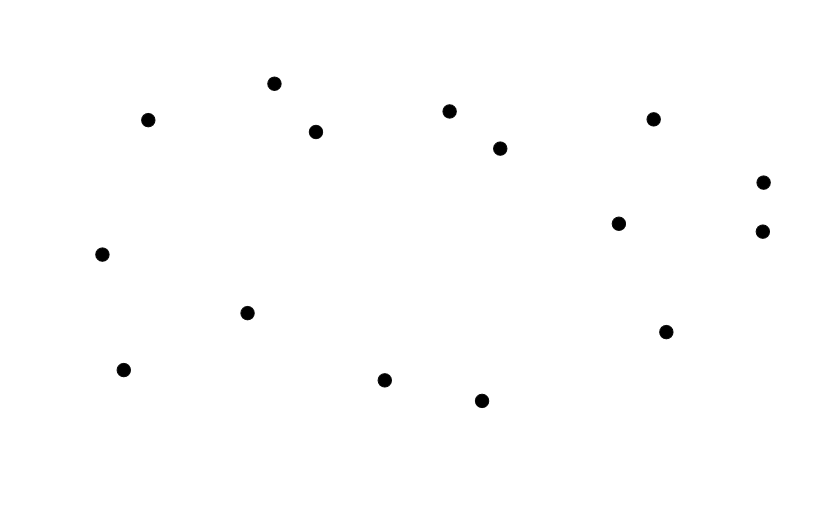
This example demonstrates the construction of a complex geometric figure using GeoGebra commands, involving points, lines, circles, and Voronoi diagrams. Key math concepts include geometric construction, transformation, trigonometry, and analytical geometry. Construction highlights: utilized commands like Line, Translate, Circle, Voronoi, and objects A1-A15 for precise creation. Suitable for high school and above learners to understand geometric constructions and algorithmic applications.
GeoGebra Commands & Parameters
Line(A12, A13) → rLine(A12, A14) → sLine(A13, A14) → tTranslate(s, Vector[(offset * UnitOrthogonalVector[s])]) → s1Translate(s, Vector[((-offset) * UnitOrthogonalVector[s])]) → s2Translate(r, Vector[(offset * UnitOrthogonalVector[r])]) → r1Translate(r, Vector[((-offset) * UnitOrthogonalVector[r])]) → r2Translate(t, Vector[((-offset) * UnitOrthogonalVector[t])]) → t2Translate(t, Vector[(offset * UnitOrthogonalVector[t])]) → t1Line(A15, A1) → fTranslate(f, Vector[((-offset) * UnitOrthogonalVector[f])]) → f2Line(A4, A5) → gTranslate(f, Vector[(offset * UnitOrthogonalVector[f])]) → f1Translate(g, Vector[(offset * UnitOrthogonalVector[g])]) → g1Line(A9, A6) → hTranslate(g, Vector[((-offset) * UnitOrthogonalVector[g])]) → g2Translate(h, Vector[(offset * UnitOrthogonalVector[h])]) → h1Translate(h, Vector[((-offset) * UnitOrthogonalVector[h])]) → h2Line(A15, A2) → iLine(A4, A7) → kLine(A9, A2) → jLine(A6, A7) → lTranslate(i, Vector[(offset * UnitOrthogonalVector[i])]) → i1Translate(i, Vector[((-offset) * UnitOrthogonalVector[i])]) → i2Translate(j, Vector[(offset * UnitOrthogonalVector[j])]) → j1Translate(j, Vector[((-offset) * UnitOrthogonalVector[j])]) → j2Translate(k, Vector[(offset * UnitOrthogonalVector[k])]) → k1Translate(k, Vector[((-offset) * UnitOrthogonalVector[k])]) → k2Translate(l, Vector[(offset * UnitOrthogonalVector[l])]) → l1Translate(l, Vector[((-offset) * UnitOrthogonalVector[l])]) → l2Line(A8, A10) → nLine(A10, A11) → pLine(A5, A3) → mLine(A8, A11) → qLine(A1, A3) → aTranslate(m, Vector[(offset * UnitOrthogonalVector[m])]) → m1Translate(m, Vector[((-offset) * UnitOrthogonalVector[m])]) → m2Translate(n, Vector[(offset * UnitOrthogonalVector[n])]) → n1Translate(n, Vector[((-offset) * UnitOrthogonalVector[n])]) → n2Translate(p, Vector[(offset * UnitOrthogonalVector[p])]) → p1Translate(p, Vector[((-offset) * UnitOrthogonalVector[p])]) → p2Translate(q, Vector[(offset * UnitOrthogonalVector[q])]) → q1Translate(q, Vector[((-offset) * UnitOrthogonalVector[q])]) → q2Translate(a, Vector[(offset * UnitOrthogonalVector[a])]) → a1Translate(a, Vector[((-offset) * UnitOrthogonalVector[a])]) → a2Circle(A1, offset) → B1Circle(A2, offset) → B2Circle(A3, offset) → B3Circle(A4, offset) → B4Circle(A5, offset) → B5Circle(A6, offset) → B6Circle(A7, offset) → B7Circle(A8, offset) → B8Circle(A9, offset) → B9Circle(A10, offset) → B10Circle(A11, offset) → B11Circle(A12, offset) → B12Circle(A13, offset) → B13Circle(A14, offset) → B14Circle(A15, offset) → B15Voronoi(A1:A15) → grafo1Circle(A1, C1) → D1Circle(A2, C2) → D2Circle(A3, C3) → D3Circle(A4, C4) → D4Circle(A5, C5) → D5Circle(A6, C6) → D6Circle(A7, C7) → D7Circle(A8, C8) → D8Circle(A9, C9) → D9Circle(A10, C10) → D10Circle(A11, C11) → D11Circle(A12, C12) → D12Circle(A13, C13) → D13Circle(A14, C14) → D14Circle(A15, C15) → D15Circle(A1, C1 + offset) → E1Circle(A2, C2 + offset) → E2Circle(A3, C3 + offset) → E3Circle(A4, C4 + offset) → E4Circle(A5, C5 + offset) → E5Circle(A6, C6 + offset) → E6Circle(A7, C7 + offset) → E7Circle(A8, C8 + offset) → E8Circle(A9, C9 + offset) → E9Circle(A10, C10 + offset) → E10Circle(A11, C11 + offset) → E11Circle(A12, C12 + offset) → E12Circle(A13, C13 + offset) → E13Circle(A14, C14 + offset) → E14Circle(A15, C15 + offset) → E15Circle(A1, C1 - offset) → F1Circle(A2, C2 - offset) → F2Circle(A3, C3 - offset) → F3Circle(A4, C4 - offset) → F4Circle(A5, C5 - offset) → F5Circle(A6, C6 - offset) → F6Circle(A7, C7 - offset) → F7Circle(A8, C8 - offset) → F8Circle(A9, C9 - offset) → F9Circle(A10, C10 - offset) → F10Circle(A11, C11 - offset) → F11Circle(A12, C12 - offset) → F12Circle(A13, C13 - offset) → F13Circle(A14, C14 - offset) → F14Circle(A15, C15 - offset) → F15
AI Drawing Prompt Reference
On a plane, choose several reference points and connect them pairwise to form three main lines. Translate each main line in the direction orthogonal to itself to create two parallel copies (a pair above and below). Next, form several additional lines using other reference points as the outer boundary, and for each of these lines create corresponding two translated parallel copies in the same orthogonal direction. Finally, draw three circles centered at three of the reference points using the same given radius, so the circles intersect and interact with the line network, producing a structured geometric construction with translations, parallel lines, and line–circle overlaps.
The prompt above was compiled from the original drawing commands and is for reference only.