
From Parallelograms to Triangles: IM 6.1.7 Practice
Loading the math board and drawing, please wait…
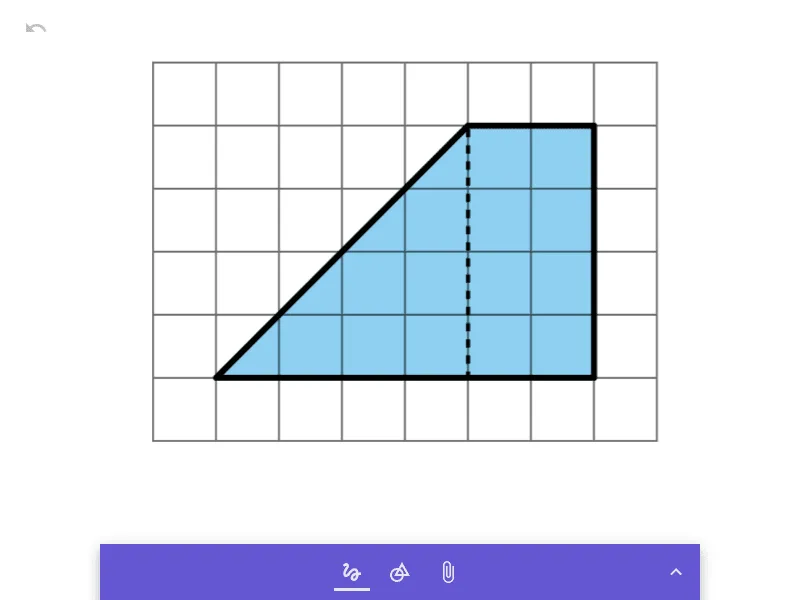
① This example demonstrates how to derive the area of a triangle from a parallelogram by decomposing or transforming the shape, providing a visual and hands-on approach to understanding area relationships. ② Core mathematical concepts include area formulas for parallelograms and triangles, geometric decomposition and rearrangement, the relationship between shapes with equal base and height, and foundational geometric reasoning. ③ Construction notes: Based on the construction summary, the example uses an image object (pic1), likely as a static illustration or background; in practice, GeoGebra tools such as polygon, segment, and move tools can be used to dynamically show the decomposition, but this practice focuses on student exploration and problem-solving. ④ Suitable for upper elementary or middle school students (grades 6-7) as a practice exercise to reinforce area concepts and spatial reasoning, and for teachers to create interactive lessons.
AI Drawing Prompt Reference
Draw a parallelogram and show how it can be decomposed or transformed into a triangle with the same base and height. Include the parallelogram with a diagonal or dividing line marked in dashed or contrasting color, splitting it into two congruent triangles. Keep one triangle in place and move or rotate the other to the side, making the area relationship clear. Label the base and height for easy comparison.
The prompt above was compiled from the original drawing commands and is for reference only.