
Frieze Model
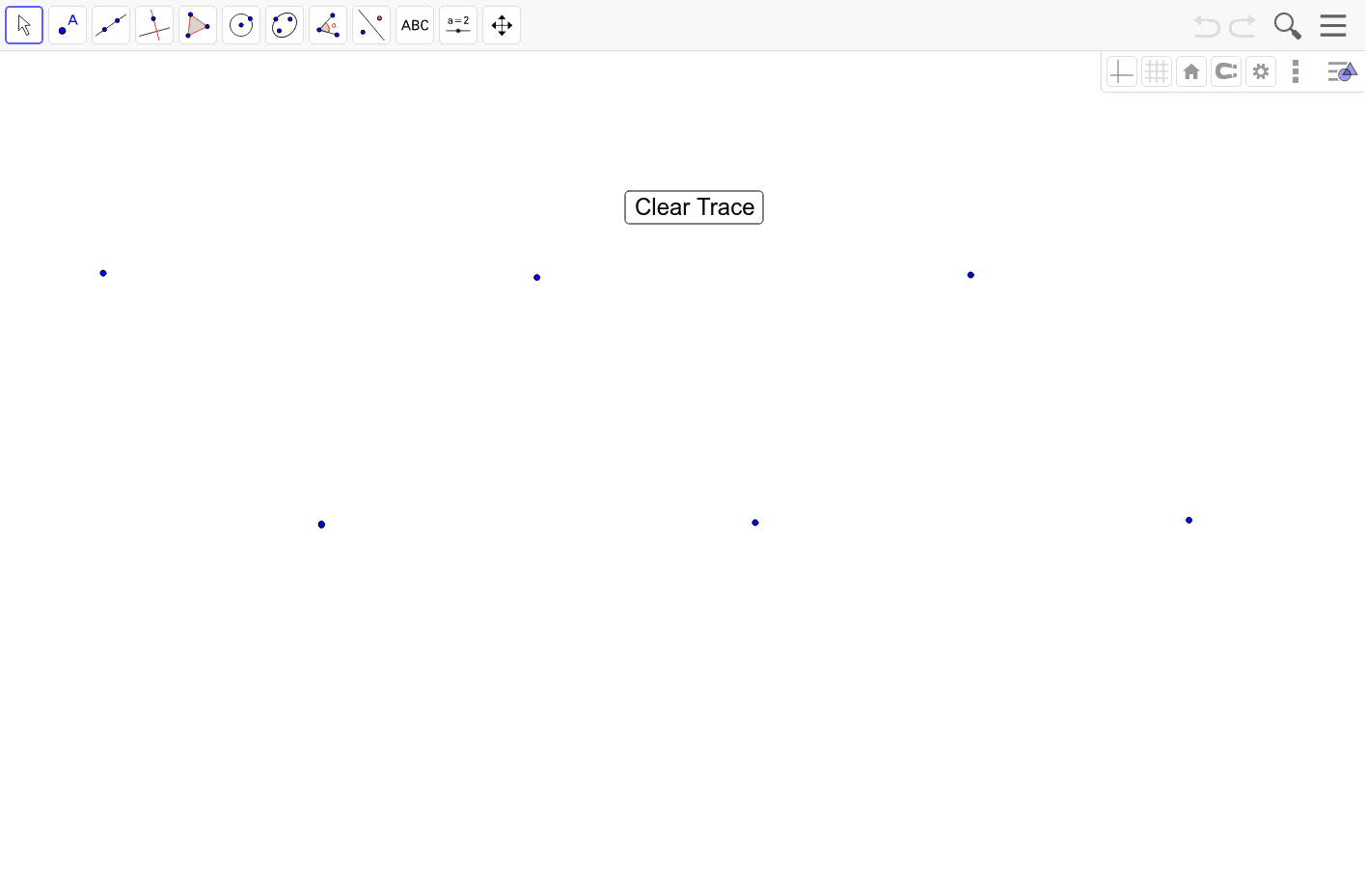
Loading the math board and drawing, please wait…
In collections
MTH 595 Book
This example demonstrates the application of translation and reflection transformations in geometric construction. Key mathematical concepts include translation, reflection, vector, and trigonometric functions. Using GeoGebra commands such as Line, Vector, Mirror, and Translate, a series of symmetric shapes can be constructed. Suitable for high school mathematics education and learning about translation and reflection transformations.
GeoGebra Commands & Parameters
Line(A, B) → aVector(C, D) → uMirror(E, a) → E'Translate(E', u) → E''Translate(E'', Vector[(0, 0.020000000000000018)]) → E'''Translate(E'', u) → E'''_1Mirror(E'''_1, a) → FTranslate(F, u) → F'Mirror(F', a) → F''Translate(F'', u) → F'''Mirror(F''', a) → GTranslate(G, u) → G'Mirror(G', a) → G''
AI Drawing Prompt Reference
Draw a symmetric shape composed of several points and line segments. Start with an initial line segment, reflect a point, translate it, and then repeat reflection and translation steps to generate more symmetric points. Connect these points with line segments to form a symmetric pattern. The construction order should follow the sequence of reflection and translation to maintain symmetry.
The prompt above was compiled from the original drawing commands and is for reference only.