
Eight Circles Intersection
Loading the math board and drawing, please wait…
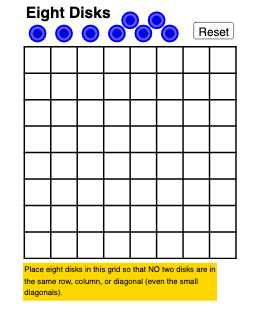
This example demonstrates the geometric formation and spatial relationships of eight intersecting circles. It involves core math concepts like circles, intersection points, angles, and geometric construction. Construction highlights include using commands such as Segment, Circle, Line, and AngularBisector to create and adjust circles. Suitable for high school and above students learning geometric construction, spatial geometry, and analytical geometry.
GeoGebra Commands & Parameters
Segment(A, I) → fSegment(J, H_1) → gSegment(K, G_1) → hSegment(L, F_1) → iSegment(M, E_1) → jSegment(N, D_1) → kSegment(O, C_1) → lSegment(P, B_1) → mSegment(Q, A_1) → nSegment(A, Q) → pSegment(B, R) → qSegment(C, S) → rSegment(D, T) → sSegment(E, U) → tSegment(F, V) → aSegment(G, W) → bSegment(H, Z) → cSegment(I, A_1) → dCircle(PSeven, disksize) → eCircle(PThree, disksize) → c_2Circle(PFour, disksize) → d_1Circle(POne, disksize) → e_1Circle(PSix, disksize) → f_1Circle(PTwo, disksize) → g_1Circle(PFive, disksize) → h_1Circle(PEight, disksize) → k_1Line(POne, yAxis) → i_1Line(PTwo, i_1) → j_1Line(PThree, j_1) → l_1Line(PFour, l_1) → m_1Line(PFive, m_1) → n_1Line(PSix, n_1) → p_1Line(PSeven, p_1) → q_1Line(PEight, q_1) → r_1Line(POne, xAxis) → s_1Line(PTwo, s_1) → t_1Line(PThree, t_1) → a_1Line(PFour, a_1) → b_1Line(PFive, b_1) → c_1Line(PSix, c_1) → f_2Line(PSeven, f_2) → g_2Line(PEight, g_2) → h_2AngularBisector(s_1, i_1) → i_2, j_2AngularBisector(t_1, j_1) → k_2, l_2AngularBisector(a_1, l_1) → m_2, n_2AngularBisector(b_1, m_1) → p_2, q_2AngularBisector(c_1, n_1) → r_2, s_2AngularBisector(f_2, p_1) → t_2, a_2AngularBisector(g_2, q_1) → b_2, d_2AngularBisector(h_2, r_1) → e_2, f_3