
Cube Net by kmsravindra123
Loading the math board and drawing, please wait…
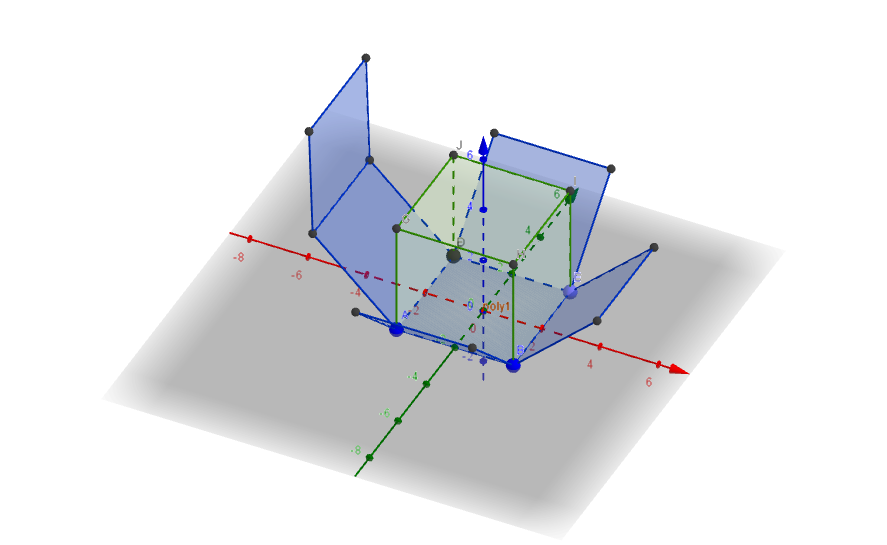
This example demonstrates the net of a cube and its folding process. It involves core math concepts like solid geometry, polygon assembly, and spatial visualization. Constructed using GeoGebra commands such as Polygon, Point, Cube, and Net. Suitable for high school students learning solid geometry or educational demonstrations.
GeoGebra Commands & Parameters
Polygon(A, B, 4) → poly1, f, g, h, i, C, DPoint(Circle[B, Distance[A, B], Segment[A, B]]) → ECube(A, B, E) → a, F, faceEFJI, faceGHIJ, edgeAF, edgeAB, edgeBE, edgeEF, edgeAG, edgeFJ, edgeGJ, edgeGH, G, edgeBH, edgeHI, edgeEI, edgeIJ, H, I, J, faceABEF, faceAFJG, faceABHG, faceBEIHNet(a, b) → c, K, T, U, V, W, Z, faceKLMN, faceKNPO, faceKLTS, faceLMVU, faceMNZW, L, faceOPQR, edgeKN, edgeKL, edgeLM, edgeMN, edgeNP, edgeOP, edgeKO, edgeKS, edgeST, M, edgeLT, edgeLU, edgeUV, edgeMV, edgeMW, edgeWZ, edgeNZ, edgePQ, edgeQR, edgeOR, N, O, P, Q, R, S
AI Drawing Prompt Reference
Draw a net of a cube showing its folding process, including multiple squares and connection points, start by sketching the basic square framework, then add diagonals and folding lines, finally combine them into a foldable cube net, emphasizing the connection of geometric shapes and spatial relationships.
The prompt above was compiled from the original drawing commands and is for reference only.