
Arithmetic Sequence Gaps
Loading the math board and drawing, please wait…
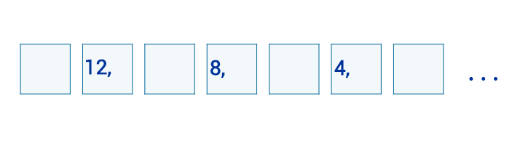
This example demonstrates the gaps in an arithmetic sequence. Key mathematical concepts include the definition and properties of arithmetic sequences. Using GeoGebra commands such as Random, RandomElement, and Polygon, the construction of the arithmetic sequence is illustrated. Suitable for students at the junior high school level and above to learn about arithmetic sequences.
GeoGebra Commands & Parameters
Random(-20, 20) → aRandomElement(list1) → dPolygon(A, B, C, D) → poly1, a_1, b_1, c_1, d_1Polygon(E, F, G, H) → poly2, e_1, f_1, g_1, h_1Polygon(I, J, K, L) → poly3, i_1, j, k, lPolygon(M, N, O, P) → poly4, m, n, o, pPolygon(Q, R, S, T) → poly5, q, r, s, tPolygon(U, V, W, Z) → poly6, u, v, w, z_1Polygon(A_1, B_1, C_1, D_1) → poly7, a_2, b_2, c_2, d_2
AI Drawing Prompt Reference
Draw a figure showing the gaps in an arithmetic sequence, including multiple polygons representing each term of the sequence, determined by randomly generated first term and common difference, arranged in order to illustrate the increasing or decreasing pattern of the sequence, suitable for junior high school students and above to learn about arithmetic sequences.
The prompt above was compiled from the original drawing commands and is for reference only.