
A Special Point in Geometry: Linking Functions and Vectors
Loading the math board and drawing, please wait…
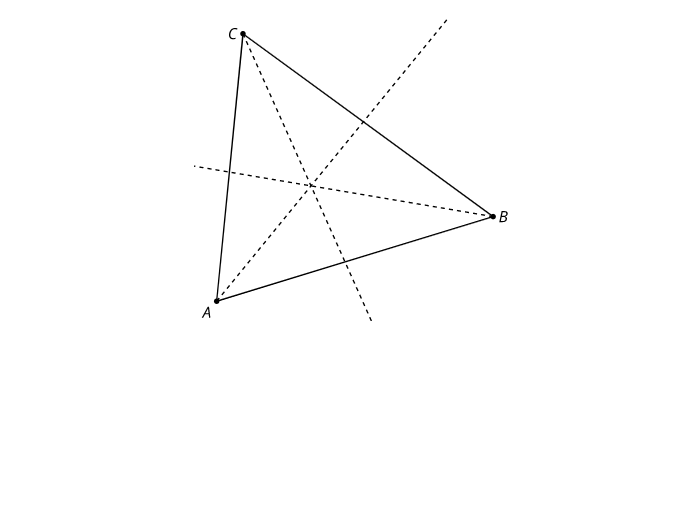
This example demonstrates how a “special point” emerges in a geometric configuration by enforcing relationships between algebraic and geometric objects. The key ideas include quadratic-function behavior, vector operations and direction, and parallelogram (or parallel-structure) geometry; it may also incorporate exponential functions when non-linear variation is used to define or distinguish the special point. For construction in GeoGebra, the workflow typically starts from a geometric backbone such as a parallelogram and associated vectors, then connects it to the graphs of relevant functions (quadratic and possibly exponential) via constraints and intersections/conditions, allowing the special point to be located or verified within the dynamic model. Suitable for middle/high school geometry-function integration and for students practicing GeoGebra-based exploration and modeling.
AI Drawing Prompt Reference
Draw a geometric configuration showing how a special point emerges through relationships between functions and vectors. Start with a parallelogram and associated vectors, then connect it to the graphs of quadratic and possibly exponential functions via constraints and intersections to locate the special point, demonstrating function behavior, vector direction, and geometric structure.
The prompt above was compiled from the original drawing commands and is for reference only.