
验证结果:通过试算检验一元一次方程解
几何画板及绘图内容加载中,请稍等……
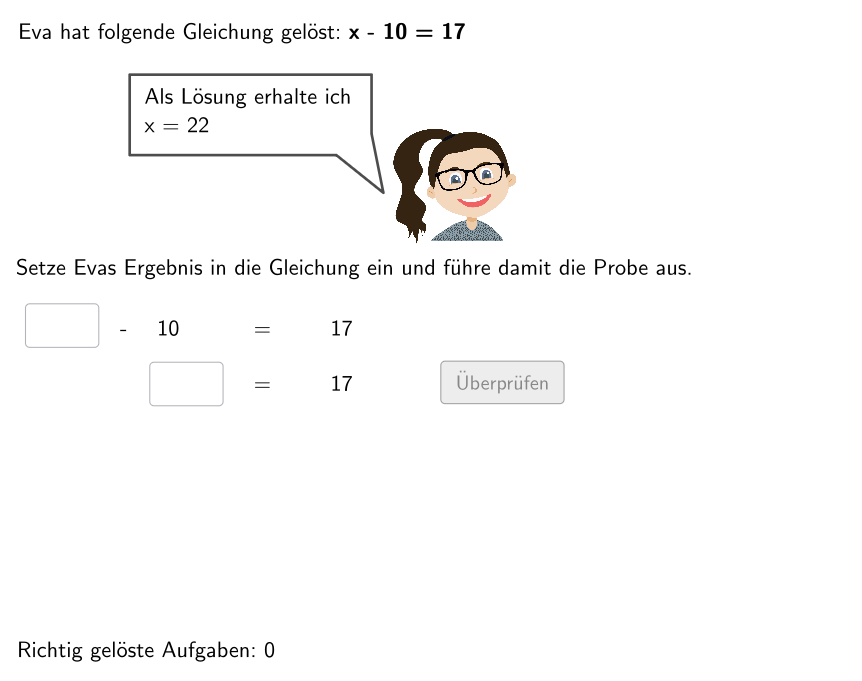
本范例通过试算检验一元一次方程的解是否正确。涉及的核心数学概念是一元一次方程的解法。使用了GeoGebra命令如Textfield, Shuffle, Append等进行方程的构造。适合5-6年级的学生进行练习。
GeoGebra 命令及参数
Textfield(bInput) → InputBox2Shuffle(Sequence[Random[21, 40], i, 1, 100]) → randomNosFora, {34, 38, 24, 22, 32, 22, 26, 36, 26, 31, 24, 37, 29, 26, 31, 40, 37, 26, 34, 31, 21, 37, 37, 35, 40, 26, 26, 30, 34, 29, 40, 32, 22, 34, 26, 36, 28, 24, 38, 31, 33, 39, 31, 26, 33, 32, 22, 40, 33, 23, 26, 28, 24, 26, 39, 24, 22, 35, 30, 23, 27, 34, 22, 36, 37, 32, 34, 33, 40, 33, 38, 40, 31, 22, 25, 35, 26, 37, 28, 34, 26, 27, 28, 37, 22, 37, 32, 35, 40, 37, 30, 28, 33, 35, 23, 38, 27, 37, 39, 33}Append(true, Sequence[If[randomNosFora(i) ≟ randomNosFora(i - 1), false, true], i, 2, 100]) → stayaRemove(Sequence[If[staya(i), randomNosFora(i), 0], i, 1, 100], Sequence[0, i, 1, 100]) → randomNosForawithoutRepeatElement(randomNosForawithoutRepeat, Mod[questionCount, Length[randomNosForawithoutRepeat]] + 1) → numawithoutRepeatDivisorsList(numawithoutRepeat) → TeilerlistenumawithoutRepeatFactors(numawithoutRepeat) →RandomElement(TeilerlistenumawithoutRepeat) → randomTeilerShuffle(Sequence[RandomElement[{numawithoutRepeat, numawithoutRepeat + 1, numawithoutRepeat - 5, numawithoutRepeat / randomTeiler, numawithoutRepeat + 12, (numawithoutRepeat * 4)}], i, 1, 100]) → RandomSolution, {28, 28, 22, 39, 3, 108, 22, 108, 3, 28, 39, 39, 22, 27, 3, 28, 22, 22, 28, 39, 3, 108, 108, 22, 28, 39, 39, 22, 39, 3, 39, 108, 108, 27, 108, 108, 28, 108, 108, 27, 22, 27, 28, 39, 108, 27, 28, 108, 3, 39, 108, 27, 28, 3, 3, 22, 3, 22, 28, 27, 3, 39, 28, 22, 108, 27, 108, 27, 108, 22, 3, 108, 22, 108, 108, 39, 3, 39, 28, 28, 39, 3, 28, 3, 27, 27, 22, 108, 22, 108, 108, 108, 39, 27, 22, 3, 108, 22, 39, 108}Element(RandomSolution, Mod[questionCount, 100] + 1) → numSolShuffle(Sequence[Min[Random[1, 10], numSol], i, 1, 100]) → RandomNosFory, {1, 7, 7, 1, 6, 10, 1, 2, 7, 5, 2, 2, 2, 9, 3, 5, 1, 1, 3, 2, 9, 1, 7, 4, 5, 3, 5, 5, 7, 2, 10, 2, 9, 7, 7, 8, 4, 3, 10, 5, 10, 9, 2, 8, 2, 7, 9, 4, 2, 7, 6, 5, 1, 8, 10, 9, 5, 2, 6, 8, 2, 10, 1, 10, 9, 7, 5, 5, 3, 1, 9, 5, 5, 9, 6, 7, 9, 8, 1, 2, 1, 7, 6, 1, 1, 4, 9, 10, 10, 8, 8, 7, 9, 10, 6, 10, 10, 8, 5, 3}Append(true, Sequence[If[randomNosFora(i) ≟ randomNosFora(i - 1), false, true], i, 2, 100]) → stayyRemove(Sequence[If[stayy(i), RandomNosFory(i), 0], i, 1, 100], Sequence[0, i, 1, 100]) → RandomNosForywithoutRepeatShuffle(Join[{Sequence[i, i, 3, 10], Sequence[(10 * i), i, 1, 9]}]) → Faktor2List, {9, 3, 30, 4, 60, 8, 50, 90, 5, 40, 80, 10, 20, 6, 10, 70, 7}Element(RandomNosForywithoutRepeat, Mod[questionCount, Length[RandomNosForywithoutRepeat]] + 1) → numywithoutRepeatShuffle(Sequence[RandomElement[l1], i, 1, 100]) → l1zufi, {"a + 10", "a - 10", "a - 10", "a + 10", "a - 10", "10 \cdot a", "10 + a", "10 + a", "a \cdot 10", "a + 10", "10 \cdot a", "a - 10", "a + 10", "10 + a", "10 \cdot a", "10 + a", "10 \cdot a", "a \cdot 10", "10 + a", "10 + a", "a - 10", "10 + a", "10 + a", "10 + a", "a \cdot 10", "a - 10", "a - 10", "a - 10", "a - 10", "a + 10", "a \cdot 10", "a + 10", "a \cdot 10", "a \cdot 10", "10 \cdot a", "10 + a", "a + 10", "a + 10", "a + 10", "10 \cdot a", "a \cdot 10", "a - 10", "a + 10", "a \cdot 10", "a + 10", "10 + a", "a + 10", "a + 10", "10 \cdot a", "a + 10", "a \cdot 10", "10 \cdot a", "a + 10", "a - 10", "a + 10", "a - 10", "a - 10", "a - 10", "10 \cdot a", "10 + a", "a - 10", "10 \cdot a", "a \cdot 10", "a - 10", "10 \cdot a", "10 \cdot a", "a - 10", "10 + a", "a + 10", "10 + a", "a + 10", "10 \cdot a", "10 \cdot a", "10 \cdot a", "10 \cdot a", "10 \cdot a", "10 \cdot a", "a + 10", "a + 10", "a + 10", "a \cdot 10", "a - 10", "a \cdot 10", "a \cdot 10", "a \cdot 10", "a + 10", "a - 10", "a - 10", "a - 10", "a - 10", "10 \cdot a", "a \cdot 10", "a + 10", "10 + a", "a + 10", "a - 10", "10 + a", "a + 10", "a - 10", "a + 10"}Append(true, Sequence[If[l1zufi(i) ≟ l1zufi(i - 1), false, true], i, 2, 100]) → stayzufiRemove(Sequence[If[stayzufi(i), l1zufi(i), 0], i, 1, 100], Sequence[0, i, 1, 100]) → l1zufiwithoutRepeatSplit(Text2, {""}) → l2Shuffle(Sequence[i, i, 10, 50]) → Faktor1List, {44, 22, 17, 30, 19, 26, 48, 47, 35, 34, 42, 27, 29, 32, 43, 10, 40, 45, 50, 14, 12, 37, 49, 33, 21, 15, 18, 39, 46, 13, 11, 23, 36, 28, 20, 31, 38, 25, 41, 24, 16}Textfield(aInput) → InputBox1Element(randomNosFora, Mod[questionCount, 100] + 1) → numaElement(RandomNosFory, Mod[questionCount, 100] + 1) → numyElement(l1zufiwithoutRepeat, Mod[questionCount, 100] + 1) → numzufiPolygon(PtopLeftCornerFeedback, PtopRightCornerFeedback, PbottomRightCornerFeedback, PbottomLeftCornerFeedback) → rectangleCorrect, ptopleftcornerfeedback, ptoprightcornerfeedback, pbottomrightcornerfeedback, pbottomleftcornerfeedbackIf(numzufi ≟ F9, NumberSeparationComma[floor((E9 * 100)) / 100], numzufi ≟ F4, NumberSeparationComma[E4], numzufi ≟ F3, NumberSeparationComma[E3], numzufi ≟ F2, NumberSeparationComma[E2], numzufi ≟ F8, NumberSeparationComma[E8], numzufi ≟ F7, NumberSeparationComma[E7], numzufi ≟ F6, NumberSeparationComma[E6], numzufi ≟ F5, NumberSeparationComma[E5]) → Text12Shuffle(Sequence[RandomElement[{6, 12, 18, 24, 30, 36, 42, 48, 54, 60, 66}], i, 1, 100]) → randomNosForaDivision, {12, 42, 42, 36, 54, 30, 42, 30, 6, 42, 36, 42, 66, 48, 18, 12, 60, 48, 60, 36, 48, 66, 30, 18, 42, 42, 24, 66, 24, 6, 6, 66, 18, 60, 18, 66, 30, 42, 18, 42, 24, 36, 6, 18, 54, 6, 24, 36, 54, 24, 24, 18, 48, 42, 60, 60, 54, 42, 66, 48, 48, 12, 18, 12, 18, 60, 18, 18, 48, 24, 12, 18, 60, 42, 66, 36, 42, 66, 30, 24, 6, 66, 54, 66, 18, 66, 42, 36, 54, 48, 42, 48, 48, 60, 42, 6, 42, 12, 18, 42}SpeechBubbleRight((1, 6), 3.5, 1) → Vieleck1Polygon(PtopLeftCornerFeedback_{1}, PtopRightCornerFeedback_{1}, PbottomRightCornerFeedback_{1}, PbottomLeftCornerFeedback_{1}) → rectangleCorrect_{1}, ptopleftcornerfeedback_{1}, ptoprightcornerfeedback_{1}, pbottomrightcornerfeedback_{1}, pbottomleftcornerfeedback_{1}Polygon(PtopLeftCornerFeedback_{2}, PtopRightCornerFeedback_{2}, PbottomRightCornerFeedback_{2}, PbottomLeftCornerFeedback_{2}) → rectangleCorrect_{2}, ptopleftcornerfeedback_{2}, ptoprightcornerfeedback_{2}, pbottomrightcornerfeedback_{2}, pbottomleftcornerfeedback_{2}If(l2(1) ≟ "a", G, H) → PosPolygon(I, J, K, Left) → q1, i, j, k, mPolygon(DownL, DownR, UpR, UpL) → q2, n, p, q, rPolygon(L, M, N, Right) → q3, f, g, h, lIf(numzufi ≟ F9, E9, If[numzufi ≟ F8, E8, If[numzufi ≟ F7, E7, If[numzufi ≟ F6, E6, If[numzufi ≟ F5, E5, If[numzufi ≟ F4, E4, If[numzufi ≟ F3, E3, If[numzufi ≟ F2, E2]]]]]]]) → zahlIf(numzufi ≟ F9, 4, If[numzufi ≟ F8, 4, If[numzufi ≟ F7, 3, If[numzufi ≟ F6, 3, If[numzufi ≟ F5, 2, If[numzufi ≟ F4, 2, If[numzufi ≟ F3, 1, If[numzufi ≟ F2, 1]]]]]]]) → modus
AI 绘图提示语参考
在坐标平面里做一个用于“检验一元一次方程解”的示意图:先放置一个文字输入框用于输入变量a;在图中画出一个主矩形作为答案区域,并在其左上、右上、右下、左下各自放置与矩形对应的四个角点;再复制出现第二个同样的四边形矩形,分别用于放置两个不同的组成部分。根据预设的分段选项,在矩形对应位置添加表示系数(如从给定的数字选取)与等式验证含义的文字气泡/标注,使画面呈现“将给定数代入并检查”的结构。
以上提示语为根据原始绘图命令整理而来,仅供参考。