
欧几里得语境下的列奥纳多·达·芬奇勾股定理证明
几何画板及绘图内容加载中,请稍等……
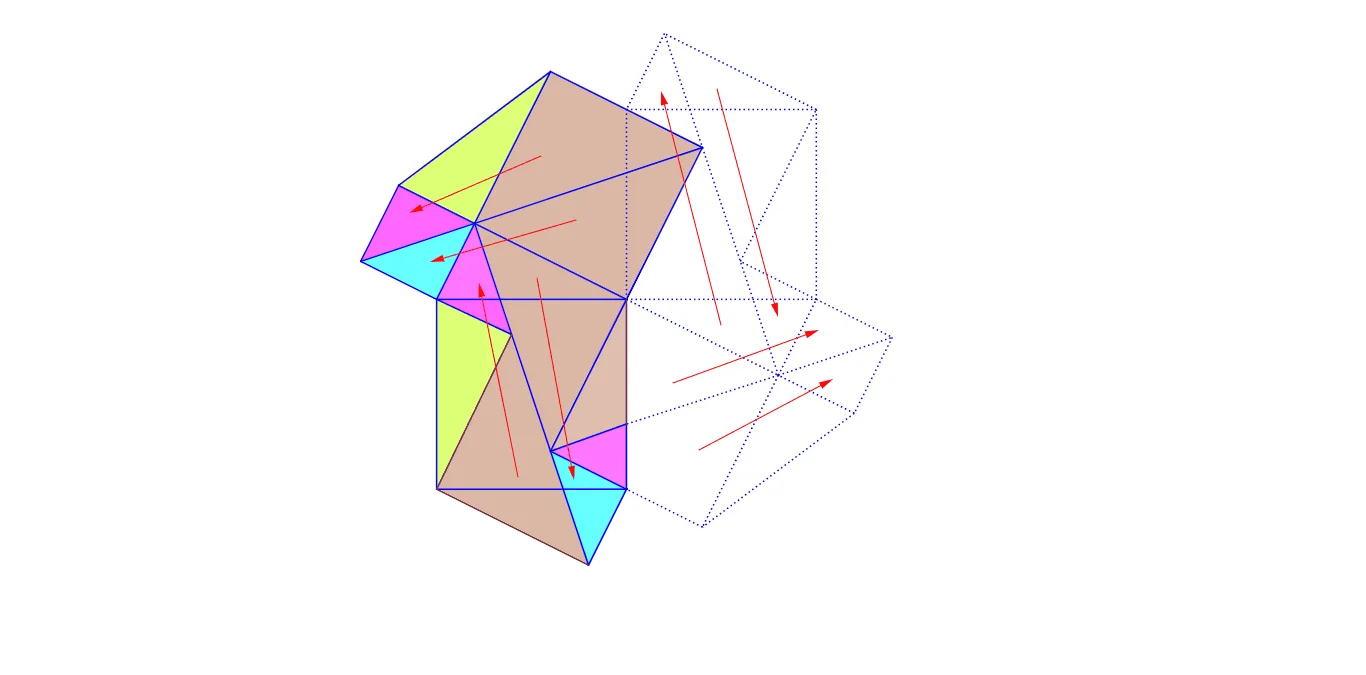
① 本范例在欧几里得几何框架下,动态演示了列奥纳多·达·芬奇(Leonardo da Vinci)对勾股定理的经典证明,通过构造对称图形与面积关系直观展示直角三角形两直角边上的正方形面积之和等于斜边上的正方形面积。② 核心数学概念包括勾股定理、面积守恒、全等三角形、对称变换以及多边形面积分解,涉及欧几里得几何中的基本作图与推理。③ 作图要点:使用GeoGebra命令如Segment(线段)、Point(点)、Polygon(多边形)、Vector(向量)、Intersect(交点)等,构造了直角三角形及其三边上的正方形,并通过辅助线、对称点与多边形分割(对象包括A, B, a, C, b, D, c, E, d, e, f, F, g, h, G, i, H, j, k, I, l, J, m, n, p, q, r, K, s, t, L, a_1, b_1, M, c_1, N, O, d_1, P, e_1)实现面积关系的可视化。④ 适合高中及以上学段的学生学习几何证明,也可用于教师课堂演示勾股定理的多种证明方法,培养几何直观与逻辑推理能力。
GeoGebra 命令及参数
Segment(A, B) → aSegment(B, C) → bSegment(C, D) → cSegment(D, E) → dSegment(E, A) → eSegment(A, C) → fSegment(D, F) → gSegment(F, E) → hSegment(B, G) → iSegment(G, H) → jSegment(H, C) → kSegment(A, I) → lSegment(I, J) → mSegment(J, B) → nSegment(J, G) → pSegment(I, H) → qSegment(F, B) → rPoint(r) → KSegment(A, K) → sSegment(K, E) → tPoint(r) → LSegment(C, L) → a_1Segment(D, L) → b_1Point(c) → MSegment(L, M) → c_1Segment(N, O) → d_1Segment(O, P) → e_1Segment(P, Q) → f_1Segment(Q, N) → g_1Segment(N, R) → h_1Segment(R, Q) → i_1Segment(N, S) → j_1Segment(S, T) → k_1Segment(T, R) → l_1Segment(R, U) → m_1Segment(U, V) → n_1Segment(V, Q) → p_1Segment(T, U) → q_1Segment(P, W) → r_1Segment(W, O) → s_1Segment(S, V) → t_1Segment(R, W) → a_2Point(a_2) → ZSegment(O, Z) → b_2Point(a_2) → A_1Segment(A_1, Q) → c_2Segment(A_1, P) → d_2Point(f_1) → B_1Segment(A_1, B_1) → e_2Segment(K, A) → f_2Polygon(G, B, I, J) → poly1, g_2, b_3, i_2, j_2Polygon(E, K, B, A) → poly2, e_3, k_2, b_4, a_3Polygon(B, G, H) → poly3, h_2, b_5, g_3Polygon(K, E, F) → poly4, f_3, k_3, e_4Polygon(B, C, H) → poly5, h_3, b_6, c_3Polygon(B, C, L) → poly6, l_2, b_7, c_4Polygon(C, M, L) → poly7, l_3, c_5, m_2Polygon(L, M, D) → poly8, d_3, l_4, m_3Polygon(B, A, I) → poly9, i_3, b_8, a_4Polygon(L, D, F) → poly10, f_4, l_5, d_4Polygon(U, R, S, T) → poly11, u, r_2, s_2, t_2Polygon(R, Z, O, N) → poly12, r_3, z, o, n_2Segment(N, Z) → p_2Polygon(R, N, O, Z) → poly13, r_4, n_3, o_1, z_1Polygon(R, U, V) → poly14, v, r_5, u_1Polygon(Z, O, W) → poly15, w, z_2, o_2Polygon(V, Q, R) → poly16, r_6, v_1, q_2Polygon(R, Q, A_1) → poly17, a_5, r_7, q_3Polygon(Q, B_1, A_1) → poly18, a_6, q_4, b_9Polygon(B_1, A_1, P) → poly19, p_3, b_{10}, a_7Polygon(R, N, S) → poly20, s_3, r_8, n_4Polygon(A_1, P, W) → poly21, w_1, a_8, p_4Vector(D_1, E_1) → u_2Vector(F_1, G_1) → v_2Vector(H_1, I_1) → w_2Vector(J_1, K_1) → u_3Vector(L_1, M_1) → v_3Vector(N_1, O_1) → w_3Vector(P_1, Q_1) → z_3Vector(R_1, S_1) → j_3Intersect(f_1, g_1) → T_1Intersect(a_2, d_2) → U_1Segment(T_1, U_1) → t_3Intersect(h_1, i_1) → V_1Intersect(k_1, q_1) → W_1Segment(V_1, W_1) → g_4Intersect(f_1, g_1) → E_2Segment(E_2, D_2) → j_4Intersect(f_1, e_2) → G_2Point(s_1) → L_2Intersect(b, c) → A_2Segment(A_2, M_2) → m_5Segment(M_2, N_2) → n_5Intersect(c, d) → O_2Segment(N_2, O_2) → p_5Intersect(r, a_1) → P_2Point(h) → Q_2Segment(P_2, Q_2) → q_5Point(t) → R_2Segment(P_2, R_2) → s_5Intersect(d, e) → S_2Segment(S_2, M_2) → t_5Intersect(a, e) → T_2Intersect(j, k) → V_2Segment(V_2, W_2) → e_6Segment(W_2, M_2) → f_6Point(f_6) → Z_2Segment(A_2, Z_2) → g_6Segment(R_2, A_2) → j_6Segment(V_2, M_2) → k_6Segment(A_2, W_2) → h_4Segment(Z_2, H_3) → g_7Segment(H_3, I_3) → h_7Segment(I_3, M_2) → i_7Segment(M_2, H_3) → j_7Segment(M_2, Z_2) → k_7Segment(Z_2, J_3) → l_7Segment(J_3, V_2) → m_7Polygon(Z_2, A_2, M_2) → poly22, m_8, z_4, a_9Segment(I_3, N_2) → c_6Point(j) → U_2Segment(A_2, U_2) → d_6Segment(U_2, G_3) → e_7Segment(G_3, Z_2) → f_7Point(c_1) → K_3Segment(M_2, K_3) → n_7Segment(L_3, U_2) → p_7Segment(G_3, L_3) → q_7Segment(M_2, L_3) → s_7Point(s_7) → M_3Segment(M_3, G_3) → t_7Segment(Z_2, M_3) → c_8Polygon(V_2, A_2, M_2) → poly23, m_9, v_4, a_{10}Polygon(M_3, G_3, L_3) → poly24, l_8, m_{10}, g_8Intersect(c, c_1) → O_3Polygon(A_2, M_2, O_3) → poly25, o_3, a_{11}, m_{11}Polygon(M_2, N_2, P_2) → poly26, p_8, m_{12}, n_8Intersect(g_6, s_7) → P_3Polygon(M_2, Z_2, P_3) → poly27, p_9, m_{13}, z_5Polygon(Z_2, P_3, M_3) → poly28, m_{14}, z_6, p_{10}Polygon(Z_2, H_3, M_2) → poly29, m_{15}, z_7, h_8Polygon(G_3, M_3, Z_2) → poly30, z_8, g_9, m_{16}Intersect(i, j) → R_3Polygon(L_3, U_2, V_2) → poly31, v_5, l_9, u_4Polygon(H_3, M_2, N_2, I_3) → poly32, h_9, m_{17}, n_9, i_8Polygon(H_3, Z_2, M_2) → poly33, m_{18}, h_{10}, z_9Intersect(d, r) → A_4Polygon(O_2, P_2, A_4) → poly34, a_{12}, o_4, p_{11}Intersect(e_7, s_7) → B_4Polygon(V_2, B_4, U_2) → poly35, u_5, v_6, b_{11}Intersect(i, n) → C_4Intersect(m, q) → D_4Intersect(m, n) → E_4Polygon(R_3, C_4, D_4, E_4) → poly36, r_9, c_{10}, d_{10}, e_9Intersect(r, t) → F_4Polygon(C_4, F_4, S_2, T_2) → poly37, c_{11}, f_9, s_9, t_9Polygon(G_3, M_3, M_2, Z_2) → poly38, g_{10}, m_{19}, m_{20}, z_{10}Polygon(H_3, M_2, N_2, I_3) → poly39, h_{11}, m_{21}, n_{10}, i_9Polygon(C_4, R_3, V_2) → poly40, v_7, c_{12}, r_{10}Intersect(g, h) → G_4Polygon(F_4, S_2, G_4) → poly41, g_{11}, f_{10}, s_{10}Polygon(V_2, A_2, C_4) → poly42, c_{13}, v_8, a_{13}Polygon(C_4, A_2, P_2) → poly43, p_{12}, c_{14}, a_{14}Polygon(O_3, P_2, O_2) → poly44, o_5, o_6, p_{13}Polygon(A_2, P_2, G_4, O_2) → poly45, a_{15}, p_{14}, g_{12}, o_7Polygon(A_2, P_2, O_3) → poly46, o_8, a_{16}, p_{15}Polygon(O_3, P_2, O_2) → poly47, o_9, o_{10}, p_{16}Polygon(O_2, A_4, P_2) → poly48, p_{17}, o_{11}, a_{17}Polygon(C_4, T_2, D_4) → poly49, d_{11}, c_{15}, t_{10}Polygon(O_2, G_4, P_2) → poly50, p_{18}, o_{12}, g_{13}Intersect(f, r) → H_4Polygon(C_4, H_4, T_2) → poly51, t_{11}, c_{16}, h_{12}Polygon(T_2, F_4, S_2) → poly52, s_{11}, t_{12}, f_{11}Polygon(F_4, C_4, T_2) → poly53, t_{13}, f_{12}, c_{17}Polygon(P_2, O_2, G_4) → poly54, g_{14}, p_{19}, o_{13}Polygon(V_2, D_4, E_4, R_3) → poly55, v_9, d_{12}, e_{10}, r_{11}Polygon(C_4, T_2, S_2, G_4) → poly56, c_{18}, t_{14}, s_{12}, g_{15}Polygon(V_2, A_2, T_2, D_4) → poly57, v_{10}, a_{18}, t_{15}, d_{13}Polygon(A_2, H_4, G_4, O_2) → poly58, a_{19}, h_{13}, g_{16}, o_{14}Polygon(M_2, L_3, U_2, A_2) → poly59, m_{22}, l_{10}, u_6, a_{20}Polygon(L_3, G_3, Z_2, M_2) → poly60, l_{11}, g_{17}, z_{11}, m_{23}Polygon(H_3, P_2, N_2, I_3) → poly61, h_{14}, p_{20}, n_{11}, i_{10}Polygon(H_3, Z_2, A_2, P_2) → poly62, h_{15}, z_{12}, a_{21}, p_{21}Intersect(r_1, s_1) → K_4Intersect(j, k) → Z_1Intersect(i, j) → B_2Intersect(a, b) → C_2Polygon(Z_1, B_2, C_2) → poly63, c_7, z_{13}, b_{12}Intersect(b, c) → F_2Polygon(Z_1, C_2, F_2) → poly64, f_5, z_{14}, c_9Intersect(r, a_1) → H_2Polygon(F_2, C_2, H_2) → poly65, h_5, f_8, c_{19}Intersect(r, t) → I_2Intersect(d, e) → J_2Intersect(g, h) → K_2Polygon(I_2, J_2, K_2) → poly66, k_4, i_4, j_5Intersect(m, n) → A_3Polygon(B_2, C_2, A_3) → poly67, a_{22}, b_{13}, c_{20}Intersect(a, e) → C_3Polygon(C_3, I_2, J_2) → poly68, j_8, c_{21}, i_5Intersect(f, r) → D_3Polygon(C_2, C_3, D_3) → poly69, d_5, c_{22}, c_{23}Intersect(c, c_1) → E_3Intersect(c, d) → F_3Polygon(E_3, H_2, F_3) → poly70, f_{13}, e_5, h_6Polygon(F_2, E_3, H_2) → poly71, h_{16}, f_{14}, e_8Intersect(l, m) → Q_3Polygon(C_2, Q_3, A_3) → poly72, a_{23}, c_{24}, q_6Polygon(D_3, C_3, I_2) → poly73, i_6, d_7, c_{25}Polygon(C_2, C_3, Q_3) → poly74, q_8, c_{26}, c_{27}Polygon(H_2, F_3, K_2) → poly75, k_5, h_{17}, f_{15}Vector(S_3, T_3) → w_4Vector(U_3, V_3) → m_4Vector(W_3, J_4) → s_4Vector(L_4, M_4) → t_4Vector(O_4, P_4) → w_5Vector(Q_4, R_4) → g_5Vector(S_4, T_4) → w_6Vector(U_4, V_4) → l_6Vector(W_4, Z_4) → m_6
AI 绘图提示语参考
画一个直角三角形,并在每条边上绘制正方形。展示如何通过添加辅助线、对称点和多边形细分来证明勾股定理,即两小正方形面积之和等于大正方形面积,适合高中及以上学生理解几何证明。
以上提示语为根据原始绘图命令整理而来,仅供参考。