
三维矩阵变换演示:立方体的线性变换与几何性质
几何画板及绘图内容加载中,请稍等……
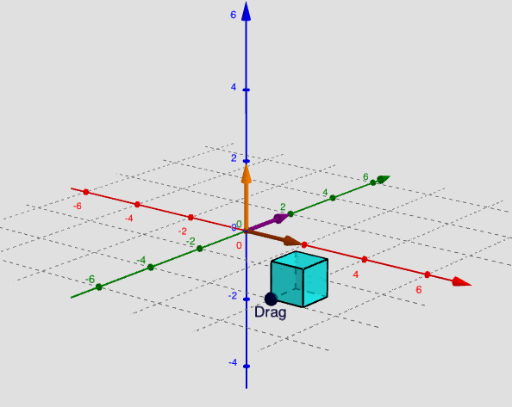
本范例演示了三维空间中矩阵对立方体的线性变换效果。核心数学概念涉及线性代数中的矩阵运算、向量空间及立体几何变换。作图要点包括利用 GeoGebra 命令 Cube 构建基础立方体,通过 ApplyMatrix 实现坐标变换,结合 Vector、Point、Segment 绘制变换后的边与面,并使用 Sequence 进行序列化处理。适合高中或大学数学课程中讲解线性变换与空间几何的教学用途。
GeoGebra 命令及参数
SelectedIndex(Examples) → indexElement(MT, index) → T_0Vector((0, 0, 0), (x_0, y_0, z_0)) → uVector((0, 0, 0), (x_1, y_1, z_1)) → vVector((0, 0, 0), (x_2, y_2, z_2)) → wCircle(A, 1, xOyPlane) → cLine(A, xAxis) → fIntersect(f, c, 1) → BSegment(A, B) → gPoint(Circle[B, Distance[A, B], Segment[A, B]]) → CCube(A, B, C) → Cube, D, faceCDHG, faceEFGH, edgeAD, edgeAB, edgeBC, edgeCD, edgeAE, edgeDH, edgeEH, edgeEF, E, edgeBF, edgeFG, edgeCG, edgeGH, F, G, H, faceABCD, faceADHE, faceABFE, faceBCGFApplyMatrix(T_a, A) → A'ApplyMatrix(T_a, B) → B'ApplyMatrix(T_a, C) → C'ApplyMatrix(T_a, D) → D'ApplyMatrix(T_a, E) → E'ApplyMatrix(T_a, F) → F'ApplyMatrix(T_a, G) → G'ApplyMatrix(T_a, H) → H'Polygon(A', B', C', D') → poly1, a', b', c', d'Polygon(E', A', B', F') → poly2, e', a'_1, b'_1, f'Polygon(B', C', G', F') → poly3, b'_2, c'_1, g', f'_1Polygon(A', E', H', D') → poly4, a'_2, e'_1, h', d'_1Polygon(H', D', C', G') → poly5, h'_1, d'_2, c'_2, g'_1Polygon(H', E', F', G') → poly6, h'_2, e'_2, f'_2, g'_2Determinant(T_0) → deterSequence(Sequence[Sequence[(i, j, k), i, -4, 4, 8 / 3], j, -4, 4, 8 / 3], k, -4, 4, 8 / 3) → points3d, {{{(-4, -4, -4), (-1.3333333333333335, -4, -4), (1.333333333333333, -4, -4), (4, -4, -4)}, {(-4, -1.3333333333333335, -4), (-1.3333333333333335, -1.3333333333333335, -4), (1.333333333333333, -1.3333333333333335, -4), (4, -1.3333333333333335, -4)}, {(-4, 1.333333333333333, -4), (-1.3333333333333335, 1.333333333333333, -4), (1.333333333333333, 1.333333333333333, -4), (4, 1.333333333333333, -4)}, {(-4, 4, -4), (-1.3333333333333335, 4, -4), (1.333333333333333, 4, -4), (4, 4, -4)}}, {{(-4, -4, -1.3333333333333335), (-1.3333333333333335, -4, -1.3333333333333335), (1.333333333333333, -4, -1.3333333333333335), (4, -4, -1.3333333333333335)}, {(-4, -1.3333333333333335, -1.3333333333333335), (-1.3333333333333335, -1.3333333333333335, -1.3333333333333335), (1.333333333333333, -1.3333333333333335, -1.3333333333333335), (4, -1.3333333333333335, -1.3333333333333335)}, {(-4, 1.333333333333333, -1.3333333333333335), (-1.3333333333333335, 1.333333333333333, -1.3333333333333335), (1.333333333333333, 1.333333333333333, -1.3333333333333335), (4, 1.333333333333333, -1.3333333333333335)}, {(-4, 4, -1.3333333333333335), (-1.3333333333333335, 4, -1.3333333333333335), (1.333333333333333, 4, -1.3333333333333335), (4, 4, -1.3333333333333335)}}, {{(-4, -4, 1.333333333333333), (-1.3333333333333335, -4, 1.333333333333333), (1.333333333333333, -4, 1.333333333333333), (4, -4, 1.333333333333333)}, {(-4, -1.3333333333333335, 1.333333333333333), (-1.3333333333333335, -1.3333333333333335, 1.333333333333333), (1.333333333333333, -1.3333333333333335, 1.333333333333333), (4, -1.3333333333333335, 1.333333333333333)}, {(-4, 1.333333333333333, 1.333333333333333), (-1.3333333333333335, 1.333333333333333, 1.333333333333333), (1.333333333333333, 1.333333333333333, 1.333333333333333), (4, 1.333333333333333, 1.333333333333333)}, {(-4, 4, 1.333333333333333), (-1.3333333333333335, 4, 1.333333333333333), (1.333333333333333, 4, 1.333333333333333), (4, 4, 1.333333333333333)}}, {{(-4, -4, 4), (-1.3333333333333335, -4, 4), (1.333333333333333, -4, 4), (4, -4, 4)}, {(-4, -1.3333333333333335, 4), (-1.3333333333333335, -1.3333333333333335, 4), (1.333333333333333, -1.3333333333333335, 4), (4, -1.3333333333333335, 4)}, {(-4, 1.333333333333333, 4), (-1.3333333333333335, 1.333333333333333, 4), (1.333333333333333, 1.333333333333333, 4), (4, 1.333333333333333, 4)}, {(-4, 4, 4), (-1.3333333333333335, 4, 4), (1.333333333333333, 4, 4), (4, 4, 4)}}}Element(points3d, 1, 1) → KKASequence(OrthogonalLine[Element[KKA, i], z = 0], i, 1, 4) → list1Element(points3d, 1, 2) → KKA1Element(points3d, 1, 3) → KKA2Element(points3d, 1, 4) → KKA3Sequence(OrthogonalLine[Element[KKA1, i], z = 0], i, 1, 4) → list2Sequence(OrthogonalLine[Element[KKA2, i], z = 0], i, 1, 4) → list3Sequence(OrthogonalLine[Element[KKA3, i], z = 0], i, 1, 4) → list4Element(points3d, 2, 1) → KAElement(points3d, 3, 1) → KA1Element(points3d, 4, 1) → KA2Sequence(OrthogonalLine[Element[KKA, i], y = 0, space], i, 1, 4) → list5Sequence(OrthogonalLine[Element[KA1, i], y = 0, space], i, 1, 4) → list6Sequence(OrthogonalLine[Element[KA, i], y = 0, space], i, 1, 4) → list7Sequence(OrthogonalLine[Element[KA2, i], y = 0, space], i, 1, 4) → list8ApplyMatrix(T_a, list1) → list1'ApplyMatrix(T_a, list2) → list2'ApplyMatrix(T_a, list3) → list3'ApplyMatrix(T_a, list4) → list4'ApplyMatrix(T_a, list5) → list5'ApplyMatrix(T_a, list6) → list6'ApplyMatrix(T_a, list7) → list7'ApplyMatrix(T_a, list8) → list8'